
 |
Cairmal |
|
He is not recognized by the F.C.I. |
Origin |
Great Britain <> Central Mediterranean -> U.S.A. | |
Translation |
Francis Vandersteen | |
This breed is also known as |
Cairmal Terrier
|
A brief presentation of the Cairmal |
| The Cairmal is a hybrid of two small breeds, the Cairn Terrier and the toy-sized Maltese. The specific Cairmal cross was bred for the companionship of the working-class Cairn Terrier and long-time companion, the Maltese. The resulting hybrid is an excellent companion for your home who is affectionate, alert and cheerful. The Cairmal is a dog-friendly mix that also gets on well with cats. The two related breeds have a long history of development in their respective parts of the world, but shared the same geographical area in Scotland from the 14th century onwards. Details of the Cairmal's history and development are limited, as this mix is a recent creation. Owners interested in determining the Cairmal's possible traits and general health should turn to its parent breeds. |
History of the Cairmal |
| The Cairmal is a hybrid of the Cairn Terrier and the Maltese. The hybrid is a modern breed and has no history outside its parent breeds. Since there is no hybrid standard, your Cairmal may have the appearance of either parent breed as well as traits of both, and owners should review the respective histories to better understand the possible dispositions and traits of their Cairmal. |
A little of the Cairn Terrier |
||
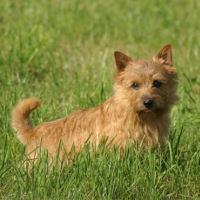
| The Cairn is an ancient breed of Scotch Terrier that was only developed as a distinct breed in the 19th century, and is distinguished from its Scotch Terrier brethren by its coat color. The Cairn Terrier's ancestor, the Scotch Terrier, was first described in 55 BC by the Romans, who identified the small dogs as agile hunters who went to ground after their quarry. The Romans called these dogs Terrarii, which is Latin for earth workers. For several centuries, the Terrier group lived and thrived as land dogs in Scotland and England, also making their way to France and parts of Germany. By the 1900s, the Cairn Terrier was firmly established as the small wire-haired Terrier of the Skye group in various colors, accepting white, which was designated for its cousin breed, the West Highland Terrier. The Cairn is often confused with the Scottish Terrier, but the Scottie has a more diverse genetic make-up, having a large gene pool history while the Cairn Terrier was restricted to the Isle of Skye. The Cairn takes its name from the stone monuments of the same name that the little Terrier was known to hunt. | ||
 |
||
| Standard of the Cairn Terrier | ||
A little of the Maltese |
||
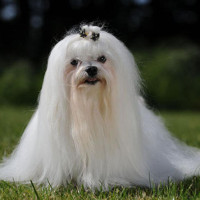
| The Maltese has always been considered a companion breed, and probably developed in the Mediterranean. Documentation on Maltese dogs can be found in ancient civilizations, such as the Egyptians, Greeks and Romans. The Maltese found its way west to France in the 15th century and was brought to England under the reign of King Henry VIII. The Maltese became a favorite of noble and royal ladies, such as Queen Elizabeth I, Queen Mary of Scotland and Queen Victoria. The Maltese is thought to have originated from a Spitz-type dog, but was developed into the modern Maltese we know today by English breeders. | ||
 |
||
| Standard of the Maltese |
Appearance of the Cairmal |
| The Cairmal is a small-to-medium-sized hybrid between the Cairn Terrier and the Maltese. Your Cairmal will develop Cairn Terrier-like characteristics, with a stiff coat of any color. Both parent breeds are small dogs, and the Cairmal will also retain a small-dog appearance. A Cairmal's eyes are small and set wide apart, and the ears are semi-erect and triangular in shape. A Cairmal's nose is generally black, and masks and dark spots can adorn this hybrid's head. A Cairmal's tail isn't too long and sits level with the back, but is carried straight, like the parent Cairn Terrier. |
Temperament of the Cairmal |
| The Cairmal is an excellent companion dog with a cheerful, affectionate disposition. This little dog takes on the personalities of both parent breeds, and is spirited and full of energy. The Cairmal is affectionate towards its family, including children, but the Maltese parent can make a child's tolerance a little more difficult. Good socialization with children and teaching them to respect and play with Cairmals will make life together much easier. As far as strangers are concerned, this little breed is not a big fan and will be wary and alert. Every dog is different and your Cairmal may or may not tolerate other dogs and pets. Good socialization at a young age and continued socialization with other dogs and pets will help your Cairmal adapt to life with other pets. |
Needs and activities of the Cairmal |
| The Cairmal has a lot of energy and needs daily exercise, but the intensity of the exercise doesn't have to be great. The Cairmal is able to meet sufficient exercise requirements indoors and doesn't need long, focused exercise outdoors. However, a small yard is also perfect. If properly exercised, your Cairmal will be easy to keep indoors and is ideally suited to apartment living. The Cairn Terrier is known for digging and rooting, so proper exercise and mental stimulation are essential to prevent destructive behavior in your Cairmal. Daily playtime and exercise also strengthen your bond and keep your Cairmal's mind properly stimulated. |
Maintenance of the Cairmal |
| The Cairmal is not a hypoallergenic dog, but it still doesn't throw away much. However, longer coats require daily brushing to avoid tangles and matting. The Maltese parent also has problems with tear staining, and lighter-colored Cairmals may need eye cleaning to avoid staining. Once stained, the discoloration is permanent on the coats. Long hair on and around the ears can attract and trap dirt and debris. Regular ear cleaning with a vet-approved solution will help prevent ear infections in your Cairmal. Cairmals aren't known for drooling much, and regular brushing will help remove dirt and debris from their coats. A clean coat and clean ears will help prevent any "doggy" smell, although this little mix isn't known for that either. Cairmals, depending on which parent breed they most closely resemble, can be medium- to high-energy and require daily exercise of moderate intensity. They are also intelligent and eager to please, which makes them easy to train. |



 English (United Kingdom)

Comments