
 |
Bullboxer Pit |
|
He is not recognized by the F.C.I. |
Origin |
Germany <> U.S.A. -> U.S.A. | |
Translation |
Francis Vandersteen |
A brief presentation of the Bullboxer Pit |
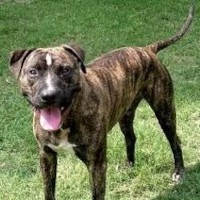
| The Bullboxer Pit, also known as the American Bullboxer, is a popular mixed breed. It is a hybrid of the Boxer and the American Pit Bull Terrier, two powerful dogs that were once bred as bull and bear baiters. These dogs can make excellent family companions, but training and socialization should begin as early as possible with these dogs to encourage the development of a calm, confident disposition, and training should continue throughout the dog's life to achieve the best overall results. Their short, smooth coats are fairly easy to maintain, however, they shed all year round and tend to drool quite profusely. |
History of the Bullboxer Pit |
| The Bullboxer Pit has a short history in relation to its parents. The hybrid is thought to have been developed in the USA. There is little recorded information about the Bullboxer Pit. However, we can consider the background of its parent breeds. |
A little of the Boxer |
||
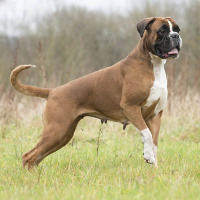
| The Boxer was developed in Germany in the 19th century from the breeding of the Old English Bulldog and the Bullenbeisser Mastiff (German Bulldog). The Bullenbeisser Mastiff was a stocky dog with a short, broad muzzle. It was used to hunt, catch and hold large game such as wild boar, bear and bison. The breed is now extinct. Boxers were originally bred for hunting, bull baiting and guarding. During WWI and WWII, the Boxer was used by the army to carry ammunition, supplies, messages and as a guard dog. The first Boxer was registered with the American Kennel Club in 1904. The Boxer got its name because it tends to stand on its hind legs and "box" with its front paws while playing. | ||
 |
||
| Standard of the Boxer | ||
A little of the American Pit Bull Terrier |
||
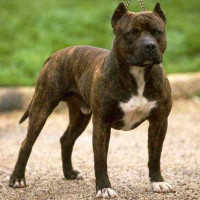
| The term Pit Bull can refer to several types of muscular short-haired dogs that have been bred by incorporating Terrier into the Bulldog lineage. They are known for their endurance, strength and tenacity. Although they were originally developed as dogs used in blood sports such as bull and bear baiting, they have also performed very effectively as farm dogs, catching and raising livestock, assisting in hunting and acting as family companions. This hybrid is developed using contributions from the American Pit Bull Terrier (APBT) as recognized by Britain's UKC, a robust breed with a strong sense of loyalty and joie de vivre. The AKC in the USA does not recognize a breed by the name of Pit Bull, but the American Staffordshire Terrier is similar enough for some dogs to be registered as American Pit Bull Terriers in Europe and twice registered as American Staffordshire Terriers in America. | ||
 |
||
| Presentation of the American Pit Bull Terrier |
Appearance of the Bullboxer Pit |
| This hybrid is a well-muscled dog with a broad, flat head and a broad muzzle that can be short or medium. Their brown eyes will be small to medium-sized and may be round or slightly almond-shaped, and their ears will generally be set high on the head and fold forward or to the sides. Some owners may choose to trim the ears, at which point they will stand upright. Their normally long, tapering tail that curves at the end may also be docked by some owners. They have a shiny, single-layered coat that lies flat against the body and has been seen in almost any color, with the exception of any kind of merle. These dogs also usually have black or white markings that stand out from their base colors. Even with a longer muzzle, these dogs can have the lower Boxer bite, making dental care particularly important. |
Temperament of the Bullboxer Pit |
| The Bullboxer Pit will generally take after the parent breeds, creating a courageous and loyal companion who prefers to be fully integrated into their families. Both parent breeds are very tolerant of children and, in some cases, protective. These dogs are extremely powerful, however, and all interactions with toddlers and children must be carefully supervised. Both the American Pit Bull Terrier and the Boxer are intelligent, responsive breeds, but they can be a little stubborn when it comes to training, and respond best to calm, confident, reward-based training. As these dogs become very powerful in a relatively short space of time, training and socialization should begin as early as possible. The American Pit Bull Terrier and Boxer breeds are generally quite agreeable with other animals, however, much socialization and training should take place when they are young to ensure a confident and adaptable adult. Both breeds can be somewhat reserved with strangers, but are generally affectionate at home. |
Needs and activities of the Bullboxer Pit |
| The Bullboxer Pit is a cross between two very athletic and active dogs, developed for their tenacity and playfulness. To maintain an intensely muscular figure, this dog needs plenty of exercise. This cross should be offered at least two hours of vigorous activity a day, either by brisk walking or jogging, or by alternative activities such as swimming, flyball and agility training. This dog is generally not recommended for apartment buildings due to its large size and higher exercise requirements. Many apartments may also restrict this type of dog, and homeowners' insurance may require dog liability coverage. |
Maintenance of the Bullboxer Pit |
| These dogs are fairly easy to manage in the grooming area, the short coat of this hybrid is easily manageable. Monthly baths are generally adequate for these dogs, however, they require regular brushing with a curry comb or soft bristle brush several times a week to control shedding. Medicated shampoo may be necessary if skin disorders such as mange or allergies develop, and if your dog has inherited the Boxer's facial folds and wrinkles, the face and muzzle area should be examined and wiped once a week or more to avoid red yeast and other fungal or bacterial infestations, especially as this hybrid tends to drool quite heavily. The paw pads of these powerfully built animals also require special attention to prevent drying out and cracking, including the use of a good dog moisturizer. This should be started as early as possible to sensitize the animal, as some breeds of the Pit Bull variety may be reluctant to have their feet touched. |



 English (United Kingdom)

Comments