 |
Bostchon |
|
He is not recognized by the F.C.I. |
Origin |
U.S.A. <> France / Belgium -> U.S.A. | |
Translation |
Francis Vandersteen | |
This breed is also known as |
Boston Frise |
A brief presentation of the Bostchon |
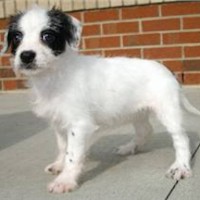
| Bostchons are gentle, sensitive and intelligent family dogs. They are outgoing, people-oriented companions that require moderate activity and lots of affection. Their average lifespan for small breed dogs is 10 to 15 years, and they generally weigh between 6 and 8 kilos. The smallest are 25.5 centimeters tall, and the tallest are 43 centimeters. Bostchons have compact Boston Terrier bodies and Bichon frise facial characteristics and temperaments. Their coat is a true hybrid compared to that of their parents, rough and dense like a Boston Terrier and long like a Bichon à poil frisé. |
History of the Bostchon |
| The Bostchon was probably bred in the middle of the century, but it's only recently that it has begun to be recognized as a specific crossbreed dog. Its personality and appearance have not stabilized, but it is generally known to be energetic, playful and stubborn. |
A little of the Boston Terrier |
||
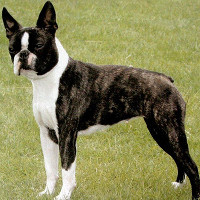
| The Boston Terrier is a breed that was actually used for pit fighting in its early years. The two breeds that were originally used to create the Boston Terrier were the English Bulldog and the English White Terrier, which is now an extinct breed. French Bulldogs were also introduced into their ancestry at some point. The foundation of this breed was determined after the birth of a specific dog named Hooper's Judge, who weighed around 14 kilos at maturity. The breed was slowly reduced by crossing males with smaller female Boston Terriers. American Bulldog Terrier was the first name given to the breed, but it didn't sit well with many dog lovers. As a result, the name was eventually changed to Boston Terrier to represent their place of origin, which is Boston, Massachusetts. | ||
 |
||
| Standard of the Boston Terrier | ||
A little of the Bichon frise |
||
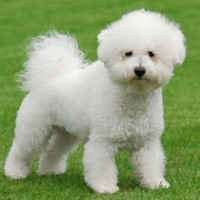
| The Bostchon's parent breed, the Bichon à poil frisé, was created from Water Spaniels and Barbet Poodles in the 12th century as Spanish sailing dogs. As a result, the name Barbichon was derived, which was then shortened to Bichon. It was only later that the breed became a popular companion dog for French and Italian royalty, although it is often described as intrinsically French. In the 1930s, the first canine authority in France drew up standards, dividing the breed into two varieties: the Teneriffe and the Bichon. The addition frisé was then proposed to describe the Bichon's notably curly, soft coat. The first litter of American Bichon Frises were born in the mid-1900s, and the breed was subsequently recognized by the AKC in 1972. | ||
 |
||
| Standard of the Bichon frise |
Appearance of the Bostchon |
| Bostchons have a Boston Terrier body and Bichon à poil frisé facial features. They are small dogs with proportionately long legs and a compact torso. Their average weight is between 6 and 8 kilos, while their average height is between 25.5 and 43 centimeters. A Bostchon's coat is medium to long like a Bichon à poil frisé, but rough and dense like a Boston Terrier. They tend to be black and white, but can also have other colors common to Boston Terriers, such as brown and brindle. Bostchons can be mischievous, which shows in their watchful but good-humored expressions. They have hanging ears that stand up straight when excited, a short muzzle, and dark eyes and nose. Bostchons also have a short, relatively slender tail and cat-like paws that are delicate for their otherwise muscular build. |
Temperament of the Bostchon |
| Like their Terrier relative, Bostchons can be sensitive, stubborn animals. As a result, Bostchons thrive in environments with consistent routines and can become obstinate if introduced to too many changes at once. At the same time, the Bostchon is an inherently happy breed, being outgoing and getting on well with children and other dogs. The combination of these personality traits makes it an excellent dog for a stable family with young children or seniors. The Bostchon is also highly intelligent, inheriting the intellect of both parent breeds, so it can be independent and resistant to training. The best way to counteract stubbornness is to introduce Bostchons to demanding training early and consistently. Ultimately, however, Bostchons love their people and are eager to please their owners. These dogs become intensely attached to their families and make wonderful pets when given sufficient structure and affection. |
Needs and activities of the Bostchon |
| The Bostchon is a dynamic, energetic breed that requires a moderate daily exercise routine and constant human affection. They will appreciate a short daily walk or a trip to the dog park. They appreciate cool climates and should not be over-exercised in the heat. Bostchons are very playful, so they also enjoy vigorous play with family members. Note that Bostchons thrive in consistent environments, so owners should do their best to schedule activity at the same time each day. Bostchons are also primarily indoor dogs, so playing and snuggling inside the house are just as important as outdoor adventures. It's also important to recognize that Bostchons can be sensitive animals who will react strongly to the tone and treatment of their owners. |
Maintenance of the Bostchon |
| Bostchons are minimal excretors and don't require much care, although owners should be aware of brushing the occasional knot out of their medium to long coats. They are not hypoallergenic and therefore not suitable for owners with allergies. Owners should give their Bostchons monthly baths and trim the hair around their eyes and ears to avoid infections in these areas. Like all breeds, Bostchons should have their nails trimmed as needed to avoid painful tears or overgrowth. Also, as this breed is prone to early tooth loss, owners should pay close attention to dental health and brush their teeth daily. |



 English (United Kingdom)

Comments