
 |
Boskimo |
|
He is not recognized by the F.C.I. |
Origin |
U.S.A. -> U.S.A. | |
Translation |
Francis Vandersteen |
A brief presentation of the Boskimo |
| The Boskimo is a hybrid breed developed by crossing the Boston Terrier and the American Eskimo Dog. The Boston Terrier is an intelligent, courageous breed from the United States. The American Eskimo Dog has uncertain ancestry. The first small white Spitz-type dogs were found mainly in communities made up of German immigrants. They have spent time as artists and are highly intelligent. The Boskimo is an excellent companion dog, and may need more care than its Boston Terrier relative. Both the Boston Terrier and the American Eskimo Dog can suffer from separation anxiety, so if you're not home regularly, the Boskimo may not be the right dog for you. |
History of the Boskimo |
| The Boskimo is recognized by the following organizations: American Canine Hybrid Club, Designer Dogs Kennel Club, Dog Registry of America, International Designer Canine Registry. |
A little of the Boston Terrier |
||
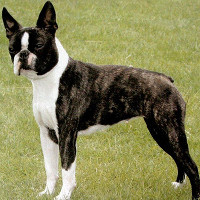
| The Boston Terrier has been called the American gentleman because of its intelligent appearance and pleasant personality. Bred in Boston, Massachusetts in the late 1800s, he has ancestors who worked as tireless vermin hunters, excelling at their job. The instinct to work and seek prey is still present in Terriers. The Boston Terrier in particular was bred from a brindle-coated Bulldog-Terrier cross and a white dog of uncertain ancestry. The result was an offspring with very interesting markings that was refined through breeding to the representation of the Boston Terrier known and adored today. The first Boston Terrier registered with the American Kennel Club was named Hector, and he joined the Club in 1893. | ||
 |
||
| Standard of the Boston Terrier | ||
A little of the American Eskimo Dog |
||
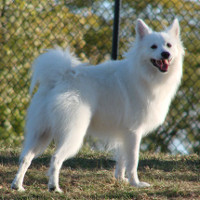
| The American Eskimo Dog was once a star performer with traveling circus shows. His beautiful white coat shone as he performed tricks for the crowd. His time as a circus performer proved to make him a very popular breed in the USA. In 1917, the American Spitz was renamed the American Eskimo Dog, although there is no definitive explanation for this change. | ||
 |
||
| Presentation of the American Eskimo Dog |
Appearance of the Boskimo |
| The Boskimo will vary in color and coat length. It will be larger than its Boston relative, and may lose the characteristic Boston look. It can be black and white or brindle and white. The American Eskimo Dog is all white, so coloring will generally depend on the colors of the Boston parent. American Eskimo Dogs come in three variants: toy, small and standard. The size of the Boskimo depends on the variation of the American Eskimo Dog used in the breeding process. It will probably have a medium to long coat. |
Temperament of the Boskimo |
| The Boskimo is likely to be a happy, clumsy, lively and intelligent dog. It will be full of energy. Yet it will also be affectionate, ready to sit on your lap at any time. The Boskimo's parent breeds both suffer from separation anxiety. Some Boskimos cope by chewing or being otherwise destructive. However, kennel training helps in this area. The Boskimo will feel secure in the kennel. Kennel training can also help with housebreaking. Boskimos are easily trainable; however, consistency and firmness are essential. |
Needs and activities of the Boskimo |
| Boskimos are happy in an apartment or house, with or without a yard. The key is to give him plenty of play so he doesn't get bored. Trips to a local dog park are very enjoyable for the Boskimo. He can become relatively inactive indoors, so don't forget to give him toys that challenge his intelligence - just fetching won't stimulate the Boskimo's highly intelligent mind. Short walks or jogs are also ideal for Boskimos. |
Maintenance of the Boskimo |
| Boskimos may require a little more maintenance than their Boston Terrier relatives. It will probably shed a lot and is not recommended for allergy sufferers. Brush him weekly with a soft bristle brush and two or three times a week during the shedding season. Brushing two or three times a week will help prevent tooth decay and bad breath; however, daily brushing is optimal for preventing gum disease. Trim your Boskimo's nails at least every two weeks. It's important to start a grooming regime with your Boskimo at an early age so that he or she can get used to it. Once accustomed to the attention, your Boskimo will appreciate the bonding time that grooming can become. |



 English (United Kingdom)

Comments