
 |
Border Sheepdog |
|
He is not recognized by the F.C.I. |
Origin |
Great Britain -> U.S.A. | |
Translation |
Francis Vandersteen |
A brief presentation of the Border Sheepdog |
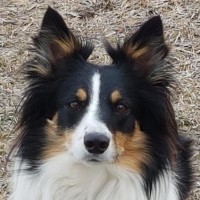
| The Border Sheepdog is a cross between the Border Collie and the Shetland Sheepdog. Because this breed is so new, there isn't much information on its history. However, we do have a lot of information about its parent breeds. The Border Collie is a small to medium-sized dog that is very athletic and intelligent, generally coming in a wide variety of colors. The Shetland Sheepdog is in the same playground as the Border Collie when it comes to agility and speed, especially when it comes to agility activities. This breed is small and athletic, with long flowing fur and bright eyes. Because the Border Sheepdog hasn't been around very long, appearance and personality vary considerably according to the most dominant parent breed genes. In general, the Border Sheepdog will have an attractive blend of attributes from both parents, with long fur, high ears and multiple varieties of coat colors and markings. Because the Border Collie and Shetland Sheepdog are high-energy working dogs, the Border Sheepdog is most often a dog that requires a lot of exercise and tends to do best with a more suburban type of lifestyle. |
History of the Border Sheepdog |
| While we don't know much about the Border Sheepdog's origin story, we do have a lot of information about how its parent breeds got started. When you combine the Border Collie and the Shetland Sheepdog, you can end up with a wide variety of sizes, colors and personalities for the Border Sheepdog. |
A little of the Border Collie |
||
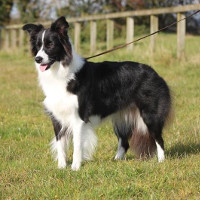
| The Border Collie is without doubt one of the most intelligent herding dogs in the world. They originated somewhere between Scotland and England in the 1800s and were bred for herding purposes. This breed excelled at its work and had the ability to think independently, tending flocks in the hills. The Border Collie was admitted to the American Kennel Club in 1995 and has since been allowed to compete in shows. There are two different lines of the breed: one for showing and one for working. These dogs are incredibly intelligent, easy to train, but not for the faint of heart. | ||
 |
||
| Standard of the Border Collie | ||
A little of the Shetland Sheepdog |
||
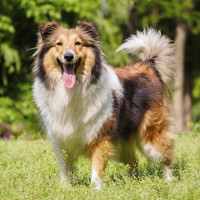
| The Shetland Sheepdog of the Shetland Islands has an unknown origin but has theories suggesting that the Shetland Sheepdog may in fact be a mix of many different breeds such as Pomeranian, Great Collie and Nordic. One of the most appropriate nicknames for this breed is Fairy Dog, which is perfect because of their smaller size, playful nature and beautiful wispy coat. Shetland Sheepdogs vary in size, sometimes even within the same litter, as there are so many different parent breeds included in their background. The breed was recognized by the American Kennel Club in 1911, and the Shetland Sheepdog has grown in popularity ever since. From the outset, the Shetland Sheepdog was often bred with Collies to obtain a breed of more homogeneous size and appearance. | ||
 |
||
| Standard of the Shetland Sheepdog |
Appearance of the Border Sheepdog |
| The Border Sheepdog's appearance can be difficult to determine, depending on the number of different varieties its parent breeds can enter. The typical Border Sheepdog can have large ears fringed in hair, a long, soft coat that can come in a variety of different colors, and can vary in size from very small to medium. Their eyes are light or dark brown and full of life and intelligence. Border Collies are known for their intimidating stare that makes herds move, so be aware that your Border Sheepdog may also look at you or look down to force his will on them. There's also the rare possibility of blue eyes occurring in the Border Sheepdog, but if this happens, one or both ears may be deaf. The Border Sheepdog does best in mild climates due to its double coat and tends to shed often. |
Temperament of the Border Sheepdog |
| Combine the personalities of the Border Collie and the Shetland Sheepdog and you have perhaps the most dynamic combination in history. Indeed, both breeds are extremely intelligent, highly athletic and not at all designed for lounging around the house. Although extremely easy to train with patience, it is of the utmost importance that a Border Sheepdog owner knows what he's getting into and is determined enough to face it. This dog can't be left alone outside, and certainly can't stand being trapped inside the house all day. To train this hybrid dog properly and keep him happy and content, you'll need to spend a lot of time training and spending quality time with him. Border Collies and Shetland Sheepdogs are very attached to their owners and eager to please. They do well with older children and animals, however, be prepared to feel breeding instincts directed towards others if your Border Sheepdog is not properly trained. This is a natural instinct that will have to be mastered. Because both parent breeds are also meant to be guard dogs, suspicion of strangers may occur initially, then recede once the dog is more at ease. Finally, the Shetland Sheepdog is known to bark often, so more suburban areas are better for your Border Sheepdog if it takes on this specific side of the gene pool. Although the Border Sheepdog is a handful, if proper training and socialization take place young, you'll have an incredible herding dog, show dog or companion that's perfect for the athletic individual. |
Needs and activities of the Border Sheepdog |
| Because the Border Sheepdog has extremely active and intelligent parent breeds, it's going to need plenty of physical and mental stimulation throughout the day. This includes activities such as intense training, jogging, biking, hiking, long walks and playing lots of fetch in the yard. Fortunately, because this breed has a double-layered coat, he'll do just fine exercising outdoors during the winter months. Be sure to give your Border Sheepdog plenty of exercise so he doesn't become destructive. High-energy dogs who don't have a way of releasing their energy productively tend to destroy the things you enjoy. However, if you can spend 1-2 hours a day giving your Border Sheepdog good mental and physical stimulation, he'll be perfectly content and happy. On top of that, because of the Border Collie's breeding instinct, without proper training your Border Sheepdog may end up guarding young children, other animals or adults who have no authority over him. Be sure to train for a significant amount of time each day to properly limit these behaviors. |
Maintenance of the Border Sheepdog |
| The Border Sheepdog is a relatively low-maintenance breed. Because of its undercoat, it tends to shed moderately throughout the year, with rather greater shedding twice a year. The best way to keep his long, soft coat in perfect condition is to brush it thoroughly at least twice a week with an undercoat rake, a smooth brush and a pin brush. Bathing should only be done occasionally, or when your dog is particularly dirty. In addition to brushing and bathing, be sure to trim your Border Sheepdog's nails every few weeks or when you can hear them clicking against the floor. |



 English (United Kingdom)

Comments