
 |
Border Collie Bernard |
|
He is not recognized by the F.C.I. |
Origin |
Great Britain <> Switzerland -> U.S.A. | |
Translation |
Francis Vandersteen |
A brief presentation of the Border Collie Bernard |
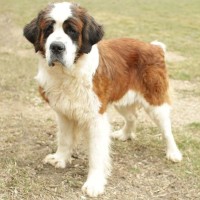
| Protective, intelligent and gentle, the Border Collie Bernard is a hybrid breed of Border Collie and St. Bernard dog. Although its past is not well documented, we do know that the Border Collie Bernard is a friendly breed that will do anything to protect its family. This breed is a medium to large dog that requires daily exercise to maintain good mental and physical health. This devoted dog loves to participate in activities such as agility, herding, scent detection and search and rescue. Its versatile traits make it a family-friendly dog. Maintaining your Border Collie Bernard's coat will require moderate care due to its thickness and texture. This loyal breed is sure to protect you from intruders while providing excellent companionship. |
History of the Border Collie Bernard |
| Although the exact origin of the Border Collie Bernard is unknown, it is suspected that the breed was developed after a sharp increase in hybrid breeds. Many hybrid breeds were developed to exclude major health conditions. The Border Collie Bernard was developed from a mixture of the Border Collie and the Chien du Saint-Bernard. Whereas the Chien du Saint-Bernard is a giant breed, the Border Collie Bernard is a medium to large breed with a much smaller build. |
A little of the Border Collie |
||
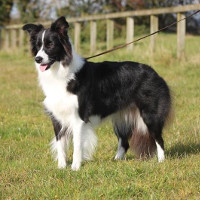
| This cautious canine breed is thought to have existed before 1800. While the Border Collie itself was not known by name, there were many working dogs that possessed unique herding styles at the time. In 1860, the Birmingham Dog Society brought the Border Collie to light by organizing classes for Scotch Sheep Dogs. The first Border Collie standard was developed in 1906. In 1995, the American Kennel Club officially recognized the Border Collie. | ||
 |
||
| Standard of the Border Collie | ||
A little of the St. Bernard |
||
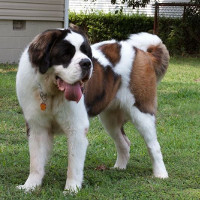
| The Border Collie Bernard's other parent breed, the Saint Bernard Dog, is a massive breed also known by a plethora of other names: the Alpine Mastiff, the Alpine Dog, the Alpine Spaniel, the Barry Dog, the Good Samaritan Dog, the Holy Dog, the Monastery Dog, the Mountain Dog and the Saint. Over the years, the Saint Bernard Dog has saved more than 2,000 lives in the Swiss Alps. Its talent for rescue is impressive, and the breed has an excellent track record. In 1810, the breed was first introduced in England under various names. In 1830, the St. Bernard was crossed with the Newfoundland to rid it of severe diseases. In 1885, the breed was officially recognized by the American Kennel Club. | ||
 |
||
| Standard of the St. Bernard |
Appearance of the Border Collie Bernard |
| The Border Collie Bernard has some of the dominant characteristics of the Border Collie in terms of facial expression. It strongly resembles the Chien du Saint-Bernard with its hard, rough, dense coat. Color combinations resemble the Saint Bernard with either brown and white, or dark brown and white. The breed also resembles the Chien du Saint-Bernard with its mask-like face. Eye colors will generally give a rich brown, but have been known to sometimes appear with light brown or blue. The color of the nose is usually always black. Ears may resemble either parent breed and may vary on each litter. The size and weight of this hybrid can vary considerably, even in siblings from the same family. |
Temperament of the Border Collie Bernard |
| The Border Collie Bernard is a gentle breed that may prefer to spend time relaxing on the sofa rather than running around with you all day, due to its parent breed, the Saint Bernard Dog. However, the Border Collie can add a little activity to your hybrid's character. Meeting strangers may require more time, as this loyal dog will want to protect you. Once it's clear that the stranger is welcome, the Border Collie Bernard will follow them around and pay attention. This breed can be cautious around children and requires supervision in addition to early training to avoid any incidents of aggression out of fear. Although the breed is generally calm, it is important to be proactive with other animals and dogs. Border Collies and Saint Bernards are stubborn but eager learners. It's important to give it the time and patience it needs to learn how to behave with its family and others. Positive reinforcement and treats will make for a happy dog. |
Needs and activities of the Border Collie Bernard |
| The Border Collie Bernard has a moderate energy level due to the low energy level generally seen in the Saint Bernard Dog, although the Border Collie brings a high energy level to the mix. Thriving in a home with a large, spacious yard, this hybrid will love the freedom to explore and roam outdoors. Remember that both parents are working breeds, so the mental aspect of their daily activities is an important part of their heritage. This canine breed will do best with an active lifestyle. Agility and obedience trials are two of the many options. Stimulate your hybrid mentally and physically and he'll be ready to relax on the couch at the end of the day. While the Saint Bernard is used to extremely cold temperatures, it's important that the Border Collie Bernard stays in an average climate. |
Maintenance of the Border Collie Bernard |
| Your Border Collie Bernard is not a hypoallergenic dog and will shed moderately like many other breeds. The Saint Bernard is a gentle giant who spends much of his time drooling. Apply it to the Border Collie Bernard and take steps to ensure his mouth is always clean. His coat is generally short and dense, making grooming relatively easy. Brush the coat daily with a stiff bristle brush and comb once a week. The coat may need a light trimming every 6 to 8 weeks. This hybrid's ears should be checked regularly for moisture build-up leading to yeast growth. Teeth and nails should also be well cared for, with nails trimmed every few weeks and teeth brushed daily. |



 English (United Kingdom)

Comments