
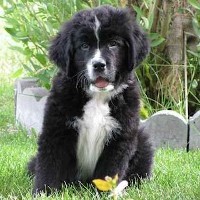
 |
Bernefie |
|
He is not recognized by the F.C.I. |
Origin |
Switzerland <> Canada -> U.S.A. | |
Translation |
Francis Vandersteen | |
This breed is also known as |
New Mountain Bernese
|
A brief presentation of the Bernefie |
| The Bernefie is a breed that was developed by crossing the Bernese Mountain Dog and the Newfoundland Dog, both of which are giant-sized dogs with coats that enable them to live in colder as well as warmer temperatures. Both parent breeds were developed to work in draft, breeding and farm situations. Both parent breeds are gentle, affectionate, loyal and intelligent. Both breeds require daily brushing of their long, thick coats to reduce shedding, avoid matting and keep them clean. The Bernese Mountain Dog was developed in the farmlands of Switzerland, while the Newfoundland was developed on the island from which it takes its name, the island of Newfoundland. |
History of the Bernefie |
| The Bernefie hybrid is a cross between two very large purebred dogs, the Bernese Mountain Dog and the Newfoundland Dog. These two parent breeds were developed for similar purposes of retrieving, breeding, guarding and companionship. Both parent breeds have thick, dense coats that protect them from colder temperatures and, in the case of the Newfoundland parent, the coat is double-layered, flat and oily, making it water-resistant for its hunting and waterfowling duties. The two parent breeds also have very similar temperaments, being described as gentle, affectionate, intelligent and loyal. The Bernese Mountain Dog was developed in the agricultural lands of Switzerland, and the Newfoundland Dog was developed on the icy island of Newfoundland, from which it takes its name. Both the Bernese Mountain Dog and the Newfoundland Dog are recognized by the American Kennel Club. |
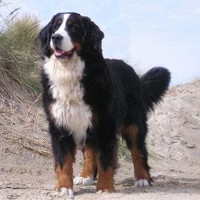
A little of the Bernese Mountain Dog |
||
| Bernese Mountain Dogs are large, loyal dogs with a docile, calm character. They were originally developed in Switzerland as versatile farm dogs to look after livestock, guard and also as draught dogs. Today, they are better known as excellent companions and are a popular choice for pets due to their good nature and trustworthy temperament with children. They have a thick, drooping coat, but are easy to care for and should only come in tricolor. Although docile, the loyalty and size of Bernese Mountain Dogs, as well as their protective nature towards their families, can mean they make good watchdogs. They are generally easy to train, with a willing character and average exercise requirements. As a large dog, the breed has a relatively short lifespan and can suffer from a number of health problems. It is therefore important to choose a healthy family. | ||
 |
||
| Standard of the Bernese Mountain Dog | ||
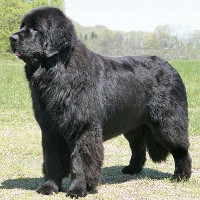
A little of the Newfoundland |
||
| Newfoundland Dogs were developed in the coastal towns of northern Canada, most notably in the fishing village of St. John's, where they were known as Greater St. John's Dogs. Although most theories indicate that Newfoundland Dogs are descendants of the Tibetan Mastiff, there is no evidence of Tibetan Mastiffs in the region, and no known indigenous dogs in the area. Whatever the breed's origins, it developed into a very large dog, perfectly suited to helping fishermen in the cold, harsh environment of the Newfoundland region, and by the late 1700s, the Newfoundland Dog breed had become common along these shores. | ||
 |
||
| Standard of the Newfoundland |
Appearance of the Bernefie |
| The Bernefie has a strong, robust body that is proportionate, often weighing between 32 and 45 kilos at maturity. They have a round head with a medium-length muzzle and a black nose with open nostrils. Their dark eyes are round and give a facial expression of intelligence, sensitivity and friendliness. Their silky ears usually fold back and hang close to the head, and require regular checking and cleaning to stay healthy. The coat is very dense and can be short or medium-length, solid black, solid brown, brown and black, brown and white, black and white or tricolored and soft to the touch. |
Temperament of the Bernefie |
| The Bernefie temperament comes from its two purebred parents, both of whom have very similar temperaments. Bernefie dogs are highly intelligent, which makes them incredibly easy to train if done with good communication between man and dog that comes from early socialization to help the dog understand what is expected of him. They are affectionate, gentle, loyal, generally cheerful and courageous. They will protect when truly needed, but will probably do so by positioning themselves between the family member in danger and the potential danger rather than attacking. They have moderate energy levels and need their daily walks to avoid becoming overweight. They are perfect with children as well as with other animals. They are a little wary of strangers, so it's very important to socialize them as early in life as possible. They have a lot of love to give to their human family and will bond closely with them. |
Needs and activities of the Bernefie |
| Your Bernefie will need daily exercise to help keep his weight under control, as he has a tendency to put on weight. He'll have more energy when he's younger, but the need for daily walks and recreation continues even as he ages to keep him healthy and fit. The Bernefie is not a sedentary dog, so it's not as well suited to apartment living as it is to a house with a fenced-in yard. They can live in rural or urban areas, as long as they have access to enough space for daily exercise. Because it has a thick, dense coat, it can tolerate colder temperatures, while the same coat will also enable it to tolerate warmer temperatures. |
Maintenance of the Bernefie |
| Bernefies require moderate maintenance. It should be brushed several times a week to prevent matting and remove debris. He won't need bathing unless absolutely necessary, so as not to strip the natural oils from his coat. As with almost all canine and hybrid breeds, regular dental check-ups and cleaning are necessary to avoid periodontal disease and tooth loss. Regular checking and cleaning of his ears will also be necessary to keep them in good health. Your Bernefie will shed at moderate levels, with shedding increasing with the season. This hybrid is not hypoallergenic, so care should be taken if there are asthmatics or family members in the household with other respiratory problems. They have a low to medium odor level. |



 English (United Kingdom)

Comments