
 |
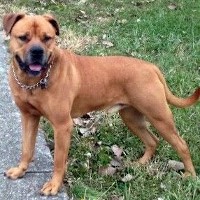
American Masti-Bull |
|
He is not recognized by the F.C.I. |
Origin |
U.S.A. <> Great Britain -> U.S.A. | |
Translation |
Francis Vandersteen |
A brief presentation of the American Masti-Bull |
| The American Masti-Bull is a hybrid breed created in the USA in the 1960s. The breed was developed by crossing the American Bulldog with the Mastiff to create a large, giant dog that can be loyal and affectionate with its family, as well as an aggressive guard dog in times of need. The Masti-Bull needs little grooming, but will drool a lot, often more than first-time owners expect. Although not a very active breed, this dog needs daily exercise to avoid the vices of boredom and keep him in good health. |
History of the American Masti-Bull |
| The American Masti-Bull is an American hybrid dog that is a cross between an American Bulldog and a Mastiff, also known as an English Mastiff. This hybrid breed is also known as American Bandog Mastiffs, a term that can become a little confusing. It's used to designate hybrids produced by crossing any type of Bulldog with any type of Mastiff. Originally, this hybridization would have begun in the 1960s with two specific breeders, namely John Swinford, an American veterinarian who wanted to breed the best guard dog, and Joe Lucero, who called his dogs American Bandog Mastiffs. |
A little of the American Bulldog |
||
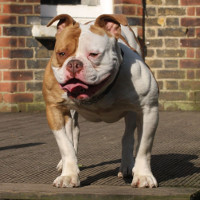
| The American Bulldog more closely resembles the 17th-century bull-baiting dogs from Great Britain than the English Bulldog, and is thought to have come to the United States during the colonial period and been used as bait for bulls, bears and buffalo. In the southern states, they were used by farmers to catch wild hogs and cattle. The modern American Bulldog can trace its roots back to these southern ancestors who survived in Alabama and Georgia. The breed gained popularity in the 1980s as a guard and family dog, but is still not recognized by the AKC. | ||
 |
||
| Presentation of the American Bulldog | ||
A little of the Mastiff |
||
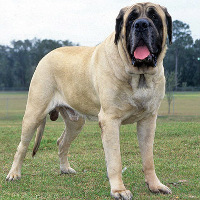
| The Mastiff is also called the English Mastiff and was originally bred as a guard dog. The Mastiff's date of origin is unknown, but Caesar left written records of the breed in 55 BC after the Romans had invaded Britain. Even older accounts of Mastiffs were found on ancient Egyptian monuments dating back to 3000 BC. The Mastiff was recognized by the AKC in 1885. | ||
 |
||
| Standard of the Mastiff |
Appearance of the American Masti-Bull |
| The American Masti-Bull is a large hybrid dog bred by crossing an American Bulldog with a Mastiff. Although shorter than a Mastiff, it retains the giant dog's thick bones. Like the Bulldog, it is highly muscular and can weigh over 45 kilos. A broad, deep chest is supported by strong legs. A well-muscled neck supports a head with larger-scale American Bulldog characteristics. A small sniff leads to a broad nose. The coat is made up of fine, short, dense hair close to the body. Coat colors can range from brindle, fawn, brown, black, blue, red and white. Any colored coat may have white markings. |
Temperament of the American Masti-Bull |
| The American Masti-Bull is a loyal and intelligent breed, but needs a strong, confident leader. Training can be difficult for first-time dog owners who are unfamiliar with communicating with dogs. The American Masti-Bull can quickly go from gentle companion to aggressive protector, so an ideal owner for this breed is someone who knows dogs' instincts. It's important to set the rules right from the start, as this large breed can be brave and stubborn. |
Needs and activities of the American Masti-Bull |
| The American Masti-Bull is a gentle giant and an affectionate family companion that thrives on attention. This outgoing, playful dog gets on well with children and can even become a babysitter. He can be an excellent watchdog when he perceives a threat, and is not overtly aggressive towards strangers in these circumstances. If well socialized from the start, Masti-Bulls can live peacefully with other pets. If this important socialization doesn't occur, it could lead to aggression towards other dogs. This moderately energetic breed needs regular exercise, such as walks or trips to the dog park, or may develop undesirable destructive behaviors when left alone. |
Maintenance of the American Masti-Bull |
| The American Masti-Bull requires little care, as it sheds only moderately. This breed's fine, short coat needs regular brushing with firm bristles or a rubber brush to reduce shedding by removing dead hairs and dandruff. An occasional bath will keep the coat clean and healthy, but should not exceed once a month. The American Masti-Bull is not a hypoallergenic breed. Regular monitoring and cleaning of the ears and eyes can reduce the risk of infections. In addition, monitoring the skin for any signs of allergies or infections can alert you to problems the breed may be at risk of. |



 English (United Kingdom)

Comments