
 |
American Eagle Dog |
|
He is not recognized by the F.C.I. |
Origin |
U.S.A. <> Great Britain -> U.S.A. | |
Translation |
Francis Vandersteen | |
This breed is also known as |
Eskimo Beagle
|
A brief presentation of the American Eagle Dog |
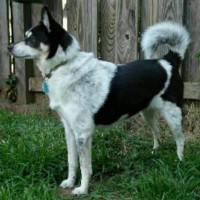
| The American Eagle Dog is a hybrid of the Beagle and the American Eskimo Dog. Although little is known about its history, this new breed has proved attractive and has a lively, loving nature that is proving popular with families. Their body is like the American Eskimo Dog and their head has well-defined Beagle characteristics. They are small to medium-sized dogs with an affectionate, loyal nature and an outgoing, confident personality. An excellent description of this breed is that it is a happy, contented dog. |
History of the American Eagle Dog |
| The word American in this breed's name comes from its parent breed name, the American Eskimo Dog, and does not refer to its origin. With limited information available on the new hybrid, we have to assume that it has the best characteristics of both parent breeds. The new hybrid gives a new take on the stunning coat coloring and texture of the American Eskimo Dog, although the coat is not as dense, making it easier for the dog in warmer climates. The American Eagle Dog has a friendly outgoing personality, is eager to please, loves activity and play, and enjoys being with its human family. |
A little of the American Eskimo Dog |
||
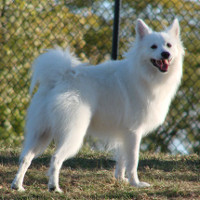
| The American Eskimo Dog, also known as the Eskie, is a small to medium-sized Nordic-type dog bred in three sizes: Toy, Miniature and Standard. The Eskie has a glossy white coat, distinctive black facial features on the nose, lips and eyes, and triangle-shaped ears that stand upright. The Eskie breed has a double coat consisting of a short undercoat and a long outer coat that stays away from the body and requires brushing twice a week to prevent matting. Like other Spitz breeds, the American Eskimo Dog loves to run and requires daily exercise, but is calm and well-behaved indoors. | ||
 |
||
| Presentation of the American Eskimo Dog | ||
A little of the Beagle |
||
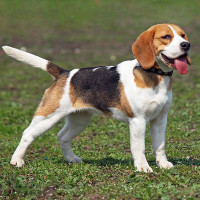
| It is said that the larger Foxhound gave birth to the Beagle to accompany men on foot when hunting, preferably hares. Today, they are still used in packs, often organized by institutions such as universities and schools. A lively, ardent little dog, brimming with enthusiasm and energy, always ready for any activity he's called upon for. This breed reflects athleticism, and there's nothing more beautiful than a pack of Beagles in full pursuit, heads bowed to follow the scent of a track, tails tipped high in the air as they concentrate on the hunt. During the reigns of King Henry VIII and Queen Elizabeth I, wire-haired Beagles existed, so small they could be tucked into the pocket of a hunting jacket. Over the years, the dogs have become larger, although pocket Beagles are still sometimes born. | ||
 |
||
| Standard of the Beagle |
Appearance of the American Eagle Dog |
| Depending on whether your American Eagle Dog is male or female, weight will vary between 9 and 22.5 kilos, making this hybrid a small to medium-sized dog breed. The coat is generally thick, dense and straight, requiring constant brushing, and can vary in color, including cream, white with cream, black and white with brown. There may be a mane-like appearance around the neck, although this distinct characteristic is most often seen in males of the breed. The ears are often floppy, and the eyelids, nose and pads are most often black. |
Temperament of the American Eagle Dog |
| This specific crossbreed or hybrid dog is highly intelligent, affectionate and loving, making the breed an excellent family dog or companion. They are extroverts who can be trained easily if they have a firm but not harsh leader, and like consistency in all things. The American Eagle Dog is energetic and playful, and loves to take part in family games. They like to be with their family and don't like to be left alone for long periods. If left alone in a small yard, the dog can be quite destructive and has nothing to do but fall into mischief. The American Eagle Dog combines the best characteristics of its parent breeds, the Beagle and the American Eskimo Dog. The Beagle was bred for hunting and likes to follow its nose, while the American Eskimo Dog was often used as a circus performer performing tricks. Both breeds are attractive and intelligent. By forming a hybrid breed from the two, a dog was produced that was sociable, easy to train and excellent with children. However, they are known to chew and dig unless they are busy and trained to behave. They adapt well to apartment life if they get plenty of exercise, although they can be barkers. These dogs learn and adapt very quickly to patient training. |
Needs and activities of the American Eagle Dog |
| The American Eagle Dog loves activity, whether it's training, walking, swimming or simply playing with the family. They'll be the first to join you in whatever you do. They're easy to train and learn quickly if you give plenty of praise, treats and rewards to keep them interested. Children and your American Eagle Dog will get along well if children learn to play safely with dogs and treat them properly. If your dog is socialized from an early age, he'll be a loyal and loving companion. Because this breed is very active and curious, a well-fenced yard is important to keep them from wandering off. They should not be trusted with smaller animals, as they tend to see them as prey and chase them away. Because they are small dogs, they can adapt to life in an apartment if they go for walks during the day. But true to their Beagle history, they can be barkers, unless trained otherwise, which can make apartment living difficult. |
Maintenance of the American Eagle Dog |
| The American Eagle Dog has a beautiful, dense coat and is classified as a medium excretor. The coat is easy to clean and your dog should be brushed daily to keep it looking its best. There will be hair around the house, so you need to decide whether you're happy to vacuum forever. A bath is only necessary when your dog really needs it, for example when he's rolled something smelly or got covered in mud. Once a week, you should check the ears for inflammation and wipe them gently with a damp cloth. Don't push anything into the inner ear in case of injury. Like you, your dog needs to keep his teeth clean, and brushing three times a week should suffice. It's a good idea to train your dog when he's a puppy to get you used to checking his ears, teeth and eyes, as this will help you later when he's mature. These dogs enjoy their food and anyone else's if they can persuade them to put it back, so watch out for weight gain. |



 English (United Kingdom)

Comments