
 |
Bo-Dach |
|
He is not recognized by the F.C.I. |
Origin |
U.S.A. <> Germany -> U.S.A. | |
Translation |
Francis Vandersteen |
A brief presentation of the Bo-Dach |
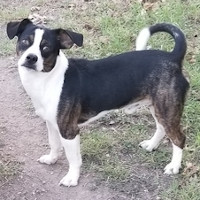
| Both the Boston Terrier and the Dachshund have a unique and distinctive appearance, while their offspring, the Bo-Dach, can vary in appearance. In general, they are sturdy little dogs with large triangular ears that tend to turn forward, a long body and fleshy limbs. Their coat can be virtually any color and is usually short. Bo-Dach dogs have a pleasant temperament and are sociable with humans and other pets. They can thrive in small houses and apartments and don't require high levels of exercise, making them a good choice for the modern urban owner. |
History of the Bo-Dach |
| Like many other hybrid dogs, the Bo-Dach was created in the late 1900s, when demand for specific crossbreed dogs was at its peak. Owners appreciated the diversity of dogs suddenly available on the market, and breeders took advantage, developing as many crossbreeds as they could. When bred correctly, these dogs have the potential to inherit the best characteristics of each parent breed, making them highly desirable. |
A little of the Boston Terrier |
||
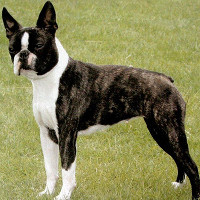
| Boston Terriers have wise faces, intelligent eyes and a popular black-and-white tuxedo coat. Although small, they have big personalities and never lack confidence. An American dog descended from a large number of breeds, including the Boxer, Bull Terrier and Bulldog, the Boston Terrier has a varied gene pool. They take their name from the region of origin in the United States, Boston, Massachusetts. The earliest examples of the breed were much larger than the Boston Terriers we know and love today. They were developed in the late 19th century, although they weren't officially recognized by the Kennel Club until 1914 and remain in their public service group today. | ||
 |
||
| Standard of the Boston Terrier | ||
A little of the Dachshund |
||
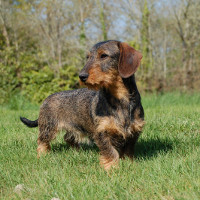
| Dachshunds have recently gained in popularity thanks to their appearance in several advertising campaigns and TV shows. They are appreciated for their gentle dispositions, long ears and comically elongated backs. However, we now understand the impact that breeding for exaggerated conformation can have, and there have been calls to start breeding Dachshunds with more normal backs in order to reduce the incidence of spinal disease within the breed. Although it may seem hard to believe, these dogs were originally developed as working dogs. They used their keen sense of smell to search for a number of animals, including badgers and foxes. Their short legs gave them the advantage of being close to the ground, enabling them to pick up even the faintest scents. This breed comes in a variety of coat sizes and lengths. So, technically, there are six Dachshund variants, each of which can be used in Bo-Dach breeding. | ||
 |
||
| Standard of the Dachshund |
Appearance of the Bo-Dach |
| The appearance of Bo-Dach dogs is very different, as they are relatively new and come from two very different parent breeds. They are generally compact and robust. Their skull is rather small, and their muzzle should not be too short. They should have a broad, dark nose with wide-open nostrils. Their ears can potentially stand upright in erect triangles, but generally hang semi-erect. They should be set wide apart. They have a long, barrel-shaped body and short limbs that make them always close to the ground. Their tails can be of various lengths and shapes, depending on the genes they inherit. A small breed, Bo-Dachs measure between 25 and 38 cm at the withers. Small and compact, they tend to weigh between 4.5 and 7 kg. The Bo-Dach's coat is normally short and straight, but can be longer and wiry depending on the Dachshund variant from which they were bred. They come in a wide range of potential coat colors, including the classic black and white of their Boston Terrier parent, brindle, brown and black, among many others. |
Temperament of the Bo-Dach |
| Affectionate and good-natured, the Bo-Dach is a true family dog that likes to be right at the heart of everything that's going on. They're outgoing and courageous, with heaps of self-confidence. As they can be rather noisy, it's advisable to spend time with younger children, as they're known for their excitement. Fabulous watchdogs, no one will go unnoticed in the Bo-Dach household. The second a new person arrives, they announce their presence to everyone, barking and running at full speed. In fact, some owners may find their yapping frustrating at times. Because of their small size and friendly temperament, they would make a poor choice of guard dog. Although their Dachshund parent was used for hunting, Bo-Dachs' prey drive should not be overdeveloped and, if they are raised around other animals, such as cats, they should be tolerant of them. As for other dogs, they enjoy their company immensely, and take the opportunity to let off steam by running around dog parks and day-care centers. |
Needs and activities of the Bo-Dach |
| These dogs are known to be excellent companions with quirky personalities. They are good with children and love to play games and be with their people. Although Bo-Dach are highly intelligent, they can be difficult to train as they can be stubborn. To make training easier, plan shorter, more engaging training sessions so you don't get bored. They need to be socialized early to get along with other animals so you can take your Bo-Dach to the dog park to play. Although very friendly, they can be possessive and wary of strangers, which makes them good guard dogs. |
Maintenance of the Bo-Dach |
| The Bo-Dach's short, tight coat makes it a relatively easy hybrid to care for. Using a firm bristle brush on their coat once a week should be all that's needed to keep your Bo-Dach looking and feeling good. They only need to be bathed if absolutely necessary with a mild dog shampoo. Bathing them too often can make their skin dry by removing the necessary natural oils. You should also clean your dog's ears for dirt and debris once a week, and trim their nails when they become too long. Brushing their teeth with a toothpaste specially formulated for dogs is also recommended once or twice a week. |



 English (United Kingdom)

Comments