 |
Yo-Chon |
|
He is not recognized by the F.C.I. |
Origin |
Great Britain <> France / Belgium -> U.S.A. | |
Translation |
Francis Vandersteen |
A brief presentation of the Yo-Chon |
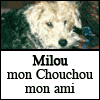
| A cross between a Yorkshire Terrier and a Bichon Frise, the Yo-Chon is a lively little dog with a fun-loving personality. They thrive around people and don't want to spend too much time alone. Curious and intelligent, these guys are quick to learn and make wonderful training companions. It's hard not to fall in love at first sight when you're introduced to a Yo-Chon for the first time. These little guys have warm, welcoming eyes with a mouth that always seems to be smiling. Their coats are lean but endearing and come in a number of colors, the black and beige combination of the Yorkshire parent being the most often seen. |
History of the Yo-Chon |
| The Yo-Chon is a delightful little bundle of fur with a super personality that was developed over the last few decades in the USA. This cross is also sometimes known as the Bichon Yorkie. More and more specific cross-breed hybrids are being created, with smaller, cuter dogs tending to be used more frequently. While there may not be much to say about the history of the recently established Yo-Chon, we certainly know a lot about its parents, both of which are popular breeds worldwide. |
A little of the Yorkshire Terrier |
||
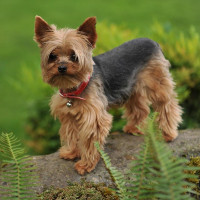
| The Yorkshire Terrier was developed in the 1800s in Yorkshire, a county in northern England. A number of different Terriers were used to create them, including the similar-looking Skye Terrier and the now extinct Black and Tan Terrier. Many are surprised to learn that the Yorkie was never bred at the knee, but used as a ratter, a job he could perform with great success thanks to his tenacity, fierce and determined nature. Although the Yorkshire Terrier is no longer used for this purpose, it remains popular in England and elsewhere thanks to its small size and courageous nature. | ||
 |
||
| Standard of the Yorkshire Terrier | ||
A little of the Bichon frise |
||
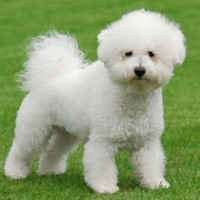
| The Bichon Frise is prized the world over for its permanent white coat and sociable nature. Despite its name, it's not a French dog and is actually thought to have originated on the Spanish island of Tenerife. Once sailors began exporting the breed to Europe, the French refined their appearance and soon became popular with the French and Spanish aristocracy. An interesting fact is that the Bichon Frise was once used in the circus to perform tricks. This position suited them so well because of their fun, clownish attitude and ability to obey orders and interact well with others. Today, the Bichon Frise is no longer part of the circus circle and spends his time relaxing at home and playing with the family's children. | ||
 |
||
| Standard of the Bichon frise |
Appearance of the Yo-Chon |
| The Yo-Chon is a small dog with a clean, compact body and circular skull. Their ears are triangular in shape and generally flop forward, although they can stand upright in some individuals. Their beautiful eyes are round and dark brown, with an alert, teasing expression. Their muzzle is fairly short and their black nose is relatively small and button-like. Yo-Chons tend to have a coat type that lies somewhere in the middle of the Bichon's curls and the Yorkshire's silky coat. Many will have a wavy coat that looks a little unkempt and comes in a range of colors, including white, black, brown and cream. Although solid coat colors are possible, most dogs will be bicolored and a small handful will be tricolored. The Yo-Chon reaches heights of between 22 and 30 centimeters and weighs between 2.7 and 3.6 kilos, making it a very small dog. Thanks to the Bichon's denser bones, they are more robust than their Yorkshire relative, with a more compact body. |
Temperament of the Yo-Chon |
| Although independent, the Yo-Chon is happiest when surrounded by loved ones and enjoys spending time in the company of its family, even if it's just relaxing in the same room. Although they're happy to explore their own means or play with their toys in the next room for a short while, they'll soon seek out their master, eager to know what they're missing. Very affectionate and gentle, Yo-Chon are renowned for being incredibly affectionate with all members of their family, and are quick to warm up to new people. They are generally good with children, but should always be supervised purely because of their small size. Although Yo-Chon can be taught to get along with other pets, they have a relatively high prey drive and will generally pursue smaller animals, especially rodents. Most will tolerate other dogs, although some may try to assert their dominance. All Yo-Chon owners should be aware of the condition known as Small Dog Syndrome, which occurs in spoiled and pampered small breed dogs. These dogs can be hostile with new people and resistant to training. Many are nervous and will growl when approached or when their toys or food are touched. Sensible ownership should prevent this syndrome from developing. |
Needs and activities of the Yo-Chon |
| Although the Yo-Chon is neither lazy nor careless, it doesn't require much exercise. For most of them, indoor playtime and a brisk outdoor run should satisfy them. This makes it the ideal companion for those who are unable to walk for very long or live in a built-up urban area. While Yo-Chon may not require much exercise, it does require a great deal of mental stimulation. Without this, dogs are prone to behavioral problems, such as constant barking or destroying furniture. Puzzles, interactive toys and a variety of games and activities should be used, as owners seek to keep things varied and ensure that their learning lasts a lifetime. |
Maintenance of the Yo-Chon |
| The Yo-Chon's medium-length coat can be brushed two to three times a week, with owners concentrating on areas prone to tangling, such as the face, belly and tail. Many will have tear stains, black fur under the eyes, due to the shape of their heads, and specific cleansers can help reduce the appearance. Those with floppy ears need weekly ear cleaning, and those with fur in the canals can benefit from ear picking. Yo-Chon owners should strive to brush their dog's teeth daily, or at least every other day. This can dramatically reduce the incidence of periodontal disease, and will avoid the need for dental cleanings at the vet as often. |



 English (United Kingdom)

Comments