
 |
Wee-Chon |
|
He is not recognized by the F.C.I. |
Origin |
Great Britain <> France / Belgium -> U.S.A. | |
Translation |
Francis Vandersteen | |
This breed is also known as |
Highland Frise
|
A brief presentation of the Wee-Chon |
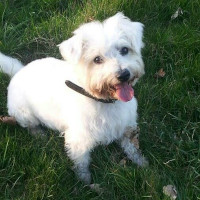
| The Wee-Chon is a small, teddy-bear-looking dog born of a cross between a West Highland White Terrier and a Bichon Frise. They measure between 23 and 30.5 centimeters and weigh up to 7 kilos. They are usually white, but sometimes black and white. These dogs have a long coat that can be straight or wavy. Wee-Chons are very affectionate family members who love to play with children and are very gentle with the elderly. These hybrids form strong bonds with their owners, and are very loyal. They'll keep you company at all times, and are easy to train. |
History of the Wee-Chon |
| The Wee-Chon originated in the United States as a cross between a West Highland White Terrier and a Bichon Frise. |
A little of the West Highland White Terrier |
||
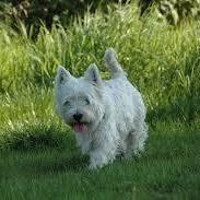
| The West Highland White Terrier, also known as the Westie, originated in Scotland. Its history is shared with other Terriers such as the Skye, Scottish, Dandie Dinmont and Cairn. Westie dogs were used to hunt foxes and get rid of rats and other vermin. The Westie is thought to be related to a breed of small earth dogs that were given to the King of France in the 17th century. The common belief is that the West Highland White Terrier is all white due to an accident in the 19th century. One day, while Colonel Malcolm de Poltalloch was out hunting, he mistook one of his Westies for a fox and shot it. The colonel was devastated by this loss and began breeding only white dogs, so as not to confuse them with foxes. The Westie was also known as the Poltalloch Terrier and the Roseneath Terrier. The breed was recognized by the American Kennel Club in 1908. | ||
 |
||
| Standard of the West Highland White Terrier | ||
A little of the Bichon frise |
||
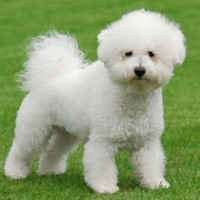
| The Bichon Frise is descended from the North African Barbet and is related to the Maltese, the Havanese, the Bolognese and the Coton de Tuléar. The Bichon Frise was introduced to France by sailors in the 14th century from Tenerife in the Canary Islands, although the breed is thought to have originated in Italy. The breed became very popular in royal circles during the reigns of King Francis I of France and King Henry III of England, in the 16th century. Bichons also became a favorite of Spanish royalty, and were depicted by great painters such as Goya. The breed lost popularity in the late 1800s, having become too common. French breeders became interested in the Bichon Frise again after the First World War, and a breed standard was drawn up in France in 1933. The breed was known as the Bichon et de Ténériffe, but later that year, the breed was named the Bichon à poil frisé. The Bichon Frise came to America in 1956 and was recognized by the American Kennel Club in 1975. | ||
 |
||
| Standard of the Bichon frise |
Appearance of the Wee-Chon |
| The Wee-Chon is a small dog. They weigh up to 7 kilos and range in height from 23 to 30.5 centimeters. This hybrid is usually white, but can rarely be black and white. The Wee-Chon has a soft-looking face. They have a triangular-shaped head with a fairly short, flat muzzle. Their ears can be erect or folded, their eyes are rounded and dark, and their nose is black. They have a long, double-coated coat, the texture of which varies according to the parental breed from which they take their inspiration. Your Wee-Chon may have a straight, silky coat, or a wavy, rough coat. |
Temperament of the Wee-Chon |
| If you're looking for a cheerful, affectionate companion, the Wee-Chon is the dog for you. This hybrid is a very gentle, affectionate and playful dog that looks like a teddy bear. He's a very affectionate member of the family and adores children. He can't wait to play with children and cuddle them. He's also very gentle with the elderly. They are quite intelligent and like to please their masters, so they quickly follow commands and are easy to train. However, it's important to socialize them as puppies to avoid small dog syndrome. If properly trained, these dogs are very friendly towards other animals and dogs. They are companion dogs and suffer from separation anxiety if left alone for long periods. However, having toys to entertain him when he's left alone is very helpful. |
Needs and activities of the Wee-Chon |
| The Wee-Chon is an active little dog. He tends to put on weight and needs daily activity to stay healthy and happy. A 20-30 minute walk will help expend his energy and keep him healthy. Likewise, taking him to a park where he can run around off-leash and play with other dogs is an excellent activity. It's important to release energy to prevent your dog from chewing on objects, as he becomes destructive when bored. Having toys will also keep him entertained. This hybrid adapts well to apartment living, but having a fenced-in area to run and dig would be much appreciated. Beware, he likes to dig, so keep him away from gardens. |
Maintenance of the Wee-Chon |
| Wee-Chon dogs are hypoallergenic and rarely shed, making them an excellent companion for allergy sufferers. However, their fur is long and tangles easily, so daily brushing is recommended. You can brush with a pimple brush and use a long-bristle brush for knots and tangles. Don't forget to brush him before bathing, otherwise the knots will tighten. You'll need to trim his hair from time to time, especially around the eyes, ears and legs, to avoid potential problems. Because of his color, you may want to use eye drops to avoid staining the tears. Check and clean his ears weekly, using ear cleaner and a cotton ball to remove debris. You should also trim his nails every month and brush his teeth daily to prevent dental problems. |



 English (United Kingdom)

Comments