 |
Frengle |
|
He is not recognized by the F.C.I. |
Origin |
France <> Great Britain -> U.S.A. | |
Translation |
Francis Vandersteen |
A brief presentation of the Frengle |
| Get ready to meet a new canine crush, the Frengle. This delightful dog is the result of crossing a Beagle with a French Bulldog. The result is a compact, energetic dog that loves to snuggle. Frengles are small in size but big in character. They're sociable, affectionate and eager to please, with just a hint of stubbornness - don't say you weren't warned. When socialized as puppies, they make excellent family dogs who love attention and enjoy being around children. Another advantage of the Frengle is that the Beagle influence gives it a slightly longer muzzle, which reduces the breathing difficulties associated with the breed. |
History of the Frengle |
| Over the past two decades, dog breeders have been experimenting like never before. Instead of concentrating on maintaining the purity of breed lines, they are trying out crossbreeding. This has the potential advantage of reducing some of the health problems associated with a particular breed - in this case, the French Bulldog's flat face, which can cause respiratory problems. As a result, the Frengle is a relatively new development with no traceable history. To get to the breed's roots, it's best to look at their parents. |
A little of the French Bulldog |
||
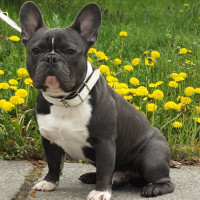
| The French Bulldog is, as its name suggests, a French dog that originated in the 1800s and was kept as a pet. They were developed by mixing the larger English Bulldog with several smaller terriers when the English Bulldog fell out of fashion with the outlawing of blood sports, such as bullfighting and dog fighting. The French Bulldog has been in high demand in recent years and is considered a highly desirable pet. | ||
 |
||
| Standard of the French Bulldog | ||
A little of the Beagle |
||
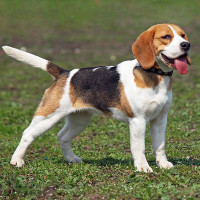
| The Beagle has a long and interesting history. Their ancestors date back to 4 BC and Roman descriptions of dogs sounding very Beagle-like. It is likely that these little dogs spread throughout Europe and were imported to England with the Norman invasion. They then bred with local hunting dogs to produce the dog we know today. The name Beagle is probably derived from the French word beugler. | ||
 |
||
| Standard of the Beagle |
Appearance of the Frengle |
| As a hybrid dog, the puppies' appearance is influenced by both parents. This can result in puppies with a stronger French Bulldog or Beagle appearance. However, the majority of puppies will be a fusion of the two and very cute. A typical Frengle is a small but stocky dog with a broad chest. They often have a wedge-shaped body, in homage to the French Bouledogue, which is longer than it is tall, a Beagle influence. Their heads generally have a longer muzzle than the French Bouledogue, but they can inherit some of its wrinkles. The ears are a marvel to behold, being a mix of those French Bulldog bat ears and the Beagle's superb velvet flaps. The result is often an expressive velvet ear flap slightly raised at the base. As for their tails, the Beagle genes often win out. The tail is straighter than that of the French Bulldog. Their coloration can vary enormously, from a fawn-like Bulldog with a black muzzle, to the Beagle's white and tan patches and all shades in between. |
Temperament of the Frengle |
| A Frengle wants to be where people are. They are friendly dogs who love to play and will always indulge in a game. They are eager to please, which makes them a pleasure to live with. However, they can have a hunting streak. This can make training sometimes frustrating if the Frengle detects an interesting scent, which it considers to take priority over your message. Frengles need to be properly socialized as puppies. This builds their confidence in a positive way and reduces the risk of them being overly anxious or reactive. They are an active breed and need plenty of exercise. If this need isn't met, they can develop bad habits, such as barking or destroying odors in the house. But that said, if you're not already in love with the Frengle, know that it loves to snuggle. |
Needs and activities of the Frengle |
| Although only a small dog, the Frengle has a lot of energy and needs a good walk every day to keep him in shape. Ideally, a morning and evening walk is best, but if there's plenty of activity, they'll be fine. These are dogs who will love to play in the secure dog park, interacting with all the other dogs with enthusiasm. They'll also love running, hiking and swimming with the family. The Frengle adapts well to all weathers, but take care not to exercise during the extreme heat of the day by providing shade and cool air conditioning if left indoors. |
Maintenance of the Frengle |
| Frengles have easy-care coats that shed very little. To keep them looking good, simply brush them once a week with a brush that lifts and removes scattered hairs, and wash them as needed. They can suffer from ear infections. Be sure to check their ears regularly and wipe them carefully with a soft, damp cloth to remove any dirt. Clipping their nails will prevent them from clicking around the house. Getting them used to brushing their teeth when they're young will help keep their teeth strong and healthy as they mature. |



 English (United Kingdom)

Comments