
 |
Cocker Pug |
|
He is not recognized by the F.C.I. |
Origin |
Great Britain <> China -> U.S.A. | |
Translation |
Francis Vandersteen |
A brief presentation of the Cocker Pug |
| The Cocker Spaniel and the Pug are popular companion dogs, which means that the Cocker Pug is likely to become a highly successful breed-specific crossbreed over time. For now, they're relatively new to the scene and have plenty of competition from similar mixed breeds that have appeared around the world, such as the Puggle and Cockapoo. The Cocker Pug is longer and leaner than the Pug, but less brachycephalic and with longer, wider ears. Incredibly gregarious, this breed loves spending time with its family. Although quick to learn, they can become easily distracted and display a persistent tendency, making them moderately difficult to train. |
History of the Cocker Pug |
| The Cocker Pug is a cross between an English Cocker Spaniel and a Pug. This specific crossbreed dog has probably been around for around two or three decades, although it's difficult to know the exact date of origin. Similarly, it's generally accepted that this mixed breed was first created in America, but records are lacking. As this new breed has such a limited history, we need to appeal to its parents to get a better idea of its origins. |
A little of the English Cocker Spaniel |
||
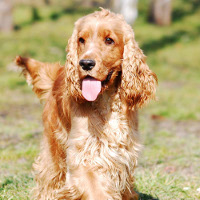
| The Spaniel is thought to have Spanish origins, with records dating back to the 1300s. Historically used as a hunting dog, the Cocker Spaniel hunted on land. Although many modern Cockers are kept as pets, they show dogs are still widely used today as working dogs. Around 100 years ago, the English Cocker Spaniel gave birth to the American Cocker Spaniel, a smaller, lighter, less athletic dog. | ||
 |
||
| Standard of the English Cocker Spaniel | ||
A little of the Pug |
||
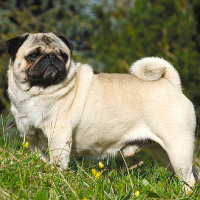
| The Pug dog has much older roots than the Cocker Spaniel. In fact, experts agree that Carlins were present in China before 200 B.C., where Chinese emperors kept them. They have always been a pocket dog and remain superb pets to this day. | ||
 |
||
| Standard of the Pug |
Appearance of the Cocker Pug |
| As the Cocker Pug is a fairly recent breed, there is still a great deal of variability within the population when it comes to their physical appearance. Over time and with repeated breeding, they will begin to develop a more uniform appearance. For the time being, buying a Cocker Pug puppy is a gamble and it can be difficult to predict which parent they will take in this lottery. Overall, this breed is quite similar to the Puggle, which is of course a Pug crossed with a Beagle. They have slim, well-muscled bodies, compact and supported by long, straight legs. They are always taller than the Pug, measuring up to 45 cm and weighing from 8 to 16 kg. While most individuals have a certain snub nose, their face will be more elongated than their Pug relative. Some facial skin folds are likely, and these are often more prominent on the nasal bridge. Their eyes are dark brown and their nose is generally black. The Cocker Pug's hanging ears are slightly wider than those of the Spaniel, but are certainly wider and longer than those of the Pug. The coat tends to be short and dense, however, a small number of dogs will have longer, wavy coats as seen on the Cocker Spaniel. The color of the coat is either black or pale. For those that are fawn in color, they will generally have a dark face mask. |
Temperament of the Cocker Pug |
| As both the Cocker Spaniel and the Pug have larger, more loving personalities, the Cocker Pug has a lot to offer. A truly social breed, these dogs appreciate nothing more than spending time with their families, and are passionate about it. They are closely bonded to all members of the family, and form particularly strong bonds with all the children in the household. Mischievous and playful, these little clowns will never say no to a game and don't take life too seriously. They are confident and courageous, able to adapt to a variety of situations and rarely develop anxieties or nervous behaviors. Most Cocker Pugs do well with other dogs, but should be introduced to them when they are still young. Caution is advised in the presence of smaller pets and cats, who may be considered more of a chasing toy than a friend. Perfect household companions, these pocket dogs are content to spend most of their day relaxing indoors. Once they've been given the minimum daily exercise requirements, they shouldn't need any more attention. |
Needs and activities of the Cocker Pug |
| Pugs tend to have low energy levels, whereas Cocker Spaniels are more energetic. Cocker Spaniels can have low to moderate energy levels and require up to 45 minutes a day of stimulating play and walks. The Cocker Pug is a social dog who loves to visit and make new friends at the dog park. Your hybrid can be laid-back, which can easily lead to weight gain. Daily walks and exercise are necessary to prevent obesity. Because Cocker Spaniels have a shorter muzzle, they can be sensitive to heat. During the hot summer months, they should be walked early in the morning or after sunset. Avoid walking him on hot asphalt, which could burn his paws. The Cocker Spaniel can live comfortably in an apartment or house, but playing and exploring in a fenced-in yard will make him very happy. The Cocker Spaniel is a family dog that attracts a lot of attention. To avoid boredom or keep him happy on his own, he should be provided with fun toys. |
Maintenance of the Cocker Pug |
| The Cocker Pug can have a medium to long coat. It should be brushed and combed several times a week, and may need occasional grooming by a professional groomer. Nails should be trimmed monthly. If you don't feel comfortable trimming his nails, you can ask the groomer or your vet to do so. Floppy ears should be kept clean to prevent ear infections caused by a build-up of bacteria. Your vet may recommend washing your dog's ears. It may be necessary to wash the Cocker Spaniel every month, especially if he likes to roll around on the ground during outdoor hours. If he has folds on his face, clean them daily, as fold dermatitis could otherwise develop. The Cocker Pug's teeth should be brushed once a week to prevent tartar build-up. |



 English (United Kingdom)

Comments