 |
Chow Pei |
|
He is not recognized by the F.C.I. |
Origin |
China -> U.S.A. | |
Translation |
Francis Vandersteen |
A brief presentation of the Chow Pei |
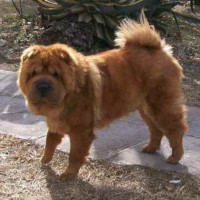
| Two of the most famous and well-known Chinese breeds, the Chow Chow and Shar Pei, have been crossed in America to create an interesting Chow Pei. Each hybrid puppy inherits varying amounts of its parents' genes, which means that even puppies from the same litter can look and act very different. Most Chow Pei puppies have the wrinkled face of the Shar Pei and the soft-furred body of the Chow Chow. The Chow Pei is most prized for its territorial nature and protective instincts. Although gentle with its family, the Chow Pei has the potential to act hostile with new people and can become aggressive in certain situations. |
History of the Chow Pei |
| A cross between the lion-maned Chow Chow and the wrinkled Shar Pei, the Chow Pei, also known as the Char Pei, is a specific cross-breed that has only recently been established. Although both parent breeds are Chinese, it is thought that the initial crossing of the two breeds took place in the USA, where most Chow Pei dogs can be found today. Although the Chow Pei is a recent creation with little history, both its parents are ancient dogs steeped in antiquity. The Chow Chow is thought to be several thousand years old and has historically fulfilled many roles, including hunter, shepherd and guardian. The Shar Pei is also thought to have existed for at least two thousand years and was traditionally kept as a guard and fighting dog. Interestingly, the Chow Chow and Shar Pei are the only two breeds in the world with dark blue-black pigmented tongues. It's quite possible that these breeds are closely related, which means that a cross between them is probably a very natural step. |
A little of the Chow Chow |
||
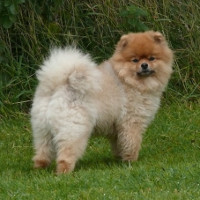
| A truly ancient breed, the Chow Chow originated in the Far East between 2,000 and 3,000 years ago. Bred to fulfill a variety of roles, including war dog, breeder, hunter, protector and even food source, the Chow Chow displays many characteristics not found in most modern breeds, both in appearance and temperament. Although devoted and loyal to one or two masters, Chow Chows are generally not considered pets for young families, as they tend to be irritable, even aggressive, especially in hot weather. | ||
 |
||
| Standard of the Chow Chow | ||
A little of the Shar Pei |
||
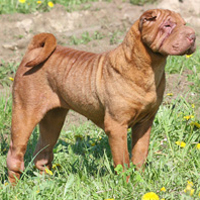
| The Shar Pei is a long-established dog breed from China. It was saved from extinction by an intensive breeding program carried out in the USA in the 1970s. This program involved breeding a relatively small number of dogs exported from their country of origin, and resulted in an exaggeration of the skin folds so characteristic of the breed. They were traditionally used as guards and fighting dogs, roles for which it was necessary to be suspicious of strangers and aggressive towards other dogs, traits that are very present in today's Shar Peis. | ||
 |
||
| Standard of the Shar Pei |
Appearance of the Chow Pei |
| Predicting the appearance of a newly-created hybrid dog can be a challenge at the best of times. In some cases, even puppies from the same litter can inherit completely different physical characteristics. While individual Chow Peis may look more like Chow Chows or Shar Peis, most will resemble some sort of mix of the two. In general, we tend to see dogs with the robust body of the Chow Chow and the wrinkled face and neck of the Shar Pei, although this is highly variable and anything is possible. Their large heads have a short muzzle, indented brown eyes that are sunken into their skin, and a pendulous upper lip. Most dogs will have the small, rounded ears of the Chow Chow, although some have the folded ears of the Shar Pei. Their noses are quite large and can be black or brown. The Chow Pei's tail will be carried over the back like a Spitz, although its fur covering will vary. Of course, like both their parents, they will also have highly pigmented tongues. The Chow Pei's coat is generally dense and very soft, and can be black, brown, fawn or cream. These colors may be blocky, or the dogs may have a mixture of colors on their coats. A darker, hairy muzzle is not uncommon. Measuring between 38 and 50 cm in adulthood, Chow Peis are medium-sized breeds. Their bodies are fairly bulky and solid, often reaching weights of up to 28 kg in adulthood. |
Temperament of the Chow Pei |
| Chow Peis can inherit behavioral traits from either parent. It can therefore be difficult to know whether they will behave more like Chow Chows or Shar Peis when they reach maturity. However, these breeds share many similar traits, which means that Chow Pei personality is easier to predict than many other hybrid breeds. Chow Pei are inevitably loyal and will form close bonds with family members, fiercely protecting them from any perceived threat. Their defensive nature makes them highly suitable guard and defense dogs, but also means that they are simply not suitable pets for families with children. Chow Pei tend not to have a high tolerance level and can act aggressively in certain situations. They don't take kindly to strangers on their territory and are always on the lookout for unwanted guests. Owners should therefore try to socialize them thoroughly as puppies to avoid hostile behavior. Chow Pei love human interaction and often spend their time in the same room as the family, as they want to be close by. However, they don't often feel the same with other animals, and generally don't get on well with other pets. Aggression from one dog to another can be a particular problem, and means that any canine companion needs to be introduced at an early age if it is to be well accepted. Although Chow Pei form close attachments with their owners, they are not generally affectionate and don't like to be bothered. Their aloof personality and potential for aggression make them unsuitable pets for inexperienced owners, and they require extensive training to become well-adapted adult dogs. |
Needs and activities of the Chow Pei |
| The Chow Pei is a rather active dog and will require several daily walks to keep it healthy and happy. He can survive in an apartment or house, but it's then up to the owner to make sure he gets enough physical and mental exercise. Physically and mentally challenging games are the best way to exercise his physical abilities as well as his high level of intelligence. Daily walks, fetch, Frisbee and obedience exercises will keep him well trained. He does his best when he has a fenced yard to run around in. He can live in an urban or rural setting, in an apartment or a house. The type of climate in which he's best suited depends on when the parent breed has the greatest influence on the coat in the biological mix. The Chow Chow coat is best suited to colder climates, while the Shar Pei coat is best suited to warmer ones. |
Maintenance of the Chow Pei |
| The Chow Pei is likely to require moderate maintenance. The coat is usually soft and thick, and can be long or short. Brushing several times a week is therefore necessary to remove loose hairs and debris and keep them clean and healthy. This weekly brushing requirement is likely to increase during seasonal periods of increased shedding. Bathing is only required once a month or so, unless it's needed more often due to outdoor activities. This monthly bath should reduce the doggy odor that can accompany dog ownership. In general, the Chow Pei's ears resemble those of the Chow Chow side and, as such, will require routine cleanliness and infection checks, but not too many, unless your Chow Pei inherits the Shar Pei's folded ear. Of course, you'll need to pay close attention to nails, teeth and eyes to keep your pet healthy and happy. |



 English (United Kingdom)

Comments