 |
Chion |
|
He is not recognized by the F.C.I. |
Origin |
Mexico <> France and Belgium -> U.S.A. | |
Translation |
Francis Vandersteen | |
This breed is also known as |
Pap-Chi
|
A brief presentation of the Chion |
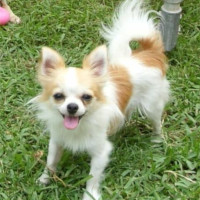
| The Chion, also known as Papihuahua, Chi-a-Pap or Pap-Chi, may be a tiny dog, but he's got a big personality. A Chihuahua and Papillon cross, he is, like his parents, bold and shrewd, but is also an affectionate and loyal companion. Blinded by his size, he is a courageous guardian and will easily defend his owner or territory with a show of defiance and noise. Because of its fine bone structure, it is not a suitable pet for young children who could accidentally injure it. The Chion is also very quick to show its teeth when upset, and lacks the patience or resilience to deal with curious young fingers. Although it's a very energetic dog, it doesn't require much exercise, as its little legs have to work very hard to cover long distances. Not only does it not require much walking, but its coat is easier to care for than that of many hybrids. However, it does shed moderately. Chions are notoriously difficult to train, as they can be stubborn and indifferent, but they do need discipline. Over-pampered individuals are likely to become domineering with their owners and irritable and aggressive with strangers. Healthy, well-bred Chions have a life expectancy of 12 to 14 years, but, like their parents, they are prone to certain health problems. |
History of the Chion |
| The Chion, under its various names, was bred as a specific crossbreed dog for around 20 years. It became very popular as the Chihuahua became known as the handbag dog of the 1990s. The Chihuahua and Papillon cross is, in many ways, a marriage of equals, in that they are miniature breeds and share many similarities in temperament and behavior. That said, they are not necessarily the right dogs for everyone, as they are independent, stubborn characters, known for their ability to bark when excited and nip when annoyed. Both parents are also known for their overconfidence, coupled with a sometimes arrogant approach to other (usually larger) dogs. These traits can be clearly seen in Dogs, who must be trained in canine company to prevent them from starting fights for which they are not equipped. All these characteristics combine to create a dog that will entertain and amuse, and can never be accused of being shy and retiring. It's this strength of personality that underpins Chion's enduring popularity as a hybrid. |
A little of the Chihuahua |
||
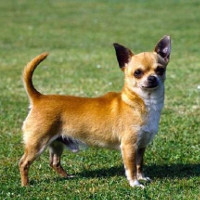
| Despite being the world's smallest dog breed, the Chihuahua has a big personality. These little dogs are loyal, intelligent and courageous. The breed is thought to have originated from wild dogs domesticated by the Toltecs, who then gained popularity in Mexico and then America, where they were refined. Today, they are a popular companion dog, appreciated for their charming yet bold characters and small size. Chihuahuas come in many colors and can be smooth or long-haired. It has an easy-care coat, which can be kept in order by brushing. | ||
 |
||
| Standard of the Chihuahua | ||
A little of the Continental Toy Spaniel |
||
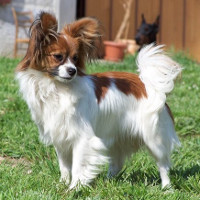
| The Continental Toy Spaniel has been a favorite of Europe's upper classes for centuries. It can be seen in many well-known royal portraits. It is said that Marie-Antoinette walked towards the guillotine holding her beloved Papillon. Although small, Papillons are lively, highly intelligent dogs. They thrive on human companionship and will not tolerate separation from their owners for very long. | ||
 |
||
| Standard of the Continental Toy Spaniel |
Appearance of the Chion |
| There is no breed standard for the Chion; as a hybrid, all individuals should be different. However, Chihuahua and Papillon are close enough in size and appearance to allow certain generalizations to be made about their offspring. Chihuahuas are tiny, slender dogs measuring between 22 and 27 cm at the withers and weighing between 2 and 4 kilos. They have large triangular ears that usually stand upright, like those of the Papillon, and prominent, protruding eyes like the Chihuahua. The skull is clearly domed, with a pronounced stop and descends to a short, slender muzzle. The jaw is often very thin. The neck and back are lean and narrow. The chest is reasonably well suspended and the abdomen is tightly folded. The feathered tail is similarly slender, often carried just above the horizontal. The coat is silky, moderately long and remarkably wavy. It is longer on the ears, throat, tail, back and legs, where it forms flowing bangs. A wide range of colors are possible: black, chocolate, black-brown, black-white, cream, fawn, gold, tricolor. Most Chions have a symmetrical face mask, although some are solid-colored. |
Temperament of the Chion |
| Although a courageous and sometimes controversial hybrid, the Chion is also an extremely loving companion that lights up visibly when spoken to and returns its owner's affection with interest. It's an energetic, playful dog that will bounce around the house with excitement, but can also curl up on someone's lap when everyone's tired and wants to relax. It is noted for its protective instincts. Despite the fact that fear is unlikely to reign in anyone's heart, it will easily stand guard against an intruder or put itself between its owner and the opposing party whenever voices are raised. Dogs are also very useful watchdogs. They hear well and will bark when they hear something out of the ordinary. This can get a little out of hand, however, and apartment dwellers may find neighbors snapping at the ceiling in frustration, which will only fuel Chion's need to make noise. They are naturally wary of strangers and can be somewhat lively and defensive, especially if not properly socialized. With other dogs, they tend to be overconfident and sometimes abrasive, and are more often the aggressors than the innocent victims in fights. Because of their very light build, they are delicate and easily injured, and are not good playmates for children. |
Needs and activities of the Chion |
| You should take your Chion out for exercise at least once a day for about 30 to 45 minutes. You can divide it into several times a day or do it all at once, but they need to work off their excess energy, otherwise they'll become anxious and restless. Some Chions can become lazy if you don't give them enough exercise, and others get bored and develop behavioral problems. Some of the best activities include walking, jogging, hiking, swimming, retrieving, a trip to the dog park and agility training. If you have a fenced yard, letting them run around outside for a few hours a day while you're at it is also acceptable, but also requires frequent attention on your part. |
Maintenance of the Chion |
| You should be prepared to brush your Chion often, at least three or four times a week. You may also find that daily brushing is best against tangles. Use a stiff bristle brush and a metal comb, and use your fingers to break up the clumps of hair. Your Chion can be bathed if necessary, but don't do it too often as this will cause the skin to dry out. It's also advisable to brush your Chion's teeth at least a few times a week to prevent periodontal disease. In addition, you should check the ears once a week for earwax build-up, mites and redness, as this hybrid is prone to ear infections. |



 English (United Kingdom)

Comments