Cheagle

He is not recognized by the F.C.I.

Origin
Mexico <> Great Britain -> U.S.A.
Translation
Francis Vandersteen
This breed is also known as
Chi-Bea
Chibeagle

A brief presentation of the Cheagle

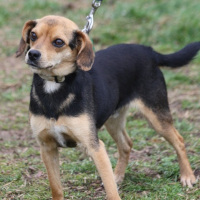
Small in stature like the Chihuahua, gentle in nature like the Beagle, the Cheagle is a cross between these two popular dog breeds, resulting in a fun, playful and happy pet. Always in a good mood, Cheagles are quality pets, although they are difficult to train and not best suited to very young children. In appearance, the Cheagle resembles the Chihuahua parent in size and muzzle, and the Beagle parent in round, dark eyes, tail, head, ears and occasional facial markings. In temperament, the Cheagle is energetic, overexcited and fearless like the Chihuahua, gentle, loving and curious like the Beagle.

History of the Cheagle

The Cheagle is a specific cross between a Chihuahua and a Beagle. As such, this crossbreed is a blend of the physical traits and personalities of its parents. The history of Cheagles is uncertain and very recent, and is very much linked to that of their parents. So, to better understand the origins of this newly created crossbreed, we need to delve into the history of its parents' breeds. Cheagles can be made up of 50% purebred Chihuahuas or purebred Beagles, or can result from multi-generation crosses. The result is a pet that perhaps retains some of the Beagle's hunting instincts, although it is difficult to train and probably not a good hunting dog. The Chihuahua's contribution is its small size and lively, energetic nature. Cheagles are recognized by the Design Canine Registry, the Designer Breed Registry, the American Canine Hybrid Club and the Dog Registry of America.
        

A little of the Chihuahua

        
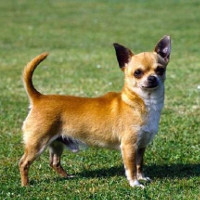
The Chihuahua may have been brought to Mexico from China by Spanish settlers, although a different theory claims that Chihuahuas are probably descended from the Techichi, a small, 9th-century mute dog found in Central and South America, which was kept by the Toltecs. Later in the 19th century, this little dog was found in the Mexican state of Chihuahua and brought to the United States.
Standard of the Chihuahua

A little of the Beagle

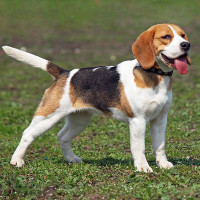
The history of the Beagle goes back to Roman times, when Beagle-like dogs were thought to be used for hunting purposes. They were then brought to England and crossed with English scent hounds, becoming the Beagle we know today in the 18th and 19th centuries.
Standard of the Beagle

Appearance of the Cheagle

Cheagles have a shiny, straight, short coat, which can have different colors, depending on the contribution of their parents. Although they can have solid colors (usually white or cream), their coat is usually a combination of more than one color: white, black, cream, brown, bronze. Some Cheagles have freckles that resemble those of the Beagle. Cheagles have a long, curly tail, overbite, Chihuahua paws and muzzle, and Beagle tail, ears and head. Cheagles are compact and small like the Chihuahua, but appear rougher, resembling the Beagle. Cheagles weigh no more than 9 kilos and measure 23 to 36 centimeters at the withers, males being slightly taller and heavier than females.

Temperament of the Cheagle

Cheagles are pets and serve no other purpose, despite the hunting heritage of their Beagle parent. Cheagles are extraordinary companions, as they are very friendly and open, playful and loving towards their families, to whom they are eternally loyal and protective. In return, they demand a lot of attention and don't stay alone for long. They love to play games and run around, entertaining adults and children alike. Although they get on well with children, it's best not to leave them unsupervised with young children, as a certain level of awareness regarding dog handling is required to interact with this crossbreed. Pushing more towards the Chihuaha side, Cheagles are very energetic and fearless. Because of their high alertness and tendency to bark, they are good watchdogs. They are easily excited and, when happy, tend to bark in a high-pitched voice, leap energetically and jump enthusiastically. Cheagles can be aggressive towards other dogs, displaying nipping and biting behaviors. Early socialization and appropriate training are therefore essential. This aggression is generally associated with Small Dog Syndrome, a behavioral problem often linked to overprotection on the part of the owner, leading to poor social and behavioral skills in the dog. The Beagle's Cheagle side softens their personality by adding a calmer, gentler nature. The Beagle's kindness and gentleness dampen the Chihuahua's energy. As a result, the Cheagle proves to be a good mix of active and large dog, who likes to run but also snuggle, is open and affectionate, and is an excellent choice for families with older children, people living in apartments and single people. However, due to their high energy levels, they can be difficult to train and are therefore not the best choice for first-time dog owners.

Needs and activities of the Cheagle

Activity requirements for Cheagles are relatively straightforward, and they are usually satisfied with forty to sixty minutes of vigorous activity a day. It's often best to divide these sessions into smaller chunks of time. These little dogs are very happy living in smaller spaces with a few short walks or energetic indoor play sessions a day, and many can also excel at scent-hunting activities. Although they can sometimes become yappy, this breed combination is much less vocal than the average Beagle, making them more suited to apartment living than many other Beagle hybrids.

Maintenance of the Cheagle

Most Cheagles require very little grooming to keep them clean and healthy. Baths should be administered sparingly to these dogs, as they are likely to develop dry, flaky or irritated skin if bathed too often, but regular brushing should be carried out to remove dead hairs and distribute their natural oils correctly. Two to four brushings a week are usually enough to keep short- and long-haired varieties healthy, clean and shiny, although long-haired dogs may need a little more detangling and a little more time. It's important to keep the ears clean and dry, as hanging ears are more prone to infection.

Comments

Latest page updates

  • Telomian

    Telomian He is not recognized by the F.C.I. Origin Malaysia Translation Francis Vandersteen A brief presentation of the Telomian The Telomian is a very rare breed of dog, and the only one native to Malaysia to have been bred outside the country. They were originally bred by the indigenous people of Malaysia to combat parasites such as snakes, rats,...
  • King Wheaten -- Cavalier King Charles Spaniel X Irish Soft Coated Wheaten Terrier

    King Wheaten He is not recognized by the F.C.I. Origin Great Britain <> Ireland -> U.S.A. Translation Francis Vandersteen A brief presentation of the King Wheaten The King Wheaten is a small dog with a heart this big and a playful disposition. Borrowing the energy and soft-coated waves of the Irish Soft Coated Wheaten Terrier and the size and...
  • Spanierd -- English Springer Spaniel X German Shepherd

    Spanierd He is not recognized by the F.C.I. Origin Great Britain <> Germany -> U.S.A. Translation Francis Vandersteen A brief presentation of the Spanierd The Spanierd is a hybrid dog. Its parent breeds are the English Springer Spaniel and the German Shepherd. They have an affable personality. He's known for entertaining family and friends with his...
  • Alaskan Goldenmute -- Alaskan Malamute X Golden Retriever

    Alaskan Goldenmute He is not recognized by the F.C.I. Origin U.S.A. <> Great Britain -> U.S.A. Translation Francis Vandersteen This breed is also known as Alaskan GoldenGoldenmuteAlaskan Gold Retriever     A brief presentation of the Alaskan Goldenmute The Alaskan Goldenmute is a descendant of two great dog breeds: the Alaskan Malamute and the Golden...
  • French pointing dog Pyrenean type

    French pointing dog Pyrenean type FCI standard Nº 134 Origin France Translation Mrs. Peggy Davis Group Group 7 Pointing Dogs Section Section 1.1 Continental Pointing Dogs « Braque » Type Working With working trial Acceptance on a definitive basis by the FCI Tuesday 18 January 1955 Publication of the official valid standard Tuesday 01 August 2023 Last...
  • French pointing dog Gascogne type

    French pointing dog Gascogne type FCI standard Nº 133 Origin France Translation Mrs. Peggy Davis Group Group 7 Pointing Dogs Section Section 1.1 Continental Pointing Dogs « Braque » Type Working With working trial Acceptance on a definitive basis by the FCI Monday 17 January 1955 Publication of the official valid standard Tuesday 01 August 2023 Last...
  • Vucciriscu

    Vucciriscu He is not recognized by the F.C.I. Origin Sicily Translation Francis Vandersteen En français, cette race se dit Vucciriscu Diese Norm ist in deutscher Sprache sichtbar Vucciriscu En español, esta raza se dice Vucciriscu In het Nederlands, wordt dit ras gezegd Vucciriscu This breed is also known as Sicilian Vucciriscu Sicilian Butcher...

© 2026 Groupe Milouchouchou ASBL. Tous droits réservés. En savoir plus

Protected by Copyright01
We use cookies

We use cookies on our website. Some of them are essential for the operation of the site, while others help us to improve this site and the user experience (tracking cookies). You can decide for yourself whether you want to allow cookies or not. Please note that if you reject them, you may not be able to use all the functionalities of the site.

Ok