 |
Chabrador |
|
He is not recognized by the F.C.I. |
Origin |
China <> Canada -> U.S.A. | |
Translation |
Francis Vandersteen | |
This breed is also known as |
Chab
|
A brief presentation of the Chabrador |
| Although the Chabrador may have been relatively unknown at the time, this new breed had already built up a small but devoted following. By crossing the Labrador Retriever and the Chow Chow, breeders have created a lovable family pet that makes a superb watchdog. Large, well-built and muscular, the Chabrador has a thick coat, often brown or black. Most dog lovers know that the Chow Chow has a reputation for independence and impartiality, while the Labrador tends to adore anyone who shows him attention. Although it's possible to have puppies after either parent, most Chabradors inherit a good mix of each parent's characteristics. |
History of the Chabrador |
| Like many of today's specific crossbreed dogs, we don't know exactly when and where the Chabrador was developed. Over the past three or four decades, there has been a huge demand for the creation of purebred hybrids, and the Chabrador is the result of a cross between the Labrador Retriever and the Chow Chow. This interesting combination may also be called the Chowbrador or Lab Chow. Although both breeds are large and robust, the similarities end there, as they have very different personalities and character traits. |
A little of the Chow Chow |
||
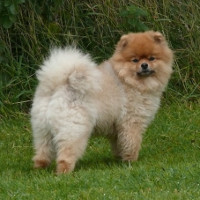
| The Chow Chow is an ancient dog that has been around for several thousand years, originating in the Far East. Chow Chows are best known for their unusual blue tongue, fiercely protective nature and courage. As well as being traditionally used as guard dogs, they have been employed as herding animals, hunters and have even been used as a source of food in times of need. Their hostile behavior and stubborn streak make them a challenging pet, which no doubt goes a long way towards explaining why they were raised in a loving, docile Labrador. | ||
 |
||
| Standard of the Chow Chow | ||
A little of the Labrador Retriever |
||
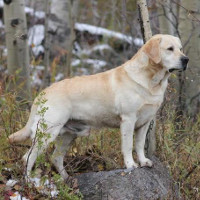
| Labrador Retrievers have been around for several hundred years and were first developed in Canada as retrievers. hunting on land and water alongside armed men. Their friendliness has earned them a reputation as the ultimate family pet, and they tend to be incredibly gentle and cheerful. | ||
 |
||
| Standard of the Labrador Retriever |
Appearance of the Chabrador |
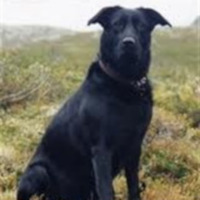
| Although there is enormous variation in this new and developing breed, most Chabradors share certain physical characteristics. A large, robust dog, the Chabrador certainly makes a striking first impression. Their broad head and muzzle and almond-shaped brown eyes give the dog an intense expression. While some of the breed's dogs have the Labrador's floppy ears, others have the straight teddy bear ears of their Chow Chow parent. Some puppies will retain the famous blue tongue of their Chow Chow parent, others will not. The Chabrador's thick double coat offers protection from the elements and tends to be black or brown. Coat length varies, and some dogs of the breed will have a neck ruff, others will not. Their tail may or may not curl over their back, and is often dense. At maturity, the Chabrador will weigh between 22 and 36 kilos, with males often weighing more than females. The average adult dog will measure between 46 and 61 centimeters at the withers. |
Temperament of the Chabrador |
| While predicting the personality of any breed can be a bit of a minefield, this is particularly true of first-generation crosses, as it can be difficult to know which of the parents' genes will be the most dominant. The Labrador Retriever and the Chow Chow have quite opposite personalities. On the whole, the Chabrador is a well-balanced dog, loyal and affectionate to its owners. However, some dogs can be dominant and keep their distance, so thorough socialization is necessary from an early age to ensure positive interaction with other people and animals, not just those in their immediate environment. They often make good friends with children, but need to be closely supervised in their company because of their strength. Most interact well with other family pets, although they may chase small animals. It is generally accepted that the Chabrador is a more demanding pet than the Labrador Retriever, but better tempered than the Chow Chow. They are relatively intelligent and benefit from a structured routine. Hyperactivity can be a problem in some dogs, although this can be controlled with the right training. |
Needs and activities of the Chabrador |
| While the Labrador Retriever is known to be an extremely active dog, the Chow Chow is a little less energetic, the combination of the two making a dog that can be an enthusiastic training partner when needed, but doesn't require as much vigorous exercise a day to stay in shape as the Labrador Retriever. One hour of activity a day is usually enough, although very energetic dogs or those living in tighter spaces, such as apartments, require an hour and a half or more to release all their energy. With extra exercise and frequent grooming to control shedding, these dogs can adapt to apartment living despite their slightly larger size, but are often more at home in a larger house with a yard. |
Maintenance of the Chabrador |
| Although Labrador Retrievers have minimal bathing requirements, they need only bathe every few months or when they get dirty, but Chow Chow dogs must bathe at least once a month and are sometimes bathed as often as once a week. Unless their activities require additional bathing, most Chabradors will benefit from a monthly bathing program. Their thick coats require careful brushing on a regular basis to control shedding, several times a week throughout the year and daily at the change of season, when these dogs shed heavily. It's important to ensure that the ears are cleaned and dried regularly to avoid infection, especially if the dog has a hanging ear. |



 English (United Kingdom)

Comments