 |
Cavador |
|
He is not recognized by the F.C.I. |
Origin |
Great Britain <> Canada -> U.S.A. | |
Translation |
Francis Vandersteen |
A brief presentation of the Cavador |
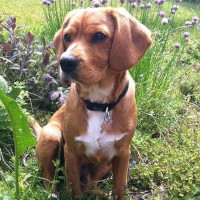
| This set of sunny coats is the result of crossing a Cavalier King Charles Spaniel with a Labrador Retriever. Because of the size differences, it's usual for the mother to be a Labrador with a Cavalier paternal contribution. With both parent breeds successful, why go to the trouble of creating a hybrid mix? As with all hybrids or specific crossbred dogs, the answer lies in the hybrid's vigor. It's the theory that expanding the gene pool by selecting unrelated dogs or breeds produces healthier, healthier puppies. While a good idea in theory, this argument is flawed. There's nothing to stop puppies inheriting the worst characteristics of either breed, a double problem if you like. In practical terms, this means there's no guarantee that the Cavador puppy won't suffer from heart disease (a condition affecting a high percentage of Cavaliers) or hip dysplasia (prevalent in Labradors). Looking on the bright side, the Cavador is a pleasure to own. Slightly smaller than a purebred Labrador, they embody friendliness in a fur coat and make delightful family companions. |
History of the Cavador |
| The specific crossbreeding of Cavalier King Charles Spaniel and Labrador Retriever began in the USA in the 1990s. A lesser-known hybrid than the very popular Cavapoo or Cockapoo, the Cavador undoubtedly deserves more popular recognition than it currently enjoys. Both parent breeds have a long history. |
A little of the Cavalier King Charles Spaniel |
||
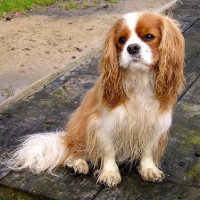
| The Cavalier King Charles Spaniel, as the name suggests, has a noble heritage where they were royal favorites. No less a figure than King Charles I, in the 17th century, sponsored the breed, indeed, the king's devotion to these little spaniels was famous during his lifetime. In the 18th century, the Duke of Marlborough took a particular interest in the development of the Cavalier breed. It was from the Duke of Blenheim's estate that the most famous Cavalier coat color, Blenheim, took its name. Then, in the 19th century, Queen Victoria preferred a close relative of the Cavalier King Charles, albeit with Carlin blood. These august owners contributed greatly to the popularity of this little spaniel, with the dog's affectionate nature doing the rest. | ||
 |
||
| Standard of the Cavalier King Charles Spaniel | ||
A little of the Labrador Retriever |
||
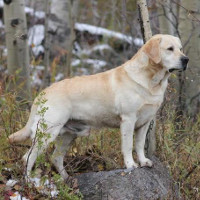
| On the other side of the family tree, the Labrador Retriever originates from Canada and the island of Newfoundland. In the 16th century, the Labrador Retriever's ancestors were called St John's Dogs, and their job was to help fishermen by pulling in their nets. In the early 19th century, these dogs found their way to England. Their natural athleticism and retrieving ability made them indispensable as hunting dogs. Although the St John's Dog is now extinct, its offspring, the Labrador Retriever, regularly tops the list of most popular dog breeds, for its friendly nature and outgoing temperament. | ||
 |
||
| Standard of the Labrador Retriever |
Appearance of the Cavador |
| In theory, the appearance of Cavadors is a blend of parent breeds. This is often the case, but cannot be assumed. So it's perfectly possible to get a Cavador that leans heavily on the size and look of a Cavalier, or that has a different appearance, and displays mainly Labrador characteristics. So the future Cavador owner should never assume what his puppy will look like as an adult. But let's move on for a moment to the idea of a true mix of characteristics. A 50:50 mix produces a medium-sized dog. The coat is soft and somewhere between short and slightly silky in length. The most common coat color is golden, but black cannot be ruled out. Instead of a solid color, you can expect a white blaze on the chest. One thing's for sure: this is a dog with floppy ears. But these ears can have a flat, velvety texture or be covered with silky, soft hair. It's also a sign of a flagpole tail and, given the kindness of the parents, it's likely to wag most of the time. |
Temperament of the Cavador |
| The pure Cavalier and Labrador breeds have exceptional temperaments. They've earned their place as popular pets precisely because of their eager, friendly and good nature. Crossed together in the Cavador, the result is an ideal family dog. But as with any dog, proper socialization as a puppy is essential. Only when they are positively exposed to a wide range of sights, sounds and smells will they grow into confident adult dogs. Cavadors generally regard people as a good source of attention, and although they bark at strangers, they are more likely to lick than bite. They also enjoy human company, making them ideal for owners who are home a lot. Conversely, leaving the dog alone for long periods can lead a Cavador to feel lonely and depressed, and to develop antisocial habits, such as barking or chewing. |
Needs and activities of the Cavador |
| A Cavador needs plenty of exercise to stay fit and healthy. Regular walks are therefore a good idea. Your dog will also enjoy swimming, ball games, Frisbee and walks with you. These are playful dogs who will also enjoy playing in a yard or indoors. If they don't get enough exercise, they could become destructive or bored. That's why it's best to get them into a daily routine. A house with a yard is ideal for this breed, but they are able to adapt to apartments provided they get regular exercise. The breed is prone to weight gain, so plenty of exercise will prevent this too. They prefer mild weather but will adapt to warmer or colder climates if not kept outdoors. |
Maintenance of the Cavador |
| Cavadors need a little grooming and require their coats to be brushed once or twice a week. They shed a moderate amount so regular brushing will remove any loose hairs and remove any dirt they may have collected. Labradors love to get in the water and roll around in the mud. So, if your dog also likes to do this, it may be necessary to bathe him with a good dog shampoo. But otherwise, bathing should only be done a few times a year. Dental hygiene is important, so try to brush your dog's teeth every day. It's also important to check your dog's ears for dirt, which can then be gently wiped away with a damp cotton ball. Nails should also be checked to see if they need trimming. |



 English (United Kingdom)

Comments