 |
Golden Labrador |
|
He is not recognized by the F.C.I. |
Origin |
Great Britain <> Canada -> U.S.A. | |
Translation |
Francis Vandersteen | |
This breed is also known as |
Golden Lab
|
A brief presentation of the Golden Labrador |
| The Golden Labrador is a big, friendly, energetic dog that always wants to be part of the action. Highly intelligent, they are easier to train than most other dogs, as they are very strong-willed. He loves being indoors with the family and will be devoted to you. Although he's alert enough to be a good watchdog, his buddy instinct excludes him from this role. These dogs need a good daily walk and plenty of mental stimulation. They love to play and will be the last ones standing in the game. They love water and are great swimmers. They may roll around in the mud afterwards to dry off, so be warned. If you can direct your dog to the grass after a dip in the lake, so much the better, otherwise your active companion will need a bath. |
History of the Golden Labrador |
| The Golden Labrador is descended from two of the most popular breeds. The Golden Labrador, also known as the Goldador, is a combination of the traits of these two wonderful canines, the Golden Retriever and the Labrador Retriever. |
A little of the Golden Retriever |
||
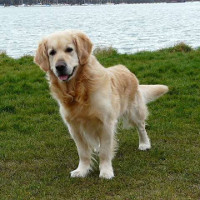
| The Golden Retriever was also bred for use as a hunting dog. Thanks to his keen sense of smell, willingness to please and boundless energy, he was the ideal dog for retrieving waterfowl and other small game. He was born in the Scottish Highlands in the late 1800s. Lord Tweedmouth was responsible for creating the breed, using several types of dog to achieve his goal, which later included the Bloodhound, Irish Setter and Tweed Water Spaniel. The Golden Retriever has become one of the most popular breeds known today. It is used in a wide range of activities, including hunting and tracking, detection work, service work for disabled people and as a guide dog for the blind. | ||
 |
||
| Standard of the Golden Retriever |
A little of the Labrador Retriever |
| The Labrador Retriever was originally used as a fish retriever by Canadian fishermen in the 1700s. He also played an essential role as a faithful companion and friend. During a visit to Canada in the 1800s, some Englishmen were so impressed by the dog that they brought them back to England, where they were used as retrievers for the nobility on hunting trips. By the end of the 19th century, the Labrador Retriever had disappeared from Canada due to its breeding laws, but the breed survived and flourished in England. The English Kennel Club recognized the dog in 1903, and the American Kennel Club followed suit in 1917. Endowed with a gentle nature, they are friendly and outgoing. The Labrador Retriever is an exuberant companion or working dog that needs plenty of exercise. |
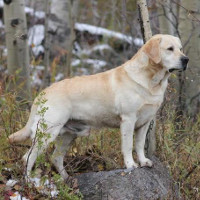 |
| Standard of the Labrador Retriever |
Appearance of the Golden Labrador |
| The Golden Labrador is a large dog with a square-shaped head slightly rounded at the top. The ears are long and floppy, and this attractive furry companion has a broad, tapering muzzle with teeth that meet in a scissor bite. It's said that the eyes are the mirror of the soul, and this is certainly true of the Goldador. His eyes are a magnificent deep golden brown and express the devotion and loyalty this dog possesses. The nose is generally black, with large nostrils ideal for picking up a scent. Strong legs and a broad chest combine with a perfectly proportioned body to make the Golden Labrador one of the world's most popular hybrid breeds. |
Temperament of the Golden Labrador |
| Good-natured, loving, affectionate, goofy and happy, Golden Labradors love people and are very friendly. Training them is child's play, as they are designed to please. Golden Labradors also like to do chores, which makes them good working dogs. Not a dog to be left alone in the yard, he'll want to be with the family. If left alone for long periods, your dog may become destructive through boredom. Goldadors respond well to praise and rewards, but avoid blunt methods as they can be sensitive to tone. They like to be guided and respond well to a master who plays a constant leadership role. Full of energy, they love a game or two, and guess who'll be the first to tire? A walk on the beach or in the river is ideal, and there's a good chance our Water Dog will jump into the water without a second thought. A good swimmer, he's happy to join you in the pool, even if he may try to "rescue" the kids until they realize that the noise is a joyful one and not an emergency. Loving, easy to care for and a friend for life, the Golden Labrador is a real gem. |
Needs and activities of the Golden Labrador |
| The Golden Labrador is very active, especially when young, and needs a walk once or twice a day to expend its energy. If he doesn't get enough exercise, he can develop destructive habits such as barking, digging and chewing everything in sight. It's easy to get him to exercise, as he'll happily go along side you when you're running or biking, and even a simple outing to the dog park will be greeted with great enthusiasm. As Golden Labradors age, they don't need as much exercise and tend to become a bit of a couch potato, but they still need a regular walk to keep them fit and content. |
Maintenance of the Golden Labrador |
| Golden Labradors sometimes seem to shed all the time. Careful brushing with a pincushion brush to remove matted hair once a day will also help prevent these loose hairs from decorating the house. Lovers of attention, they tend to enjoy this process and look forward to this special treatment. While brushing, check your dog's ears for any dirt or debris that could lead to infection, and wipe them with a soft cloth to keep them healthy. Brush your companion's teeth at least three times a week and trim his toenails when necessary, but don't cut them too short, as you risk cutting the nerve and causing bleeding. |



 English (United Kingdom)

Comments