
 |
Wolfhound Dane |
|
He is not recognized by the F.C.I. |
Origin |
Ireland <> Germany -> U.S.A. | |
Translation |
Francis Vandersteen |
A brief presentation of the Wolfhound Dane |
| The statuesque Wolfhound Dane is a hybrid dog of design that is sometimes called the Irish Mastiff. It's a cross between the Irish Wolfhound and the Great Dane. Although he's a giant, he's gentle, affectionate and loving. His large size means you need plenty of space for him. This big boy measures between 81 and 96.5 centimeters at the shoulders and weighs between 54.5 and 81.5 kilos. Over the past 20 years, the Wolfhound Dane has grown in popularity. However, this hybrid mix is thought to have originated in the 1800s, when breeders decided to cross the two mastodon parents to create the Wolfhound Dane. |
History of the Wolfhound Dane |
| The Wolfhound Dane is a wonderful cross that really brings out the best in its two parent breeds. |
A little of the Irish Wolfhound |
||
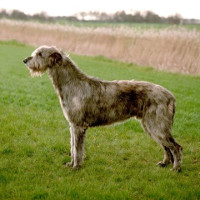
| The origins of the Irish Wolfhound go back to the first century. An ancient breed, it was frequently used to hunt elk and other big game. They were also used as war dogs. In the early days of the breed, he was called Cu, which means war dog in Gaelic. It has also been a popular watchdog throughout history. Historically, only nobles and royalty were allowed to own these imposing dogs. The number of dogs each family could own was also limited according to the family's status. The limits imposed on the breed meant that numbers declined dangerously in the 1800s. Two men, Major Richardson and Captain Graham, are credited with reviving the breed. They used Glengarry Deerhounds, Irish Danes and Tibetan Mastiffs in their breeding program to create the modern Irish Wolfhound. Unlike the Irish Wolfhounds of the past, the modern breed does not make a good watchdog because it is not aggressive. The American Kennel Club officially recognized the breed in 1950, listing it in the hound group. | ||
 |
||
| Standard of the Irish Wolfhound |
A little of the Great Dane |
| The Great Dane is an ancient breed whose origins date back to 3000 BC. The Assyrians first created the Great Dane by mating their dogs with Mastiffs from Rome. At first, they were known as wild boar hounds, as they were used to hunt wild boar. By the 1500s, the breed was called the English Dane. French visitors to Denmark in the 1500s began calling the dog the Great Dane. German breeders eventually took an interest in the breed and transformed it from a fierce hunter into a calm family dog. The Great Dane was first recognized by the American Kennel Club in 1885 and enrolled in the working group. |
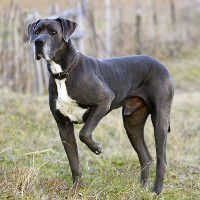 |
| Standard of the Great Dane |
Appearance of the Wolfhound Dane |
| The Wolfhound Dane is a massive breed with a large, very rectangular head. It has floppy ears and dark, almond-shaped eyes. Their coat varies from short, like that of the Great Dane, to long and rough, like that of the Irish Wolfhound. It comes in a wide variety of colors: gray, blue, brown, black, white, cream, golden, brindle, russet, merle, spotted, spotted and salt-and-pepper. Its tail is long and slightly curved. Its paws are exceptionally large. Its whole shape is that of pure, voluminous muscle. |
Temperament of the Wolfhound Dane |
| The Wolfhound Dane is very docile and affectionate. They are loyal giants. Despite its large size, it is gentle and gets on well with other animals. Many people might think that this intimidating breed wouldn't make a good pet, but the opposite is true. In fact, he makes a wonderful family dog and adores children. Although he's not a guard dog, his imposing size is usually enough to deter any would-be burglar. They rarely bark, which many people consider an advantage. |
Needs and activities of the Wolfhound Dane |
| Although the Wolfhound Dane is large, it is very gentle and doesn't need an excessive amount of exercise. A short daily walk is good for him, but he doesn't make a good jogging companion as his body isn't designed for speed or long-distance running. He's not keen on games like fetch or Frisbee. He does well in obedience, as he is always ready to please his master. In general, he just likes to take life slowly and easily. |
Maintenance of the Wolfhound Dane |
| The Wolfhound Dane requires very little maintenance. A monthly bath is usually enough to eliminate any doggy smell. Its coat doesn't tangle or shed excessively. A weekly brushing with the long-hair brush should be enough to give him a neat, elegant appearance. If he doesn't get enough exercise to wear down his nails, you'll need to trim them every two weeks. His floppy ears should be cleaned once a week to remove any build-up of debris. Some owners choose to brush their dog's teeth once a week to control breath and prevent gum disease. |



 English (United Kingdom)

Comments