
 |
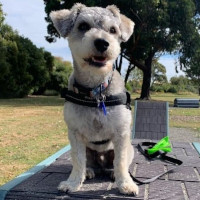
Wire Fo-Chon |
|
He is not recognized by the F.C.I. |
Origin |
Great Britain <> France / Belgium -> U.S.A. | |
Translation |
Francis Vandersteen |
A brief presentation of the Wire Fo-Chon |
| The Wire Fo-Chon is a fluffy little dog derived from a combination of the wire-haired Fox Terrier Wire and the Bichon frise. As both are toy-sized dogs, the Wire Fo-Chon is unlikely to exceed 28 centimeters in height, and usually weighs less than 7 kilos. This breed is active, loyal and gentle, and its personality is ideal for any family. They are gentle enough for children and the elderly, and can be trained quickly by anyone. However, they are easily spoiled and susceptible to small dog syndrome, so you need to be firm and consistent with the rules. |
History of the Wire Fo-Chon |
| The Wire Fo-Chon takes its personality and characteristics from its parent breeds, the Wire Fox Terrier and the Bichon frise. |
A little of the Wire Fox Terrier |
||
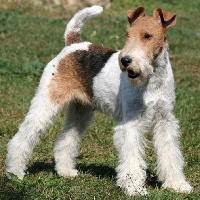
| An English breed, the Wire Fox Terrier is said to have been developed from different types of Terrier for fox hunting and hold-ups. They were mixed with smaller Terriers to obtain a small, courageous dog capable of chasing prey from their dens. Originally, Fox Terrier Wirehairs and Fox Terrier Smoothhairs were bred to achieve a smoother, cleaner coat with more white, so as not to be mistaken for a fox when hunting. However, this has not been the case for many years, and they are two distinctly different breeds. The Wire Fox Terrier was officially recognized by the AKC in 1885, but is still not as popular in the U.S.A., where it ranks 101st out of 190 breeds. | ||
 |
||
| Standard of the Wire Fox Terrier |
A little of the Bichon frise |
| Originating in France, the Bichon frise was developed in the 1300s as a pet and became a favorite of royal families such as King Henri III, who carried his dogs in a basket around his neck. Some believe that the Bichon frise already existed in ancient times, when French sailors brought them back from the Canary Islands, while others insist that it was the Italians who discovered the breed. Originally called Barbichon, meaning curly hair in French, the name was eventually shortened to Bichon. There are four types of Bichon, namely the Tenerife Bichon, the Havanese Bichon, the Bolognese Bichon and the Maltese Bichon. They are also thought to be related to the Coton de Tuléar. Eventually, street performers discovered the Bichon frise's talent and began using them on the street, then in circuses. Once they became common, they weren't as popular with royal families and almost disappeared until French breeders decided to preserve them and began trials in 1933. It was only 39 years later that they were accepted by the American Kennel Club and they are the 45th most popular dog breed in the United States. |
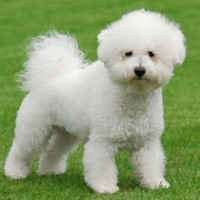 |
| Standard of the Bichon frise |
Appearance of the Wire Fo-Chon |
| The Wire Fo-Chon has a dense, medium to long, straight but wiry coat that is most often white, black, chocolate, tan or a mixture of these colors. It can also be sable or brindle. He usually has large, round, coffee-colored eyes with a gentle, curious expression. Your Wire Fo-Chon will also have a fluffy, foxy-looking muzzle with a smooth black or brown nose. His ears are floppy and hairy, but may perk up when he's listening to something. Its head is round, its neck long, and its build athletic, with strong legs and a short, curled tail. |
Temperament of the Wire Fo-Chon |
| Any form of inconsistency with the rules can give the Wire Fo-Chon the idea that it can do whatever it wants. This is known as the small dog syndrome, which can be a problem if you're too lenient with your small dog. They can also have potty training problems if you're not firm, so make sure your dog knows where he's supposed to go when he needs to go. They can have separation anxiety problems and do best in homes where families have plenty of time to spend with them. However, they generally do well if you give them enough mental and physical stimulation every day. |
Needs and activities of the Wire Fo-Chon |
| Wire Fo-Chons need plenty of exercise to avoid boredom and anxiety. Dogs that don't get enough exercise can also become overweight and have behavioral problems. This little dog is very good at learning tricks, and also enjoys obedience and agility classes. To keep him well socialized, frequent outings to the local dog park are an excellent idea. Be sure to keep him on a leash on walks and when he's not in a fenced-in area, as he has a strong propensity for hunting and may run off to chase a rabbit, squirrel, cat or other dog when outside. |
Maintenance of the Wire Fo-Chon |
| Your Wire Fo-Chon needs daily brushing to prevent tangling and matting. He also needs to be plucked every six to eight weeks, which you can do by hand or with a plucking blade. You can also choose to have your dog groomed and plucked by a professional, but you'll still need to brush him daily to prevent his coat from tangling. It's important to brush his teeth weekly to prevent gingivitis and keep his breath fresh. You can also bathe him and wash his ears once or twice a month, as required, with a mild dog shampoo. |



 English (United Kingdom)

Comments