
 |
Westeke |
|
He is not recognized by the F.C.I. |
Origin |
Scotland <> Belgium <> U.S.A. | |
Translation |
Francis Vandersteen |
A brief presentation of the Westeke |
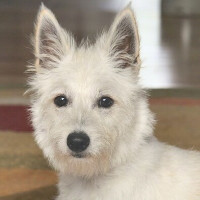
| The Westeke is a hybrid dog by design. It is a cross between the West Highland White Terrier and the Schipperke. This little white cross is happy and outgoing. He's a social butterfly who loves to interact with humans and other animals. As an adult, they generally measure 38 centimeters at the shoulders and weigh around 6 kilos. Its small size makes it a wonderful dog for an apartment. This dog is an excellent companion. He gets on well with his beloved family and is a bit mischievous. Unlike other small dogs, he really enjoys the company of children. |
History of the Westeke |
| The Westeke combines all the positive characteristics of its parent dogs to create an ideal blend of the two breeds. |
A little of the West Highland White Terrier |
||
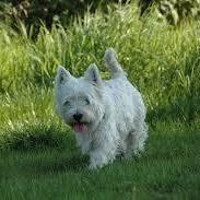
| The West Highland Terrier originated in Scotland. They were originally bred to be intrepid hunters. This robust white dog was used to hunt badgers, rats and vicious foxes. It is thought that this dog was bred to be white so that it would stand out from its prey and not be accidentally mistaken for a fox and inadvertently shot by hunters. The first Westies entered the United States around 1905. In 1908, the breed was recognized by the American Kennel Club as the Roseneath Terrier. In May 1909, the breed name was officially changed to West Highland White Terrier. The American Kennel Club registered the breed in the Terrier group. | ||
 |
||
| Standard of the West Highland White Terrier |
A little of the Schipperke |
| The Schipperke is a Belgian dog breed. Its name is thought to mean "little boatmen". Originally, the breed was called Moorke, meaning black animal. The Schipperke is thought to be a descendant of the Belgian Shepherd, which was bred through successive generations in the 1600s to create today's small dog. Historically, they were kept as pets by boatmen and cobblers along the canals of Belgium. They were also prized as rakers on canal barges. During the Second World War, the Belgian Resistance chose the Schipperke to carry messages unbeknownst to the Nazis into hiding places. The American Kennel Club recognized the breed in 1908, listing it as a non-sporting dog. |
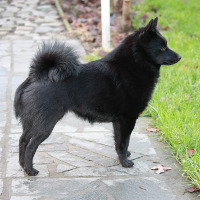 |
| Standard of the Schipperke |
Appearance of the Westeke |
| The little Westeke has a white or cream coat. Rarely will its coat be black like that of the Schipperke, but it is normally white. Apparently, the white gene is dominant. His eyes and nose are black and often resemble small buttons. This little dog's ears are erect and cat-like. His little tail curls over his back. He's a little scruffy, but his appearance is endearing. His feet are small and very delicate. His nails are often black, contrasting with his white coat. |
Temperament of the Westeke |
| The Westeke is full of energy. They love to play. Their general personality is cheerful and social. They get on well with other pets and often enjoy interacting with cats. He is loyal and affectionate. He loves nothing better than to curl up in his master's lap after a long day's play. This little dog is not afraid to alert his owners to unusual noises or the presence of a stranger. They generally do well around children, even bonding closely with the youngest. |
Needs and activities of the Westeke |
| The Westeke needs a daily walk to burn off energy. He also loves to play around the house. Nothing excites him more than a game of tug-of-war or fetch. He loves going to a dog park where he can run around and interact with other dogs. Despite his energetic personality, he can thrive as an apartment dog provided he gets daily exercise. If he lives in a house with access to a garden, he'll be very happy, but you need to keep an eye on him when he's outside, as he can show off his digging skills and escape without warning. His great intelligence makes it easy for him to learn tricks and excel at obedience; it's the perfect activity to stimulate his mind and keep him fit, too. |
Maintenance of the Westeke |
| The Westeke's coat is a little rough, like that of a Terrier. Its tousled coat benefits from weekly brushing. It rarely sheds, and doesn't need trimming. Many owners brush their dog's teeth to prevent gum disease later in life. He'll appreciate a bath once a month to eliminate any doggy smell. These active little dogs often wear down their nails, so they rarely need clipping. His upright ears tend to stay clean, but if you notice any debris, wipe them with a washcloth. |



 English (United Kingdom)

Comments