
 |
Welshund |
|
He is not recognized by the F.C.I. |
Origin |
Great Britain <> Germany -> U.S.A. | |
Translation |
Francis Vandersteen |
A brief presentation of the Welshund |
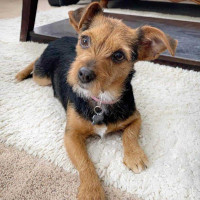
| The Welshund is a hybrid breed, created from a mixture of two European dogs, the Dachshund and the Welsh Terrier. The Welsh Terrier originated in Wales, while the Dachshund originated in Germany. Although very different in appearance, the parent dogs do have some similarities, as they were both used for hunting and tracking, but these days are often bred as pets or companions. Both parent breeds are also known to be particularly energetic and require moderate exercise. The owner of this hybrid must be prepared to give it regular exercise to avoid any destructive or negative behavior due to boredom. They need to be socialized from an early age with other dogs, as they have strong personalities and can be quite stubborn. This means that solid training is needed from an early age, which can sometimes prove difficult due to their stubborn nature. While the Welsh Terrier is tall, the Dachshund is longer, but both are said to be feisty and courageous. As the Welshund can inherit many different characteristics in terms of appearance, there are many variations to consider. The Dachshund is known to be small, while the Welsh Terrier is larger, so the size of the Welshund can vary from 10 to 25 cm. The Welsh Terrier has a double coat, which requires regular maintenance, while the Dachshund's coat texture can be very varied. Although some sources indicate that the Welsh Terrier is good with children, it is suggested that the Dachshund be supervised. Supervision of young children is always recommended at an early age, especially with small breeds. |
History of the Welshund |
| The Welshund's parent breeds are recognized by the American Kennel Club, but as a hybrid breed, the Welshund is not, although it is recognized by the International Designer Canine Registry and the Designer Breed Registry. The two parent breeds have been recognized by the American Kennel Club for over 100 years: the Dachshund in 1885 and the Welsh Terrier in 1888. The main difference between the two is that the Dachshund, originally from Germany, is recognized as a member of the hound group, while the Welsh Terrier belongs to the terrier group. Regardless of this difference, the Dachshund has French Terrier, Pinscher and Basset Hound ancestors. The Welsh Terrier, originally from Wales, has a more simplistic ancestry, derived from the English Black and Tan Terrier. Whereas the Dachshund was originally designed to hunt small game, the Welsh Terrier hunted small mammals such as foxes, badgers, otters and rats. Both have stamina and are energetic breeds. The Welshund as a hybrid, although mainly bred today as a pet, would make a good hunter thanks to the skills it inherits from both parent breeds. Why these two breeds were originally mixed is unclear, but you can get the best of both with this mix. The Welsh Terrier is generally a very healthy dog, with minimal health problems, so mixing this breed could mean that hybrids such as the Welshund inherit this characteristic. The Welsh Terrier is known for being calmer than other Terriers and for being good with children, characteristics for which the Dachshund is not necessarily known, but it is smaller in size. The Dachshund is also easier to care for than the Welsh Terrier, so this mix can become the ideal family pet. |
A little of the Welsh Terrier |
||
| Although the history of the Welsh Terrier is poorly documented, it is thought to have originated in the late 1700s as a relative of the now extinct English Black and Tan Terrier, but the earliest written records date back to 1450. As such, it is not only considered one of the UK's oldest surviving breeds, but is also one of only two breeds thought to have originated in Wales. Originally bred by farmers to hunt and clear their land of otters, foxes, badgers and other small to medium-sized prey, their courageous character is still evident today. In the late 1800s, the breed was finally recognized by the English Kennel Club and, in 1900, the Welsh Terrier Club of America was founded. Although generally a highly recognizable breed thanks to its coat color and gait, it is considered an endangered breed, as only a few hundred dogs are registered with the American Kennel Club each year. | ||
 |
||
| Standard of the Welsh Terrier |
A little of the Dachshund |
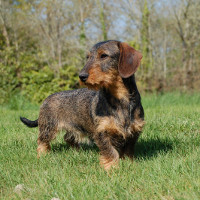
| The Dachshund, or badger hound in German, is the result of Germanic breeding in the 18th and 19th centuries, which aimed to create a dog not only of the right shape and size to hunt animals from the den, but also one with a solid constitution and fearless attitude. In the 1800s, Doxies were finally bred as pets, giving rise to the later-recognized miniature version, which deviates a little from the standard in terms of size. Both are now recognized and more regularly kept as companions, but many still employ them as hunters in Germany, where their size is not measured in weight or stature as in America, but rather by the circumference of their chest, the most determining factor in the size of the hole they can squeeze into. |
 |
| Standard of the Dachshund |
Appearance of the Welshund |
| Determining a Welshund's appearance is quite difficult. While its parent breed, the Welsh Terrier, is fairly simple with its black and brown colors, its coat is long and hard. There's also the Welsh Terrier's famous curly beard, moustache and bushy eyebrows. Dachshunds, on the other hand, are more complicated, as they are available in three varieties - smooth, long and wire-haired - and also come in different sizes. They are also known to come in many different colors. They can also have several different eye colors, including brown, blue and hazel. All Dachshunds have short legs and a long body, but the Welsh Terrier can grow to around 15 cm taller than the average Dachshund, so the size of the Welshund can vary. Like the Welsh Terrier, the Wirehaired Dachshund has a double coat. Both breeds have powerful legs and need regular exercise to expend their energy. Both breeds have floppy ears, but the Dachshund's are much larger. The Dachshund has a long, powerful muzzle with a scissor bite, while the Welsh Terrier also has a fairly long muzzle, with a scissor or flat bite. The Welsh Terrier's muzzle is covered with hair, often referred to as a mustache or beard. Both parent breeds have a fairly short tail that points upwards, but the Welsh Terrier's tail is often docked, in countries where this is permitted, within a few weeks of birth. The Welshund should be reasonably easy to train, as both parent breeds respond well to training. Exercise is essential for the Welshund, and as the Dachshund is known for its intelligence, it's important to mentally stimulate the breed too, to make sure it doesn't get bored. |
Temperament of the Welshund |
| As the Welshund is a hybrid, and its parent breeds have many differences in temperament, it's difficult to define a typical temperament for this breed. The Dachshund is highly intelligent and can have a stubborn streak, wanting to get his own way. It's very active, especially for a small dog, and it's easy for this breed to get bored, which can lead to negative and destructive behavior. The Welsh Terrier is also known to be very energetic, so the Welshund needs to be well exercised, both physically and mentally, from an early age. Training is also important, and strong bonds can be forged between the Welshund and its owner. It is suggested that Dachshunds are better suited to older children, but the Welsh Terrier is said to be excellent with children of all ages. Some sources suggest that both dogs should be supervised when in the presence of children or other dogs. Socialization and supervision are essential here, to ensure that a positive temperament is always encouraged from an early age. The American Kennel Club states that both parent breeds are friendly, which means that the Welshund possesses the characteristics necessary for the perfect family dog. The American Kennel Club also states that the Dachshund is inquisitive, while the Welsh Terrier is feisty, suggesting that they are mischievous and can get into trouble on occasion. Keep training sessions fun and avoid repetition to keep this hybrid interested, stimulated and out of trouble. |
Needs and activities of the Welshund |
| Both parent breeds, the Welsh Terrier and the Dachshund, are energetic and require moderate exercise of around 60 minutes a day. Both are known to have high energy levels and like to be stimulated both physically and mentally. Land dog activities and field trials can be the ideal outing for your hybrid. Your Welshund will thrive in a warm climate, as neither too hot nor too cold will suit this breed, and measures must be taken to protect your dog from both. In colder weather, a short-haired Welshund may need a sweater or pullover. |
Maintenance of the Welshund |
| The Welshund is a difficult breed to care for. The Dachshund has different breed varieties, including longhair, shorthair and wirehair. The Welsh Terrier has a double coat, with a long, dense, hard topcoat. Coat texture, density and length may vary according to the Dachshund variety with which the Welsh Terrier is mixed. The Welsh Terrier is very high-maintenance and should be brushed regularly, daily if possible. Shorthaired Dachshunds are easy to care for and require minimal grooming with a long-haired brush. Longer-haired variants of the Dachshund and the coat of the Welsh Terrier also require a detangling brush and comb. If your Welsh Terrier has a longer coat, you may want to take him to the groomer, as his coat may need plucking. Regular baths are suggested for both breeds. If your Welshund has a bushy beard, moustache and eyebrows like the Welsh Terrier, you'll need to pay special attention to these areas, wiping and grooming them carefully. You should also brush your Welshund's teeth at least two or three times a week. Your dog will be in good health if you give him regular exercise and stimulate his mind with tricks. Your Welshund's nails should be trimmed once a month to ensure that his paws are healthy for walking and exercise. |



 English (United Kingdom)

Comments