
 |
Wel-Chon |
|
He is not recognized by the F.C.I. |
Origin |
Great Britain <> France / Belgium -> U.S.A. | |
Translation |
Francis Vandersteen |
A brief presentation of the Wel-Chon |
| The Wel-Chon is an active little dog born of a cross between the spirited Welsh Terrier and the cheerful Bichon frise. The resulting dog is energetic, lively and playful. These dogs are intelligent, yet gentle in behavior, which means they are easy to train and an excellent option for new dog owners. They get on well with other dogs and love to play with children. Wel-Chons thrive in any environment and will happily accompany you wherever you go. If you own a Wel-Chon, its fun-loving personality will never fail to brighten your day. |
History of the Wel-Chon |
| The Wel-Chon is a recently developed hybrid breed, so there's not much documentation on its history. However, its parent breeds can both be traced back hundreds of years. |
A little of the Welsh Terrier |
||
| The Welsh Terrier, or Welshie, is a very old breed of Terrier originating from Wales, which was traditionally used to hunt rats, badgers, foxes and other small animals. Its origins date back to the 1500s, and it is thought to be descended from the old black and tan English Terrier, now extinct. Although an ancient breed, the Welshie was not recognized by the Kennel Club of England until 1885. A few years later, Welshies found their way to the USA and were registered with the American Kennel Club in 1888. | ||
 |
||
| Standard of the Welsh Terrier |
A little of the Bichon frise |
| The Bichon frise is an ancient breed, thought to have originated in the Mediterranean, probably Italy. Records indicate that this dog was brought to France from Tenerife in the 14th century. It is thought to be the result of a cross between the North African Barbet and the Poodle, and is probably closely related to the Havanese Bichon, the Maltese Bichon and the Coton de Tuléar. Bichons were admired by royalty in France - King Henri III was particularly fond of them - until the 1800s, when they became commoners' dogs. These adorable dogs soon found work as interpreters or even guide dogs, and managed to persevere until they once again became a popular pet. The Bichon frise made its way to the U.S.A. in the 1950s and was recognized by the American Kennel Club in 1972. |
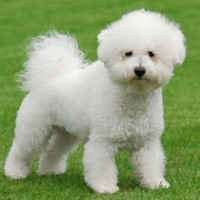 |
| Standard of the Bichon frise |
Appearance of the Wel-Chon |
| The Wel-Chon will have a thick double coat that helps protect the dog from the elements. The outer coat may be curly like that of the Bichon frise or harsh like that of the Welsh Terrier; the undercoat is soft. The Wel-Chon will probably be white or cream, but can be black and tan like the Welshie, or white or cream, with patches of black and tan. Although they have abundant fur, these dogs shed very little. They have a robust, square build and a confident pose. They have straight legs, round paws and black paw pads. Wel-Chons have an alert, friendly expression, with dark eyes and a black nose. Its ears can be the triangular shape of the Welsh Terrier or the floppy ears of the Bichon frise. |
Temperament of the Wel-Chon |
| The Wel-Chon is a happy, energetic dog that loves people. Their Terrier heritage means they're likely to be great watchdogs, alerting you energetically to any changes in their environment, but they'll go back to being friendly once they've finished warning you. These dogs are wonderful companions for children; they are very playful and feed off the energy of youngsters. Wel-Chons are generally friendly with other dogs, although their Terrier genes mean they can have a strong prey drive and will not fail to pursue small pets. Bichon frises are known to be very cooperative when it comes to training, but Welshies tend to have the stubborn streak of a Terrier, which your Wel-Chon could inherit. In any case, these are intelligent dogs that should be easy to train, provided you are firm and reward your dog for his efforts. These dogs are energetic and will enjoy their daily walks. Bichon frises are prone to separation anxiety, so make sure you don't leave your Wel-Chon alone for too long, as he may be in the same predicament. |
Needs and activities of the Wel-Chon |
| The Wel-Chon is a happy, active breed that enjoys spending time with its family. They are moderately energetic and need around 30 minutes of activity a day. They also need a lot of attention. They are intelligent dogs, well suited to obedience and agility trials. Wel-Chons can thrive in any environment. If you live in an apartment, make sure your dog gets plenty of exercise, as it will probably bark if bored. This dog's thick coat means it can adapt to any climate, insulating it from the cold in winter and repelling the heat in summer. |
Maintenance of the Wel-Chon |
| Given its abundant fur, you may be surprised to learn that the Wel-Chon is actually a low shedding breed, making it an excellent choice for allergy sufferers. However, its thick coat requires weekly brushing to prevent tangling and matting. Welsh Terriers are a breed that sweats, which means their coat can become odorous, and it's possible that Wel-Chons are in the same situation. You'll know it's bath time when your dog starts to smell. Be careful when using scented shampoos, however, as this dog can have sensitive skin and skin allergies. Bichon frises have a thick, curly coat that never stops growing; if your Wel-Chon inherits this coat, expect to have to take him to the groomer every 6 to 8 weeks. Check your Wel-Chon's ears every week or so for signs of irritation; sometimes dirt can get trapped in his fur and cause ear infections. If your dog's ears are dirty, simply wipe them with a warm, damp cloth. Trim your dog's nails about once a month and brush his teeth weekly to prevent dental disease. |



 English (United Kingdom)

Comments