 |
Transylvizsla Hound |
|
He is not recognized by the F.C.I. |
Origin |
Hungary -> U.S.A. | |
Translation |
Francis Vandersteen |
A brief presentation of the Transylvizsla Hound |
| The Transylvizsla Hound is one of the rarest hybrid dogs, as its parent breeds are not common in the United States. It is a combination of the Transylvanian scenthound and the Hungarian Short haired Pointer, both of which are medium to large-sized, athletic and sporting hounds. Transylvizsla Hounds love people, but need to be socialized young to get along with other pets. They are both attentive and independent, and make wonderful pets for people who don't have young children or live in small apartments. This is a very healthy breed that can live for over 14 years. |
History of the Transylvizsla Hound |
| The Transylvizsla Hound has no history as yet, since it's a new breed, but you should be able to get an idea of its past by consulting the history of the Transylvanian Scenthound and the Hungarian Short haired Pointer. |
A little of the Transylvanian Scenthound |
||
| The Transylvanian Scenthound, also known as the Hungarian Hound, was bred from hounds in the 9th century to hunt large animals such as wild boar, bison, lynx and bear. It is thought to have been bred from Asian and Celtic hounds by the Hungarian Magyar tribe in 800 A.D. for hunting in the Carpathian Mountains. There were two types, the short hound and the long hound, which were separated by size to hunt game of different sizes. They almost disappeared in the 1100s, when people concentrated more on farming than hunting, but those who loved the breed kept it alive. It was recognized by the United Kennel Club in 2006, and the American Kennel Club allowed it to be registered in its breeding services in 2015 to one day become a full member of the club. | ||
 |
||
| Standard of the Transylvanian Scenthound |
A little of the Hungarian Short haired Pointer |
| The Hungarian Short haired Pointer is another Hungarian breed that came to prominence in the Middle Ages as a pointing dog. They were bred from the Turkish Yellow Hound, Transylvanian Scenthound and Weimaraner in the 10th century. They were named for their pointing ability, but are also known for their ability to sniff and track. According to ancient stone engravings and writings, the Magyars hunted with this breed and falcons. At first, the Vizsla was a noble breed that belonged only to Hungary's royal families, but it eventually became popular with the common people after the breed came close to extinction following the Second World War. The breed finally arrived in America in the 1950s, where it was recognized by the AKC in 1960. Today, it is the 31st most popular dog breed. |
 |
| Standard of the Hungarian Short haired Pointer |
Appearance of the Transylvizsla Hound |
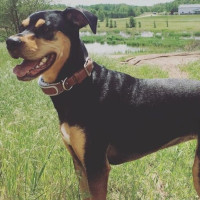
| The Transylvizsla Hound is a medium to large-sized dog with inquisitive, oval brown eyes and a brown or black nose on a square muzzle. Its head is rectangular with hanging ears, and it has a smooth, toned body, deep chest, long legs and medium-length tapered tail. Its double-layered coat is short, flat, dense and smooth. The Transylvizsla Hound comes in many colors, but is generally multicolored: black, tan and chocolate, red, liver, robin, blue, grizzly, piebald, brindle or sable. It's sometimes mistaken for a slim Rottweiler because of its color, but it's much smaller and has an almost delicate appearance. |
Temperament of the Transylvizsla Hound |
| Your Transylvizsla Hound will need firm but positive training to learn the rules. He likes to push the boundaries to see what he can do, so make sure your dog knows you're the boss. The Transylvizsla Hound isn't very good with young children or small animals, so you'll need to supervise him in the presence of smaller ones. He loves to hunt and can follow a scent for miles. Make sure he stays in a yard or on a leash when outside. They are good listeners if well trained, but can be distracted by their instincts. |
Needs and activities of the Transylvizsla Hound |
| You should walk your Transylvizsla Hound once or twice a day, and let it play in a fenced enclosure as often as possible. They have lots of energy and like to check out the smells of local wildlife and other scents, so the local park or dog park is an excellent choice for a day out. These dogs also enjoy sports such as scent trials, obedience and agility classes, flyball, Frisbee and earth dog training, and most of them are pretty good at these activities. They need at least an hour's exercise a day to avoid anxiety and bad habits like aggression and excessive barking. |
Maintenance of the Transylvizsla Hound |
| The Transylvizsla Hound coat is easy to care for, and you'll only need to give your dog a light brushing with a long-haired brush or rubber grooming glove once or twice a week. You can bathe your dog if necessary, but shampooing too often can cause dry skin. Nails should be trimmed once a month, and ears checked and cleaned at bath time. If you brush your hybrid's teeth regularly at least twice a week, you should be able to avoid costly dental expenses. These dogs tend to get cold if they're outside in cool weather, and some owners prefer to have them wear a dog sweater or coat to keep them warm. |



 English (United Kingdom)

Comments