 |
Springer Pit |
|
He is not recognized by the F.C.I. |
Origin |
Great Britain <> U.S.A. -> U.S.A. | |
Translation |
Francis Vandersteen |
A brief presentation of the Springer Pit |
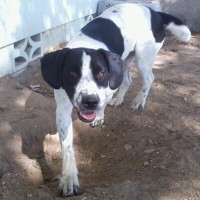
| The Springer Pit is a cross between an English Springer Spaniel and an American Pit Bull Terrier. They are large, short-coated dogs with a moderate tendency to shed. They live up to 15 years and weigh between 16 and 29.5 kilos. The Springer Pit is fun to be around; these dogs have very high energy levels and need lots of daily activity to drain it. They're full of excitement and energy, and always ready for a fun game like fetch or flyball. The Springer Pit is a highly intelligent dog that likes to follow commands, making it easy to train. They are also very affectionate and sensitive, and don't like to be left alone for long periods. |
History of the Springer Pit |
| The Springer Pit is the result of crossing an English Springer Spaniel with an American Pit Bull Terrier. |
A little of the English Springer Spaniel |
||
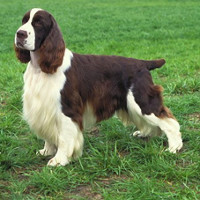
| The English Springer Spaniel is thought to have originated in Spain, hence its name. The breed is known to have a long history, dating back to 300 AD, when Welsh legal documents mention Spaniels. Dogs resembling today's English Springer Spaniel can be seen in some paintings from the 16th and 17th centuries. Spaniels were used for hunting; these dogs would summon small animals or birds, and lead them to where they could be captured. Later, when guns were invented, these dogs helped in the hunt by chasing game. In the 19th and early 20th centuries, the English began to classify Spaniels from the same litter according to their use for hunting, rather than their breed. Smaller dogs were intended for woodcock hunting, hence the name Cocker, and larger dogs were ideal for hunting game, hence the name Springer. The English Springer Spaniel was first imported to America by a Canadian breeder in 1913. Since the 1940s, two types of Springer have been bred: hunting dogs and show dogs. Springers used for field work have greater endurance, speed and sense of smell. These two types of Springers are not crossbred. The American Kennel Club recognized the English Springer Spaniel in 1910. | ||
 |
||
| Standard of the English Springer Spaniel |
A little of the American Pit Bull Terrier |
| The American Pit Bull Terrier is descended from the Bull and Terrier breeds created in England in the 19th century for bull and bear baiting. Later, when these shows became illegal, the dogs were used for dog fighting instead. These "Bull Dogs" were developed for dog fighting, but it was necessary that they not bite their masters, so they got a dog aggression trait, but had an opposition to attacking humans. As a result, these dogs became known as strong, protective dogs, but also as affectionate and respectful family dogs. Later, when dogs were brought to America, people began to use them for hunting, protecting property and companionship. There, breeders also developed a dog larger than the original English dog. This larger breed was given the name American Pit Bull Terrier and was recognized by the American Kennel Club in 1936 as the American Staffordshire Terrier. The name was changed to separate the dogs from their fighting past. |
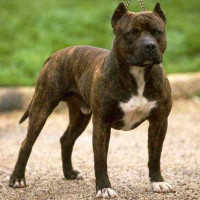 |
| Presentation of the American Pit Bull Terrier |
Appearance of the Springer Pit |
| The Springer Pit is a large dog with short to medium-length hair. Its coat can be black, white, blue, cream, brindle, brown or a combination of two or three colors. It has a muscular, compact build, strong legs and paws that help it run fast and swim, and a long tail. These dogs have very strong jaws and their teeth meet in a scissor bite. The Springer Pit has a large head, long, floppy ears and round, gentle eyes. It has a long muzzle, thinner than its head, and a big black or brown nose. |
Temperament of the Springer Pit |
| The Springer Pit is a very affectionate, intelligent, energetic and cheerful dog. They are very playful, like to run around a yard or park, and tend to have rabies, like the English Springer Spaniel. It's important to have a fenced yard, as this dog tends to wander and can get lost or injured. It is very intelligent, loyal and follows commands effortlessly, making it very easy to train. This hybrid is very friendly with other people, dogs and animals, and is always looking to play. This dog is not recommended for guarding property; it may bark at first, but will soon want to play and be petted. The Springer Pit is also very sensitive and emotional, and does not take well to being left alone for long periods. It can suffer from separation anxiety and, if bored, will seek out objects to chew and destroy. |
Needs and activities of the Springer Pit |
| The Springer Pit is the offspring of two very active dogs, so it needs plenty of exercise to stay healthy and happy, and to avoid undesirable behaviors like bad breath or excessive barking. A walk 2 or 3 times a day, a brisk walk or a jog are perfect for them. These dogs also need activities that require both physical and intellectual effort. A good game of flyable, fetch, tracking or other agility games would be much appreciated. Some Springer Pits may also enjoy swimming, whether in a large pond or a small plastic pool. These dogs live best in a home with a large yard where they can run and play freely. If you don't have a large yard, take them to a park where they can run around freely - they'll be happy, especially if there's a pond or lake where they can swim. |
Maintenance of the Springer Pit |
| This hybrid dog doesn't require much maintenance, making it ideal for someone who doesn't have the time or money to constantly groom a dog. He sheds moderately, so it's highly recommended to use a depilator several times a week, as well as an occasional bath to keep him clean. It's important to check and clean his ears every week to avoid infection. You can do this with a cotton pad soaked in a cleaning solution. Brushing teeth at least three times a week is necessary to remove tartar and bacteria. You'll also need to trim his nails once or twice a month, if he doesn't wear them out on his own with activity. |



 English (United Kingdom)

Comments