 |
Silkshund |
|
He is not recognized by the F.C.I. |
Origin |
Australia <> Germany -> U.S.A. | |
Translation |
Francis Vandersteen |
A brief presentation of the Silkshund |
| The Silkshund is an intentional cross between the German badger-hunting dog known as the Dachshund and the Australian Silky Terrier, a companion Terrier that was originally developed in Australia. The result, also called Silky Doxie by the Designer Canine Registry, is a lively little animal that is both intelligent and charming. As both parent breeds are vermin hunters, these little dogs have a strong propensity for hunting and should never be allowed off-leash. Although they tend to bark more than other breeds, these little dogs, if trained from the start, are just as at home in a large house as in an apartment. |
History of the Silkshund |
| The Silkshund is a designer dog, an intentional cross between two very small canines, the Dachshund, a badger-hunting dog from Germany, and a small pet from Australia with a talent for hunting rats and snakes, the Australian Silky Terrier. |
A little of the Australian Silky Terrier |
||
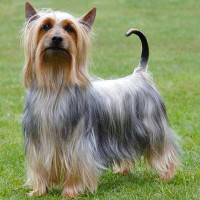
| Around the same time that Dachshund clubs were being formed, Yorkshire Terriers were introduced to Australia to improve the coat of the slightly larger Australian Terrier. The result of this combination was the Australian Silky Terrier, also known as the Sydney Terrier, first recognized as a breed in its own right in 1906 in New South Wales. At the time, there were wide variations between different Australian Silky Terriers, particularly in weight and ear confirmation, partly due to the mixing of Yorkshire, Australian and Silky Terriers, which continued even after the full breed standard was written in 1926. In 1932, the Kennel Control Council of Victoria introduced legislation prohibiting any new crosses between the three Terrier breeds. The breed was recognized by the American Kennel Club in 1959, when the breed standard was revised to further reduce the weight range from 3 to 5.5 kilos to 3.5 to 4.5 kilos. Despite their tiny size, these dogs are renowned for easily getting rid of rats and snakes when the need arises. | ||
 |
||
| Standard of the Australian Silky Terrier |
A little of the Dachshund |
| The Dachshund was developed at some point before the 1400s in Germany to eradicate vermin, mainly foxes and badgers. This dog had to be brave enough to pursue animals often larger than itself, small enough to slip into dens and underground tunnels, and tough enough to eliminate its prey once it had caught it. German foresters and farmers continued to perfect the breed and encouraged the adoption of additional features, such as a deep chest for greater endurance, large paddle-shaped legs that increase their digging ability, and a long, sturdy tail that makes it easier for hunters to pull dogs from burrows. The first Dachshund clubs were formed in the late 1800s, and these lively little dogs had become one of the ten most popular breeds in the United States by 1914. |
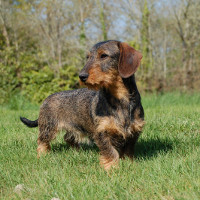 |
| Standard of the Dachshund |
Appearance of the Silkshund |
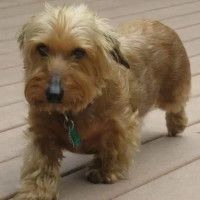
| This hybrid is a small canine with a fairly long back and short legs, a flat, wedge-shaped or tapered skull and a relatively long, sometimes slightly arched muzzle, characteristic of the Dachshund breed. The Silkshunds that most closely resemble the Dachshund have longer backs and shorter legs than those that favor their Australian Silky Terrier heritage, and all have thick, strong necks. The almond-shaped eyes of this crossbreed are generally dark, with dark rims and a lively, energetic expression, and their ears can range from the small triangular ears of the Australian Silky Terrier to the longer floppy ears of the Dachshund. The coats of the Dachshund and Australian Silky Terrier are very different from each other, and your Silkshund could inherit the short, soft, double-layered coat of the Dachshund, the long, silky, single-layered coat characteristic of the Australian Silky Terrier, or any coat in between. |
Temperament of the Silkshund |
| The Silkshund is a charming, lively little dog, both mentally agile and courageous. He's happiest when with his family, and can be very loyal. While they get on well with older children and adults, they are not always the best choice for families with young children, due to their fragility and tendency towards jealous or possessive behavior. This little dog has a not-so-little hunting instinct and should never be left off-leash outdoors, unless closely supervised in a fenced-in area. Supervision is absolutely necessary, even in a fenced yard, as the Dachshund is designed to dig efficiently and the Australian Silky Terrier not only digs but climbs too. While Dachshunds get on well with other Dachshunds, they are not so sociable with other dogs, and the Australian Silky Terrier is also known to be a little bossy and quarrelsome with other canines. Early socialization and training can help limit these tendencies, as well as preventing shy or wary behavior with strangers and excessive vocalizing. |
Needs and activities of the Silkshund |
| Although these dogs are quite small, they are also energetic and may need more exercise than many other dogs of their size. They are usually content with forty-five to sixty minutes of vigorous activity a day, usually divided into several shorter sessions throughout the day. In addition to brisk walks around the neighborhood or in nearby parks, Silkshunds can also enjoy activities such as agility training, earth dog trials, advanced obedience or trick training. Because of their small size, they can even get plenty of exercise playing games such as fetch and hide-and-seek in your house or apartment. |
Maintenance of the Silkshund |
| Grooming requirements for this small dog can vary quite widely, due to the differences in coat between the two parent breeds, but neither is particularly difficult or time-consuming to maintain. Silkshunds whose coats more closely resemble those of the Australian Silky Terrier generally don't shed much, and may even be considered hypoallergenic by many. Although they require more frequent bathing than those with the Dachshund's short, soft coat, brushing and combing are only necessary a few times a week to ensure that the hair doesn't tangle. Those who have inherited the Dachshund's short, double coat will only need a bath a few times a year, but will still need to be brushed with a long-haired brush or grooming glove once or twice a week to remove loose hair and keep their coat healthy and shiny. Dachshund-type Silkshunds tend to shed more and are less likely to be hypoallergenic. |



 English (United Kingdom)

Comments