Silkland Terrier

He is not recognized by the F.C.I.

Origin
Australia <> Great Britain -> U.S.A.
Translation
Francis Vandersteen

A brief presentation of the Silkland Terrier

The Silkland Terrier is a hybrid of the Australian Silky Terrier and the West Highland White Terrier or Westie. This mix combines two pure toy breeds that both demand your attention - but how can you say no to these adorable, cuddly little companions. Both parent breeds bring vivacity, energy and love to the biological mix of this beloved little family member. He'll make a wonderful addition to your family, although he may try to lay down the law if the pack leader isn't established firmly and early in his life. Not to mention his ability to sit on your lap.

History of the Silkland Terrier

The Silkland Terrier is a hybrid of the Australian Silky Terrier and the West Highland White Terrier. Although we have some information on the appearance and temperament of this hybrid, we don't know where or when it was developed. We can probably assume that this hybrid originated in the USA in the late 1900s or early 2000s, when interest in combining pure breeds for various reasons became more popular. Let's take a brief look at the history of the parent breeds to appreciate this canine. The Silkland Terrier hybrid is itself recognized by the American Canine Hybrid Club, the Dog Breed Registry, the Designer Dogs Kennel Club, the Dog Registry of America and the International Designer Canine Registry.


A little of the Australian Silky Terrier

        
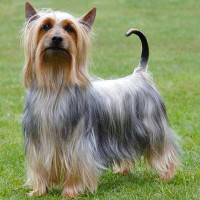
The Australian Silky Terrier, aka Sidney Silky, originated in Australia in the 1800s. The Yorkshire Terrier and some native Australian Terrier breeds are thought to be included in the ancestry of this single toy breed native to Australia. Although it was bred for companionship and not for hunting vermin, don't let its delicate size fool you, for this is a true Terrier and quite capable of it. The Australian Silky Terrier was introduced to the United States by soldiers returning from World War II, where it was officially recognized by the American Kennel Club in 1959. It is currently the 100th most popular dog breed in its registry.
Standard of the Australian Silky Terrier


A little of the West Highland White Terrier

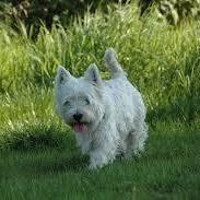
The West Highland White Terrier originated in the Scottish Highlands, also known as the Roseneath Terrier, Poltalloch Terrier, Highland and West Highlander, in the 1800's. It was bred to hunt small game and found a home in mining communities, farms, mills, villages, homes and gardens. The Westie breed was originally red, but when, in the 1900s, one of the red hounds was mistakenly killed for a fox, they began to be bred to produce the white color we see today, the old breeding habit being to remove white puppies at birth to preserve the red color of the original breed. The Westie arrived in the United States and was officially recognized by the American Kennel Club in 1908, where it ranks 41st among the most popular dog breeds in its registry.
Standard of the West Highland White Terrier

Appearance of the Silkland Terrier

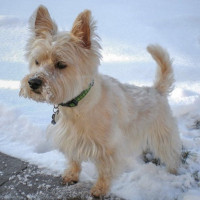
The Silkland Terrier is a hybrid of the Australian Silky Terrier and the West Highland White Terrier, and as such can inherit appearance traits from either or both of its parent breeds. Breeders and owners of the Silkland Terrier hybrid describe it as measuring 23 to 28 centimeters at the shoulders and weighing 7 to 9 kilos. It has a thick, silky coat of variable length, the most common colors being black, brown, white and cream. Its eyes are dark brown and almond-shaped, and its ears are small, V-shaped, set high and carried erect. Its nose is black and its bite is scissor-like. The tail is set high and short, carrot-shaped and carried high.

Temperament of the Silkland Terrier

Your Silkland Terrier is a hybrid mix of Australian Silky Terrier and West Highland White Terrier, and may inherit all the temperament and personality traits of one or both parent breeds. Breeders and owners describe its temperament and personality as alert, affectionate, friendly, energetic, intelligent, gentle, playful and lively. It is considered a good match for new owners and, if properly socialized from an early age, will get on well with children, the family cat, dogs and, albeit cautiously, even strangers. He barks from time to time but, rest assured, no stranger, friend or family member will approach him without his very vocal alarm capabilities getting the better of him. This characteristic makes him an excellent little watchdog. He has a strong propensity for hunting and a moderate tendency to wander, hence the importance of keeping him on a leash when outside the house, fenced yard or other secure enclosure. His parents have given him a high level of energy, which needs to be managed on a daily basis. He's easy to train, as he's eager to please.

Needs and activities of the Silkland Terrier

Your Silkland Terrier is a fairly energetic little member of the family. He will need 1 to 2 hours a day of appropriate exercise to manage this energy. He'll love those daily walks, even if they don't have to be long as he's small, as well as playtime in a dog park or fenced yard. He'll also be keen to take part in interactive games like fetch, Frisbee, indoor or outdoor hunt and seek, and obedience and agility training. Its small size makes it perfect for apartment or condominium living, provided there's a commitment to exercise. It can also live well in a family home, with or without a fenced yard, in a rural or urban environment. It's best suited to a temperate climate, where it's neither very hot nor very cold, but it can live anywhere as long as you provide it with appropriate protection and take precautions to protect it from extreme temperatures. It has a strong urge to hunt and a moderate tendency to wander. It is therefore essential to keep it on a leash when it is outside the house, fenced garden or any other enclosed, safe area, unless you feel like chasing it around the neighborhood or woods in search of a small animal or an interesting scent that has caught its attention.

Maintenance of the Silkland Terrier

Your Silkland Terrier hybrid falls into the high-maintenance category and sheds constantly, although its coat is considered hypoallergenic. His coat is thick and, depending on the dominant parent in the biological mix, can be more or less long. It should be brushed several times a week to remove loose hairs, debris, knots and tangles, and to distribute the natural vital oils in its coat to keep it healthy and beautiful. His ears should be checked weekly and cleaned if necessary with a cotton ball and a dog-approved ear cleaner. Check his nails every week too. They will probably need trimming every month, unless he can maintain them through normal physical activity. We recommend brushing his teeth two or three times a week at home to prevent the development of periodontal disease, which can lead to tooth loss over time. He's considered to be in the low drool and dog odor category. He's an active little dog, and you'll need to manage all that energy on a daily basis.

Comments

Latest page updates

  • Telomian

    Telomian He is not recognized by the F.C.I. Origin Malaysia Translation Francis Vandersteen A brief presentation of the Telomian The Telomian is a very rare breed of dog, and the only one native to Malaysia to have been bred outside the country. They were originally bred by the indigenous people of Malaysia to combat parasites such as snakes, rats,...
  • King Wheaten -- Cavalier King Charles Spaniel X Irish Soft Coated Wheaten Terrier

    King Wheaten He is not recognized by the F.C.I. Origin Great Britain <> Ireland -> U.S.A. Translation Francis Vandersteen A brief presentation of the King Wheaten The King Wheaten is a small dog with a heart this big and a playful disposition. Borrowing the energy and soft-coated waves of the Irish Soft Coated Wheaten Terrier and the size and...
  • Spanierd -- English Springer Spaniel X German Shepherd

    Spanierd He is not recognized by the F.C.I. Origin Great Britain <> Germany -> U.S.A. Translation Francis Vandersteen A brief presentation of the Spanierd The Spanierd is a hybrid dog. Its parent breeds are the English Springer Spaniel and the German Shepherd. They have an affable personality. He's known for entertaining family and friends with his...
  • Alaskan Goldenmute -- Alaskan Malamute X Golden Retriever

    Alaskan Goldenmute He is not recognized by the F.C.I. Origin U.S.A. <> Great Britain -> U.S.A. Translation Francis Vandersteen This breed is also known as Alaskan GoldenGoldenmuteAlaskan Gold Retriever     A brief presentation of the Alaskan Goldenmute The Alaskan Goldenmute is a descendant of two great dog breeds: the Alaskan Malamute and the Golden...
  • French pointing dog Pyrenean type

    French pointing dog Pyrenean type FCI standard Nº 134 Origin France Translation Mrs. Peggy Davis Group Group 7 Pointing Dogs Section Section 1.1 Continental Pointing Dogs « Braque » Type Working With working trial Acceptance on a definitive basis by the FCI Tuesday 18 January 1955 Publication of the official valid standard Tuesday 01 August 2023 Last...
  • French pointing dog Gascogne type

    French pointing dog Gascogne type FCI standard Nº 133 Origin France Translation Mrs. Peggy Davis Group Group 7 Pointing Dogs Section Section 1.1 Continental Pointing Dogs « Braque » Type Working With working trial Acceptance on a definitive basis by the FCI Monday 17 January 1955 Publication of the official valid standard Tuesday 01 August 2023 Last...
  • Vucciriscu

    Vucciriscu He is not recognized by the F.C.I. Origin Sicily Translation Francis Vandersteen En français, cette race se dit Vucciriscu Diese Norm ist in deutscher Sprache sichtbar Vucciriscu En español, esta raza se dice Vucciriscu In het Nederlands, wordt dit ras gezegd Vucciriscu This breed is also known as Sicilian Vucciriscu Sicilian Butcher...

© 2026 Groupe Milouchouchou ASBL. Tous droits réservés. En savoir plus

Protected by Copyright01
We use cookies

We use cookies on our website. Some of them are essential for the operation of the site, while others help us to improve this site and the user experience (tracking cookies). You can decide for yourself whether you want to allow cookies or not. Please note that if you reject them, you may not be able to use all the functionalities of the site.

Ok