
 |
Siberian Black Mouth Cur |
|
He is not recognized by the F.C.I. |
Origin |
Siberia <> U.S.A. -> U.S.A. | |
Translation |
Francis Vandersteen |
A brief presentation of the Siberian Black Mouth Cur |
| The Siberian Black Mouth Cur is a hybrid dog. Its parent breeds are the Siberian Husky and the Black Mouth Cur. It's a large dog, weighing around 32 kilos at maturity. It inherits the ability and desire to work. He's a hunter at heart, and the tenacity of the Siberian Husky's parent breed can only add to his hunting prowess. They also make excellent watchdogs. He is likely to be aloof with strangers, and his size will make him intimidating to potential intruders. He is good with children, provided he is properly socialized. |
History of the Siberian Black Mouth Cur |
| The Siberian Black Mouth Cur is a rare hybrid dog breed. To understand the origins of the Siberian Black Mouth Cur, it's important to study the origins of its parent breeds. |
A little of the Siberian Husky |
||
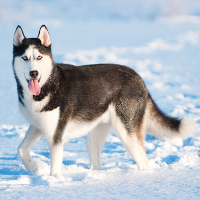
| The ancestor of the Siberian Husky came from the Chukchi, the indigenous nomads of Siberia. DNA confirms that the Siberian Husky is one of the oldest dog breeds. Not only did the dogs provide transport for their masters, they also slept indoors with families, bringing warmth to children in particular. The Husky was brought to Alaska in 1908, where it became a sled dog. The Siberian Husky was part of the All-Alaskan Sweepstakes, a race very similar to the Iditarod. It was also used to pull sleds in the deep snows of the Klondike during the Gold Rush. | ||
 |
||
| Standard of the Siberian Husky |
A little of the Black Mouth Cur |
| The Black Mouth Cur is a truly American dog. The Black Mouth Cur originated in the southern United States. In 1964, L.H. Ladner shared his breeding records, which showed that his family had developed the dog that would become the Black Mouth Cur. His detailed records made it possible to determine the origin of the Black Mouth Cur's lineage. It is not known exactly which breeds were combined before the Ladner family opened the records of their breeding program to create the modern Black Mouth Cur. |
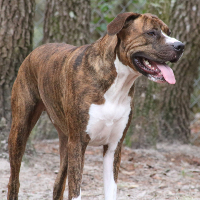 |
| Presentation of the Black Mouth Cur |
Appearance of the Siberian Black Mouth Cur |
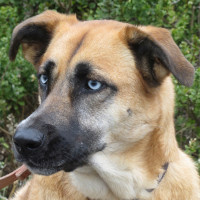
| The Siberian Black Mouth Cur is a large dog. They can be cream or yellow, a nod to their Black Mouth Cur lineage. Conversely, they can be dark brown or gray (or even black) like their Siberian Husky parent. Eye color also varies. He may have brown eyes like the parent breed Black Mouth Cur, or have a “glass” eye (one brown and one blue) - a trait he may inherit from the parent breed Siberian Husky. His coat is also likely to be influenced by the dominant parent breed. It may inherit the short, smooth coat of the Black Mouth Cur. Conversely, it may inherit the slightly longer, denser double coat of the Siberian Husky's parent breed. Its tail curls over its back and its ears are erect. |
Temperament of the Siberian Black Mouth Cur |
| The Siberian Black Mouth Cur is a rather serious dog. It takes him a while to get used to strangers. However, this makes him a good watchdog. He's not likely to be distant with his family. He's very intelligent, but housetraining may take a little longer with the Siberian Black Mouth Cur than with other breeds. However, start training him from an early age and reinforce his good behavior with praise and treats. He won't respond to punishment as a deterrent to bad behavior. He's not the type to bark a lot, but he'll let you know if something's wrong on his territory. Of course, once he's attached himself to his family, he's very affectionate with them. He can be gentle with other dogs, but he needs to be socialized from an early age so that he can spend time with other animals. |
Needs and activities of the Siberian Black Mouth Cur |
| The Siberian Black Mouth Cur tends to be rather active; however, if left to its own devices, it will become lazy and start to put on weight. To keep him healthy, it's best to give him plenty of playtime and exercise. He'll adapt to the activities of an active family, like long walks and hikes. In fact, you'll probably get tired before he does on the hiking trail. If you allow him to play inside a fenced yard, make sure the fence is at least 1.80 m high and anchored at least 25 centimetres into the ground. Both breeds have a tendency to climb over fences and dig their way out. He'll also enjoy a trip to the dog park, but wait until he's fully trained. Don't forget that he's a hunter at heart and can be prone to wandering off when not on a leash or inside a well-built fence. |
Maintenance of the Siberian Black Mouth Cur |
| The Siberian Black Mouth Cur's level of maintenance will largely depend on the dominant parental breed. If it inherits the short, straight coat of the parent Black Mouth Cur breed, the Siberian Black Mouth Cur will need little maintenance. It can be brushed once a week to remove any excess hair, and bathed only when necessary. If he inherits the dense double coat of the parent Siberian Husky breed, you'll need to brush him two or three times a week to rid his coat of excess hair. Expect him to “blow” his coat twice a year. In spring and autumn, you'll need to brush him daily. Brush his teeth two or three times a week to prevent tartar build-up on his teeth and bad breath; better still, to prevent tooth decay, brush his teeth every day. Note: you'll need to establish a grooming routine with him from the very beginning of his life. The Siberian Husky's parent breed can be sensitive to touch. Wipe his ears with a cotton ball once a week to remove excess dirt; also check for redness and odor. Trim his nails every two weeks, unless he wears them down naturally. |



 English (United Kingdom)

Comments