
 |
Turnspit Dog |
|
He is not recognized by the F.C.I. |
Origin |
United Kingdom | |
Translation |
Francis Vandersteen | |
En français, cette race se dit |
 |
Chien de tournebroche |
Diese Norm ist in deutscher Sprache sichtbar |
 |
Rotisserie-Hund |
En español, esta raza se dice |
 |
Perro asador |
In het Nederlands, wordt dit ras gezegd |
 |
Turnspit-hond |
|
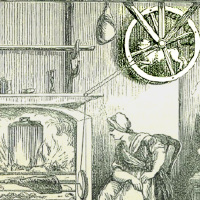
The Turnspit dog was a short-legged, long-bodied dog bred to turn meat on a wheel-known as a turnspit or dog wheel-during cooking. It is mentioned in the 1576 work *Of English Dogs* under the name "Turnespete." It was also known as the kitchen dog, the cooking dog, or the wheel dog. In Linnaeus's 18th-century classification of dogs, it is listed as *Canis vertigus*. The breed went extinct because it was considered such a common, low-status dog that no records were kept of it. Some sources consider the Turnspit dog a type of Glen of Imaal Terrier, while others link it to the Welsh Corgi. As culinary techniques advanced, the need for Turnspit dogs declined. Over time, they were no longer bred for their specific function and their numbers dwindled, eventually leading to their extinction. A preserved specimen of a Turnspit dog is on display at the Abergavenny Museum in Wales. Queen Victoria kept retired Turnspit dogs as pets. The dogs were also taken to church to serve as foot warmers. Turnspit dogs were described as "long-bodied, crooked-legged, and ugly-looking dogs, with a wary and unhappy air." Delabere Blaine, a 19th-century veterinarian (who styled himself the "father of canine pathology"), classified the Turnspit dog as a variety of spaniel. They are often depicted with a white stripe down the middle of the face. Turnspit dogs are notable for their long bodies and short, usually crooked legs. Their coats are generally dark grey mottled with black or entirely black, with a whitish belly. |



 English (United Kingdom)

Comments