 |
Harrier |
|
FCI Standard No. 295 |
Origin |
Great Britain | |
Translation |
Mrs. Peggy Davis, brought up to day by Dr. Paschoud | |
Group |
Group 6 Scenthounds and related breeds | |
Section |
Section 1.2 Medium-sized Hounds | |
Working |
With working trial | |
Date of acceptance on a definitive basis by the FCI |
Wednesday 27 November 1974 | |
Date of publication of the official valid standard |
Tuesday 08 September 2026 | |
Date of the last update |
Tuesday 06 October 2026 | |
En français, cette race se dit |
 |
Harrier |
Diese Norm ist in deutscher Sprache sichtbar |
 |
Harrier |
En español, esta raza se dice |
 |
Harrier |
In het Nederlands, wordt dit ras gezegd |
 |
Harrier |
Usage |
| Scent hound. |
General appearance |
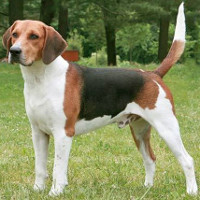
| Strong and light dog, less powerful and more distinguished than the Foxhound. |
Behaviour / temperament |
| Friendly, lively. Showing aggression or nervousness unacceptable. |
Head |
||
Cranial region |
||
Head |
Expressive, moderately large. | |
Skull |
Flat, occipital crest slightly marked. | |
Facial region |
||
Nose |
Black, well developed. | |
Muzzle |
Quite long and rather more pointed than square. | |
Lips |
Covering the lower jaw. | |
Eyes |
Always dark, never prominent, of medium size, not too round. | |
Ears |
V shaped, almost flat, slightly turned, quite short and rather set on high. | |
Neck |
| Long and free although well tied into the shoulders. Slightly arched in its upper part. |
Body |
||
Back |
Straight and muscled. | |
Loin |
Strong and slightly arched. | |
Chest |
More developed in depth than in width. | |
Ribs |
Rather flat than too rounded. | |
Side |
Must neither be too full nor too tucked up. | |
Tail |
| Of medium length, with some longer and coarser, slightly offstanding hairs (like ears of grain) towards the tip; well carried. |
Limbs |
Forequarters |
||
Generality |
Forelegs straight and vertical. | |
Shoulders |
Sloping and well muscled. | |
Hindquarters |
||
Generality |
Strong, hip bones quite prominent. | |
Upper thigh |
Long and well let down. | |
Hock |
Neither too straight nor too bent. | |
Feet |
| Neither too tight nor too round. |
Gait and movement |
| Supple and steady. |
Skin |
| White with black markings. |
Coat |
||
Hair |
Smooth, of English style, i.e. flat and not too short. | |
Colour |
Any recognised hound colours and markings. Any other colour or combination of colours unacceptable. |
|
Size and weight |
||
Height at withers |
From 48 to 55 cm maximum - but rather from 48 to 50 cm preferred. | |
Faults |
| • Any departure from the foregoing points should be considered a fault and the seriousness with which the fault should be regarded should be in exact proportion to its degree and its effect upon the health and welfare of the dog and its ability to perform its traditional work. • Faults listed should be in degree of seriousness. |
Disqualifying faults |
 Aggresive or overly shy. Depigmented nose. Prognathism. Loin long and flabby. Thin thighs. Discoloration of scrotum. Aggresive or overly shy. Depigmented nose. Prognathism. Loin long and flabby. Thin thighs. Discoloration of scrotum. |
NB : |
| • Any dog clearly showing physical or behavioural abnormalities shall be disqualified. • The above mentioned faults when occurring to a highly marked degree or frequently are disqualifying. • Male animals should have two apparently normal testicles fully descended into the scrotum. • Only functionally and clinically healthy dogs, with breed typical conformation should be used for breeding. |



 English (United Kingdom)

Comments