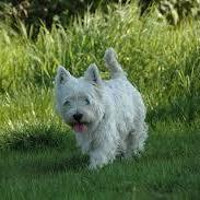
West Highland White Terrier

FCI Standard No. 85

Origin
Great Britain
Group
Group 3 Terriers
Section
Section 2 Small-sized Terriers
Working
Without working trial
Date of acceptance on a definitive basis by the FCI
Friday 29 October 1954
Date of publication of the official valid standard
Tuesday 08 September 2026
Date of the last update
Tuesday 06 October 2026
En français, cette race se dit
West Highland White Terrier
Diese Norm ist in deutscher Sprache sichtbar
West Highland White Terrier
En español, esta raza se dice
West Highland White Terrier
In het Nederlands, wordt dit ras gezegd
West Highland White Terrier

Usage

Terrier.
 

General appearance

Strongly built; deep in chest and back ribs; level back and powerful quarters on muscular legs and exhibiting in a marked degree a great combination of strength and activity.

Behaviour / temperament

Small, active, game, hardly, possessed of no small amount of self-esteem with a varminty appearance. Alert, gay, courageous, self-reliant but friendly.

Head

Cranial region

Head
Distance from occiput to eyes slightly greater than length of foreface. Head thickly coated with hair and carried at right angle or less, to axis of neck. Head not to be carried in extended position.
Skull
Slightly domed; when handled across forehead presents a smooth contour. Tapering very slightly from skull at level of ears to eyes.
Stop
Distinct stop, formed by heavy, bony ridges immediately above and slightly overhanging eye, and slight indentation between eyes.

Facial region

Nose
Black and fairly large, forming smooth contour with rest of muzzle. Nose not projecting forward.
Muzzle
Foreface gradually tapering from eye to muzzle; not dished nor falling away quickly below eyes, where it is well made up.
Jaws and teeth
Jaws strong and level. As broad between canine teeth as is consistent with varminty expression required. Teeth large for size of dog, with regular scissor bite, i.e. upper teeth closely overlapping the lower teeth and set square to the jaws.
Eyes
Set wide apart, medium in size, not full, as dark as possible and set well under heavy eyebrows which gives the dog a sharp and intelligent piercing expression. Light coloured eyes undesirable.
Ears
Small, erect and carried firmly, terminating in sharp point, set neither too wide nor too close. Hair short and smooth (velvety), should not be cut. Free from any fringe at top. Round-pointed, broad, large or thick ears or too heavily coated with hair undesirable.

Neck

Sufficiently long to allow proper set on of head required, muscular and gradually thickening towards base allowing neck to merge into nicely sloping shoulders.

Body

Body
Compact.
Back
Level.
Loin
Broad and strong.
Chest
Deep and ribs well arched in upper half presenting a flattish side appearance. Back ribs of considerable depth and distance from last rib of quarters as short as compatible with free movement of body.

Tail

13 -15 cms long, covered with harsh hair, no feathering, as straight as possible, carried jauntily, not gay or carried over back. A long tail undesirable, and on no account should tails be docked.

Limbs

Forequarters

Shoulders
Sloping backwards. Shoulder-blades broad and lying close to chest wall. Shoulder joint placed forward.
Elbows
Well in, allowing foreleg to move freely, parallel to axis of body.
Forearm
Forelegs short and muscular, straight and thickly covered with short, hard hair.
Forefeet
Larger than hind feet, round, proportionate in size, strong, thickly padded and covered with short harsh hair. Under surface of pads and all nails preferably black.

Hindquarters

Generality
Strong, muscular and wide across top. Legs short, muscular and sinewy.
Upper thigh
Very muscular and not too wide apart.
Stifle
Well bent.
Hock
Bent and well set in under body so as to be fairly close to each other when standing or moving. Straight or weak hocks highly undesirable.
Hind feet
Smaller than forefeet and thickly padded, round, proportionate in size, strong, thickly padded and covered with short harsh hair. Under surface of pads and all nails preferably black.

Gait and movement

Free, straight and easy all round. In front, legs freely extended forward from shoulder. Hind movement free, strong and close. Stifle and hocks well flexed and hocks drawn under body giving drive. Stiff, stilted movement behind and cowhocks highly undesirable.

Skin

Free from obvious skin problems.

Coat

Hair
Double coated. Outer coat consists of harsh hair, about 5 cms long, free from any curl. Undercoat, which resembles fur, short, soft and close. Open coats highly undesirable.
Colour
White.
Any other colour or combination of colours unacceptable.

Size and weight

Height at withers
Approximately 28 cms.

Faults

• Any departure from the foregoing points should be considered a fault and the seriousness with which the fault should be regarded should be in exact proportion to its degree and its effect upon the health and welfare of the dog and its ability to perform its traditional work.
• Faults listed should be in degree of seriousness.
 

Disqualifying faults

Aggressive or overly shy dogs.

NB :

• Any dog clearly showing physical or behavioural abnormalities shall be disqualified.
• The above mentioned faults when occurring to a highly marked degree or frequently are disqualifying.
• Male animals should have two apparently normal testicles fully descended into the scrotum.
• Only functionally and clinically healthy dogs, with breed typical conformation should be used for breeding.


Detailed history

Like all Scottish terriers, the ancient history of the West Highland White Terrier is rather obscure. Today adored by the publicity and object of a passionate fashion, yesterday secret race crowned in the exhibitions, this charming Terrier with the white dress nevertheless has a past more distant, that many seem to even forget: that of a rough hunter of Scottish vermin.

It should first be pointed out that Terriers have always been found in Scotland. Even before the Middle Ages, they were used to dislodge and kill harmful animals and other "stink", such as rats and mice, of course, as well as badgers, otters and polecats. The fox was also among their victims, which leaves one wondering about the determination and aggressiveness that these little dogs had to show. The first written records of the existence of Scottish Terriers are undoubtedly found in various 16th century authors (Johannes Caius, Turbeville, for example), who mention Northern Terriers and describe a type of short-legged, hard-haired dogs. chasing the fox and the badger underground. In 1774, Oliver Goldsmith spoke of a small burrow, of unswerving courage and a clear voice.

In the wilderness of the Highlands, as well as on the coast and in the Hebrides, Terriers were reared by nobles and peasants. Some differences appeared in the types and colors, according to the preferences of each breeder, in every most remote corner, but it was not until the beginning of the nineteenth century that the descriptions began to note these variations and that the types were more clearly drawn; without it being possible today to precisely locate the origins of each current race, if they are not the same, moreover. Rather, to the east (in the Aberdeen area, in particular), dogs with strong bodies, short legs, large heads, long noses and hard teeth developed. Their ears were small and erect, their hair was hard from sand to black. They would be the ancestors of the Scottish Terrier. In the western counties, the dogs, also leggy, had the body more collected, nervous, the hair longer; they were apparently the ancestors of Cairn and West Highland. In the Northwest Islands, there was a third type with a longer back, stronger structure, long hair, from which would descend the Skye Terrier.

Often white puppies that were born in a litter were drowned because they were thought to be less hard-working than colored subjects. Otherwise, until that time, there was little physical care of a dog as long as he was strong enough and clever enough to do the job. The peasants and gamekeepers were not tender with their dogs, and it is said, for example, that young Terriers had to face an otter to death in a creek as proof of their courage. Who has already seen the jaw, agility and strength of an otter will understand the difficulty of this test. In the hunt, dogs were dealing with ferocious game and determined to sell his skin dearly. It is therefore that of the brave dogs who often suffered from it. And the medicine of the moment was rather expeditious: when a dog was torn, his master sewed it with the big wire and alive. As for hunting in the cairns, the rocky mounds where the vermin hides (which gave their name to one of these Terriers), it was also perilous. The dogs often got stuck in it, in their ardor to pursue the beast, and only a fast of several days allowed them to leave, emaciated but alive.

But the reputation of the brave Highland Terriers had long since overflowed their native moors. As evidenced by the precautions taken by James I of England (James VI of Scotland) when he wanted to send in royal gift six White Terriers of Argyll. The dogs were embarked on several boats (in case one would sink). The lucky recipient was none other than Henry IV. In 1839, it will no longer be a king but an artist (Sir Edwin Landseer) who will pay tribute to the West Highland White Terrier by making it appear on two of his paintings, Highlands Dogs and Dignity and Impudence: any confusion as to the race of these animals is impossible, so close are they to the Westie type, even today.

The history of the West Highland then narrows around a region, Argyll County, and a man, Colonel ED Malcolm of Poltalloch. Argyll, located to the southwest of the Grampian Mountains, had the curious peculiarity of sheltering several entirely white wild species. Foxes, hares and immaculate heather cocks had to cohabit with the little white Terriers, also perfectly pigmented and totally free of albinism. Malcolm de Poltalloch, who became a prominent breed specialist, was the first, not to tolerate, but to look for the white color in his litters. In fact, this great hunter accidentally killed one of his favorite Terriers, whom he could not distinguish in the red bushes; here is the Colonel, who is determined to have only white dogs. White is not exactly the appropriate qualifier, since, as T. Bell notes in 1837, a common tint of Scottish terriers was linty white, with cream and even light yellow. Such were the Colonel's Terriers around 1870, after he had succeeded in creating his distinct variety of Highland Terriers. Again, these dogs had to work first, and their color, like their morphology, could afford to be approximate. The character, he was king, which explains our hard, turbulent, stubborn and well-tempered Westies. Note the semi-erect ears that sometimes appeared at the time.

But Colonel Poltalloch was not only a hunter, he also hid an initiated dog-dog, and he went off to present his Terriers in exhibitions. This was in 1890, and the various Scottish races were not yet very well defined. All these little devils of working dogs coexisted in the same categories, which explains the confusion and controversy over the names that were long given to the breed, such as "Highland Terrier", "Poltalloch Terrier", "Pittenweem Terrier" , "Roseneath Terrier" and even "White Scottish Terrier" or "Skye White Terrier". It must be admitted that there was something to lose. These famous "Roseneath Terriers" were presented at the Crystal Palace in 1899, the same dogs being called West Highland White Terriers in Edinburgh in 1904. The breed was launched.

Two years later, the first English Race Club was founded and the standard developed. That year, the Kennel Club officially recognized Westie, which, however, was still far from current dogs. It was not until November 18, 1924, that couplings between Cairn and Westie were forbidden, and in 1928 the standard of the second was changed, especially with regard to size. Between the wars would see the first steps of grooming Terriers, except for the Cairn, which kept its aspect of shaggy little devil. The success was soon, and the Westie was soon appreciated in the south of England, then exported in the seventies.

A story of brave and hardworking dogs, who today seduce by their qualities of heart and their little rascal look. A beautiful story, in short. This dog is a big man in a mini format. This is, quickly summarized, the portrait of the West Highland White Terrier. Small, he is, but without concessions. And, if his size does not allow him to impose himself physically (and again), he fills this lack by a character of fire and frightens the strongest by his determination and his courage. Of course, it's his looks, but he has so much more to offer. To buy it without knowing it could be a disaster, because this devil must have a master at the height.

First, it's an asset. No wonder for a Terrier, certainly, but the Westie seems to have some genius to create the event where there is nothing to see. A little cabotin, let's face it, it does nothing like the others, and the mere fact of watching it live is already a spectacle. In the house, he knows every nook, every little household detail that can make an exciting game, he walks his field with pride and confidence. No way to spend the afternoon to be cuddled. The Westie is a dog, not a toy, and he was quick to call him back. He also cultivates a certain independence and stays on his own. Even if his curiosity pushes him towards his master as soon as he works at his height (close to the ground) his presence in the house is enough for him, and he will know how to wait for him patiently if he is absent. Nor is he the working dog eternally fixed on his mission, and to make him obey is already a great feat. Because the Westie seems to enjoy not falling into any category. Or else, it should be created for him: large volunteer dog disguised as innocent little doggie. Everyone does what he likes; he agrees, especially if he decides.

The stubborn and somewhat stubborn side of the West Highland should not overshadow his great abilities of affection and attachment to his master, provided that he is respected. Because, by seeming not to take care of him, the Westie does not really leave him from a sole. Moreover, even if he tries to be as discreet as possible at these times, no one is fooled when he gets closer on the tip of the legs and settles to beg for a caress, a small friendly gesture. We may be Terrier, we still need love. In his racing style, the Westie hides a big heart. This affectivity, he unfolds it to the place of the children, that he will love to the madness if they are well brought up and do not pull him the hair (otherwise, it will make them understand quickly that he is not dog with let yourself be martyred). He will always be up for real games (not to report the "baballe") and for walks. The forest excursions are what he prefers, and he will not be the first tired. Nothing stops him, neither the trunks of trees lying across the road, nor the holes, nor the brambles. As a true Terrier, he remained sensitive to any game-like smell, and is able to run through the thickets in pursuit of an animal to reappear an hour later, muddy, exhausted, but delighted.

His obstinacy may also be felt by cats and other domestic animals. It must therefore forbid any aggression towards them from infancy. This does not prevent him from being perfectly able to fraternize with the feline of the house, if he has been used to it young; thus, the charming sight of Toutou et Minet sharing, asleep, a single basket will not be rare. Do his fellow creatures find favor in the eyes of this prince? Generally speaking, yes, the West Highland has a good sociability, but it can not hide its strong personality, and some friction can occur if it falls on a big dog velléitaire. He who thinks he is big, he does not hesitate to attack his opponent with an astonishing assurance. Dominant enough by nature, he willingly submits dogs larger than himself by his sole authority. It can happen that a "beefy" puts it in its place, which, far from calming Sir Westie, rather excite. In short, he is charming as long as one does not try to annoy him.

This voluntary and intrepid attitude, the West also has a little in its reaction to any training attempt. This is why it is essential to take care of his education while he is still a puppy not too sure of him. Not to teach him good manners would soon turn him into a little despot, cute, but sometimes hard to bear. This dog is a strong, and any weakness in his regard would be a serious mistake, as would any attempt to take in force, which he would reject en bloc. However, the person who will slip the iron hand in the velvet glove and insist without seeking to dominate openly will have a great chance to make a small companion charming, mischievous indeed, but also an active partner.

For the Westie is a clever man who, if he does not like to submit in public, quickly understands where his interest is with a decided master. An open vexation would make him sulk for days, that's why the cases will be settled in family, with an absolute constancy in prohibitions and orders. Such an act authorized today will not be defended tomorrow (and vice versa), otherwise the Westie will lose all faith in the solidity of his master and will no longer recognize him as his protector and friend. It must be asked little, but demand to be listened to. The West is not a dog who delights in a permanent order - execution relationship, but it is essential to obtain his obedience the few times he is asked: no question of remaining on a request without answer. Then, we congratulate him warmly; he will soon prefer caresses to the big voice. Very intelligent, the Westie can, if he has decided, surprise by being very cooperative and even enjoy sports such as agility. In this discipline, where dog and master follow together a course of obstacles, in harmony and without peremptory orders, the West is likely to find its balance by becoming half of a team and not a mere subordinate. Whatever the activity that his teachers will choose to share with him, the important thing is to establish a voluntary collaboration that will make him as happy as they are.

Formerly a country dog exclusively, the West now becomes one of the favorite breeds of city dwellers because of its small size and its rustic character as much as it plays. It is therefore essential that his rhythm of life be in harmony with his temperament and preserve his balance. Of course, there is no question of confining him to cramped rooms by giving him for every exercise his three daily hygienic walks. However, with regular outings in a green space, long enough for him to really be physically busy, he will be very happy, when the time comes, to return to the apartment. After the effort, the comfort, and the carpet it likes surely as much as the straw, if it is well adapted to the city. Nevertheless, sessions of real campaign will do him the greatest good, and it would be contrary to his nature to want to preserve his immaculate whiteness by forbidding him to run in the mud and play in puddles.

A word about the value of the West Highland White Terrier as an alarm bell. Let a stranger appear at the gate or at the door, and there is no doubt that the clear, high-pitched voice of the Westie will be heard. Of course, he is not a real watchdog, because (fortunately) he is relatively sociable with strangers, but he will not fail to bark to signal an unexpected presence. This West Highland is a real character.

Irresistible with its mischievous look, endearing by its independent but affectionate character, practical thanks to its pocket size, it's really the dog of the eighties. Wish him to keep this huge public favor and be one of the favorites of the twenty-twenties decade. He deserves it.

Comments

Latest page updates

  • Yorkshire Terrier

    Yorkshire Terrier FCI Standard No. 86 Origin Great Britain Group Group 3 Terriers Section Section 4 Toy Terriers Working Without working trial Date of acceptance on a definitive basis by the FCI Saturday 30 October 1954 Date of publication of the official valid standard Tuesday 08 September 2026 Date of the last update Tuesday 06 October 2026 En...
  • Welsh Terrier

    Welsh Terrier FCI Standard No. 78 Origin Great Britain Group Group 3 Terriers Section Section 1 Large- and medium sized Terriers Working Without working trial Date of acceptance on a definitive basis by the FCI Saturday 23 October 1954 Date of publication of the official valid standard Tuesday 08 September 2026 Date of the last update Tuesday 06...
  • Welsh Springer Spaniel

    Welsh Springer Spaniel FCI Standard No. 126 Origin Great Britain Group Group 8 Retrievers-Flushing Dogs-Water Dogs Section Section 2 Flushing Dogs Working With working trial Date of acceptance on a definitive basis by the FCI Thursday 30 December 1954 Date of publication of the official valid standard Tuesday 08 September 2026 Date of the last...
  • Welsh Corgi Pembroke

    Welsh Corgi Pembroke FCI Standard No. 39 Origin Great Britain Group Group 1 Sheepdogs and Cattle Dogs (except Swiss Cattle Dogs) Section Section 2 Cattledogs (except Swiss Cattledogs) Working Without working trial Date of acceptance on a definitive basis by the FCI Wednesday 13 November 1963 Date of publication of the official valid standard Tuesday 08...
  • Welsh Corgi Cardigan

    Welsh Corgi Cardigan FCI Standard No. 38 Origin Great Britain Group Group 1 Sheepdogs and Cattle Dogs (except Swiss Cattle Dogs) Section Section 2 Cattledogs (except Swiss Cattledogs) Working Without working trial Date of acceptance on a definitive basis by the FCI Tuesday 12 November 1963 Date of publication of the official valid standard Tuesday 08...
  • Sussex Spaniel

    Sussex Spaniel FCI Standard No. 127 Origin Great Britain Group Group 8 Retrievers, Flushing dogs, Water dogs. Section Section 2 Flushing dogs Working With working trial Date of acceptance on a definitive basis by the FCI Friday 31 December 1954 Date of publication of the official valid standard Tuesday 08 September 2026 Date of the last update Tuesday 06...
  • Staffordshire Bull Terrier

    Staffordshire Bull Terrier FCI Standard No. 76 Origin Great Britain Group Group 3 Terriers Section Section 3 Bull type Terriers Working Without working trial Date of acceptance on a definitive basis by the FCI Thursday 21 October 1954 Date of publication of the official valid standard Tuesday 08 September 2026 Date of the last update Tuesday 06...
  • Skye Terrier

    Skye Terrier FCI Standard No. 75 Origin Great Britain Group Group 3 Terriers Section Section 2 Small-sized Terriers Working Without working trial Date of acceptance on a definitive basis by the FCI Wednesday 20 October 1954 Date of publication of the official valid standard Tuesday 08 September 2026 Date of the last update Tuesday 06 October 2026 En...
  • Shetland Sheepdog

    Shetland Sheepdog FCI Standard No. 88 Origin Great Britain Group Group 1 Sheepdogs and Cattle Dogs Section Section 1 Sheepdogs Working Without working trial Date of acceptance on a definitive basis by the FCI Tuesday 09 November 1954 Date of publication of the official valid standard Tuesday 08 September 2026 Date of the last update Tuesday 06...
  • Sealyham Terrier

    Sealyham Terrier FCI Standard No. 74 Origin Great Britain Group Group 3 Terriers Section Section 2 Small sized Terriers Working Without working trial Date of acceptance on a definitive basis by the FCI Tuesday 19 October 1954 Date of publication of the official valid standard Tuesday 08 September 2026 Date of the last update Tuesday 06 October...
  • Scottish Terrier

    Scottish Terrier FCI Standard No. 73 Origin Great Britain Group Group 3 Terriers Section Section 2 Small-sized Terriers Working Without working trial Date of acceptance on a definitive basis by the FCI Monday 18 October 1954 Date of publication of the official valid standard Tuesday 08 September 2026 Date of the last update Tuesday 06 October...
  • Old English Sheepdog (Bobtail)

      Old English Sheepdog (Bobtail) FCI Standard No. 16     Origin   Great Britain Group   Group 1 Sheepdogs and Cattle Dogs (except Swiss Cattle Dogs) Section   Section 1 Sheepdogs Working   Without working trial Date of acceptance on a definitive basis by the FCI   Monday 25 November 1963 Date of publication of the official valid standard   Tuesday 08 September...
  • Norwich Terrier

    Norwich Terrier FCI Standard No. 72 Origin Great Britain Group Group 3 Terriers Section Section 2 Small-sized Terriers Working Without working trial Date of acceptance on a definitive basis by the FCI Saturday 16 October 1954 Date of publication of the official valid standard Tuesday 08 September 2026 Date of the last update Tuesday 06 October...
  • Norfolk Terrier

    Norfolk Terrier FCI Standard No. 272 Origin Great Britain Group Group 3 Terriers Section Section 2 Small-sized Terriers Working Without working trial Date of acceptance on a definitive basis by the FCI Saturday 01 October 1966 Date of publication of the official valid standard Tuesday 08 September 2026 Date of the last update Tuesday 06 October...
  • Manchester Terrier

    Manchester Terrier FCI Standard No. 71 Origin Great Britain Group Group 3 Terriers Section Section 1 Large and medium sized Terriers Working Without working trial Date of acceptance on a definitive basis by the FCI Friday 15 October 1954 Date of publication of the official valid standard Tuesday 08 September 2026 Date of the last update Tuesday 06 October...
  • Lakeland Terrier

    Lakeland Terrier FCI Standard No. 70 Origin Great Britain Group Group 3 Terriers Section Section 1 Large and medium-sized Terriers Working Without working trial Date of acceptance on a definitive basis by the FCI Thursday 14 October 1954 Date of publication of the official valid standard Tuesday 08 September 2026 Date of the last update Tuesday 06 October...
  • Labrador Retriever

      Labrador Retriever FCI Standard No. 122     Origin   Canada Group   Group 8 Retrievers, Flushing dogs, Water dogs Section   Section 1 Retrievers Working   With working trial Date of acceptance on a definitive basis by the FCI   Friday 24 December 1954 Date of publication of the official valid standard   Tuesday 08 September 2026 Date of the last update   Tuesday 06...
  • King Charles Spaniel

    King Charles Spaniel FCI Standard No. 128 Origin Great Britain Group Group 9 Companion and Toy Dogs Section Section 7 English Toy Spaniels Working Without working trial Date of acceptance on a definitive basis by the FCI Monday 03 January 1955 Date of publication of the official valid standard Tuesday 08 September 2026 Date of the last update Tuesday 06...
  • Harrier

      Harrier FCI Standard No. 295     Origin   Great Britain Translation   Mrs. Peggy Davis, brought up to day by Dr. Paschoud Group   Group 6 Scenthounds and related breeds Section   Section 1.2 Medium-sized Hounds Working   With working trial Date of acceptance on a definitive basis by the FCI   Wednesday 27 November 1974 Date of publication of the official valid...
  • Greyhound

    Greyhound FCI Standard No. 158 Origin Great Britain Group Group 10 Sighthounds Section Section 3 Short-haired sighthounds Working Without working trial Date of acceptance on a definitive basis by the FCI Saturday 23 April 1955 Date of publication of the official valid standard Tuesday 08 September 2026 Date of the last update Tuesday 06 October...
  • Gordon Setter

    Gordon Setter FCI Standard No. 6 Origin Great Britain Group Group 7 Pointing Dogs Section Section 2.2 British and Irish Pointers and Setters; Setters Working With working trial Date of acceptance on a definitive basis by the FCI Tuesday 28 May 1963 Date of publication of the official valid standard Tuesday 08 September 2026 Date of the last...
  • Golden Retriever

    Golden Retriever FCI Standard No. 111 Origin Great Britain Group Group 8 Retrievers, Flushing Dogs, Water Dogs Section Section 1 Retrievers Working With working trial Date of acceptance on a definitive basis by the FCI Thursday 02 December 1954 Date of publication of the official valid standard Tuesday 28 July 2009 Date of the last update Wednesday...
  • Fox Terrier Wire

    Fox Terrier Wire FCI Standard No. 169 Origin Great Britain Group Group 3 Terriers Section Section 1 Large and medium-sized Terriers Working Working trial optional Date of acceptance on a definitive basis by the FCI Friday 13 May 1955 Date of publication of the official valid standard Tuesday 08 September 2026 Date of the last update Tuesday 06...
  • Fox Terrier Smooth

    Fox Terrier Smooth FCI Standard No. 12 Origin Great Britain Group Group Terriers Section Section 1 Large and medium sized Terriers Working Working trial optional Date of acceptance on a definitive basis by the FCI Wednesday 26 June 1963 Date of publication of the official valid standard Tuesday 08 September 2026 Date of the last update Tuesday 06...
  • Flat Coated Retriever

    Flat Coated Retriever FCI Standard No. 121 Origin Great Britain Group Group 8 Retrievers-Flushing Dogs-Water Dogs Section Section 1 Retrievers Working With working trial Date of acceptance on a definitive basis by the FCI Thursday 23 December 1954 Date of publication of the official valid standard Tuesday 08 September 2026 Date of the last update Tuesday...
  • Field Spaniel

    Field Spaniel FCI Standard No. 123 Origin Great-Britain Group Group 8 Retrievers, Flushing Dogs, Water Dogs Section Section 2 Flushing Dogs Working With working trial Date of acceptance on a definitive basis by the FCI Monday 27 December 1954 Date of publication of the official valid standard Tuesday 08 September 2026 Date of the last update Tuesday...
  • English Toy Terrier

    English Toy Terrier FCI Standard No. 13 Origin Great Britain Group Group 3 Terriers Section Section 4 Toy Terriers Working Without working trial Date of acceptance on a definitive basis by the FCI Tuesday 17 September 1963 Date of publication of the official valid standard Tuesday 08 September 2026 Date of the last update Tuesday 06 October 2026 En...
  • English Springer Spaniel

    English Springer Spaniel FCI Standard No. 125 Origin Great Britain Group Group 8 Retrievers-Flushing Dogs-Water Dogs Section Section 2 Flushing Dogs Working With working trial Date of acceptance on a definitive basis by the FCI Wednesday 29 December 1954 Date of publication of the official valid standard Tuesday 08 September 2026 Date of the last...
  • English Setter

    English Setter FCI Standard No. 2 Origin Great Britain Group Group 7 Pointing Dogs Section Section 2.2 British and Irish Pointers and Setters, Setter Working With working trial Date of acceptance on a definitive basis by the FCI Wednesday 06 March 1963 Date of publication of the official valid standard Tuesday 08 September 2026 Date of the last...
  • English Pointer

    English Pointer FCI Standard No. 1 Origin Great Britain Group Group 7 Pointing Dogs Section Section 2.1 British and Irish Pointers and Setters, Pointer Working With working trial Date of acceptance on a definitive basis by the FCI Tuesday 05 March 1963 Date of publication of the official valid standard Tuesday 08 September 2026 Date of the last...
  • English Foxhound

    English Foxhound FCI Standard No. 159 Origin Great Britain Group Group 6 Scenthounds and related breeds Section Section 1.1 Large-sized Scent hounds Working With working trial Date of acceptance on a definitive basis by the FCI Monday 25 April 1955 Date of publication of the official valid standard Thursday 26 March 2009 Date of the last update Wednesday...
  • English Cocker Spaniel

    English Cocker Spaniel FCI Standard No. 5 Origin Great Britain Group Group 8 Retrievers, Flushing Dogs, Water Dogs Section Section 2 Flushing dogs Working With working trial Date of acceptance on a definitive basis by the FCI Wednesday 10 April 1963 Date of publication of the official valid standard Tuesday 08 September 2026 Date of the last...
  • Tibetan Mastiff

    Tibetan Mastiff FCI Standard No. 230 Origin Tibet (China)Patronage FCI Group Group 2 Pinscher and Schnauzer- Molossoid breeds- Swiss Mountain and Cattle Dogs Section Section 2.2 Molossoid breeds, Mountain type Working Without working trial Date of acceptance on a definitive basis by the FCI Tuesday 22 August 1961 Date of publication of the...
  • Deerhound

    Deerhound FCI Standard No. 164 Origin Great Britain Group Group 10 Sighthounds Section Section 2 Rough-haired Sighthounds Working Without working trial Date of acceptance on a definitive basis by the FCI Friday 29 April 1955 Date of publication of the official valid standard Tuesday 08 September 2026 Date of the last update Tuesday 06 October...
  • Dandie Dinmont Terrier

    Dandie Dinmont Terrier FCI Standard No. 168 Origin Great Britain Group Group 3 Terriers Section Section 2 Small-sized Terriers Working Without working trial Date of acceptance on a definitive basis by the FCI Thursday 12 May 1955 Date of publication of the official valid standard Tuesday 08 September 2026 Date of the last update Tuesday 06...
  • Curly Coated Retriever

    Curly Coated Retriever FCI Standard No. 110 Origin Great Britain Group Group 8 Retrievers, Flushing Dogs, Water Dogs Section Section 1 Retrievers Working With working trial Date of acceptance on a definitive basis by the FCI Friday 10 December 1954 Date of publication of the official valid standard Tuesday 08 September 2026 Date of the last...
  • Collie Smooth

    Collie Smooth FCI Standard No. 296 Origin Great Britain Group Group 1 Sheepdogs and Cattle Dogs (except Swiss Cattle Dogs) Section Section 1 Sheepdogs Working Without working trial Date of acceptance on a definitive basis by the FCI Wednesday 18 December 1974 Date of publication of the official valid standard Tuesday 08 September 2026 Date of the...
  • Collie Rough

    Collie Rough FCI Standard No. 156 Origin Great Britain Group Group 1 Sheepdogs and Cattle Dogs (except Swiss Cattle Dogs) Section Section 1 Sheepdogs Working Without working trial Date of acceptance on a definitive basis by the FCI Wednesday 13 April 1955 Date of publication of the official valid standard Tuesday 08 September 2026 Date of the...
  • Clumber Spaniel

    Clumber Spaniel FCI Standard No. 109 Origin Great Britain Group Group 8 Retrievers, Flushing dogs, Water dogs Section Section 2 Flushing dogs Working With working trial Date of acceptance on a definitive basis by the FCI Thursday 09 December 1954 Date of publication of the official valid standard Tuesday 08 September 2026 Date of the last update Tuesday...
  • Chow Chow

    Chow Chow FCI Standard No. 205 Origin China, patronage : Great Britain Group Group 5 Spitz and primitive type Section Section 5 Asian Spitz and related breeds Working Without working trial Date of acceptance on a definitive basis by the FCI Tuesday 10 December 1957 Date of publication of the official valid standard Tuesday 08 September 2026 Date...
  • Chinese Crested Dog

    Chinese Crested Dog FCI Standard No. 288 Origin China, patronage Great Britain Group Group 9 Companion and Toy Dogs Section Section 4 Hairless breeds Working Without working trial Date of acceptance on a definitive basis by the FCI Monday 17 July 1972 Date of publication of the official valid standard Tuesday 08 September 2026 Date of the last...
  • Cairn Terrier

    Cairn Terrier FCI Standard No. 4 Origin Great Britain Group Group 3 Terriers Section Section 2 Small-sized Terriers Working Without working trial Date of acceptance on a definitive basis by the FCI Saturday 06 April 1963 Date of publication of the official valid standard Tuesday 08 September 2026 Date of the last update Tuesday 06 October 2026 En...
  • Bullmastiff

    Bullmastiff FCI Standard No. 157 Origin Great Britain Group Group 2 Pinscher and Schnauzer Molossoid breeds - Swiss Mountain and Cattle Dogs Section Section 2.1 Molossoid breeds, Mastiff Type Working Without working trial Date of acceptance on a definitive basis by the FCI Saturday 23 April 1955 Date of publication of the official valid standard Tuesday...
  • English Bulldog

    English Bulldog FCI Standard No. 149 Origin Great Britain Group Group 2 Pinscher and Schnauzer Molossoid breeds-Swiss Mountain and Cattle Dogs Section Section 2.1 Molossoid breeds, Mastiff Type Working Without working trial Date of acceptance on a definitive basis by the FCI Monday 14 March 1955 Date of publication of the official valid standard Tuesday...
  • Bull Terrier

    Bull Terrier FCI Standard No. 11 Origin Grande-Bretagne Group Group 3 Terriers Section Section 3 Bull type Terriers Working Working trial optional Date of acceptance on a definitive basis by the FCI Saturday 26 June 1993 Date of publication of the official valid standard Tuesday 08 September 2026 Date of the last update Tuesday 06 October 2026 En...
  • Border Terrier

    Border Terrier FCI Standard No. 10 Origin Great Britain Group Group 3 Terriers Section Section 1 Large and medium-sized terriers Working Without working trial Date of acceptance on a definitive basis by the FCI Wednesday 26 June 1963 Date of publication of the official valid standard Tuesday 08 September 2026 Date of the last update Tuesday 06...
  • Bedlington Terrier

    Bedlington Terrier FCI Standard No. 9 Origin Great Britain Group Group 3 Terriers Section Section 1 Large and medium sized Terriers Working Without working trial Date of acceptance on a definitive basis by the FCI Thursday 20 June 1963 Date of publication of the official valid standard Tuesday 08 September 2026 Date of the last update Tuesday 06...
  • Bearded Collie

    Bearded Collie FCI Standard No. 271 Origin Great-Britain Group Group 1 Sheepdogs and Cattle Dogs (except Swiss Cattle Dogs) Section Section 1 Sheepdogs Working Without working trial Date of acceptance on a definitive basis by the FCI Wednesday 30 August 1967 Date of publication of the official valid standard Tuesday 08 September 2026 Date of the...
  • Beagle

    Beagle FCI Standard No. 161 Origin Great Britain Translation Prof. R. Triquet Group Group 6 Scent hounds and related breeds Section Section 1.3 Small-sized hounds Date of acceptance on a definitive basis by the FCI Tuesday 26 April 1955 Date of publication of the official valid standard Tuesday 08 September 2026 Date of the last update Tuesday 06...
  • Basset Hound

    Basset Hound FCI Standard No. 163 Origin Great Britain Group Group 6 Scent hounds and related breeds Section Section 1.3 Small-sized hounds Working With working trial Date of acceptance on a definitive basis by the FCI Thursday 28 April 1955 Date of publication of the official valid standard Tuesday 08 September 2026 Date of the last update Tuesday...
  • Basenji

    Basenji FCI Standard No. 43 Origin Democratic Republic of Congo, under the patronage of Great Britain Group Group 5 Spitz and primitive types Section Section 6 Primitive type Working Without working trial Date of acceptance on a definitive basis by the FCI Thursday 26 March 1964 Date of publication of the official valid standard Tuesday 08...
  • Airedale Terrier

    Airedale Terrier FCI Standard No. 7 Origin Great Britain Group Group 3 Terriers Section Section 1 Large and medium sized Terriers Working Working trial optional Date of acceptance on a definitive basis by the FCI Tuesday 28 May 1963 Date of publication of the official valid standard Tuesday 08 September 2026 Date of the last update Tuesday 06...
  • Afghan Hound

    Afghan Hound FCI Standard No. 228 Origin AfghanistanPatronage Great Britain Group Group 10 Sighthounds Section Section 1 Long-haired or fringed sighthounds Working Without working trial Date of acceptance on a definitive basis by the FCI Tuesday 12 December 1961 Date of publication of the official valid standard Tuesday 08 September 2026 Date of the...
  • Romagna Water Dog

    Romagna Water Dog FCI Standard No. 298 Origin Italy Translation Antonio Morsiani, Renée Sporre-Willes and Prof. R. TriquetRevised by ENCI and Renée Sporre-WillesRevised by the FCI Head OfficeOfficial language (EN). Group Group 8 Retrievers –Flushing Dogs –Water Dogs Section Section 3 Water Dogs Working Working trial optional Date of acceptance on a...
  • Whippet

    Whippet FCI Standard No. 162 Origin Great Britain Group Group 10 Sighthounds Section Section 3 Short-haired Sighthounds Working Without working trial Date of acceptance on a definitive basis by the FCI Wednesday 27 April 1955 Date of publication of the official valid standard Tuesday 08 September 2026 Date of the last update Tuesday 06 October...
  • Tibetan Terrier

    Tibetan Terrier FCI Standard No. 209 Origin Tibet, patronage Great Britain Group Group 9 Companion and Toy Dogs Section Section 5 Tibetan breeds Working Without working trial Date of acceptance on a definitive basis by the FCI Wednesday 18 December 1957 Date of publication of the official valid standard Tuesday 08 September 2026 Date of the last...
  • Tibetan Spaniel

    Tibetan Spaniel FCI Standard No. 231 Origin Tibet (China)Patronage Great Britain Group Group 9 Companion and Toy Dogs Section Section 5 Tibetan breeds Working Without working trial Date of acceptance on a definitive basis by the FCI Tuesday 22 August 1961 Date of publication of the official valid standard Tuesday 08 September 2026 Date of the...
  • Shih Tzu

    Shih Tzu FCI Standard No. 208 Origin Tibet, patronage Great Britain Group Group 9 Companion and Toy Dogs Section Section 5 Tibetan breeds Working Without working trial Date of acceptance on a definitive basis by the FCI Monday 16 December 1957 Date of publication of the official valid standard Tuesday 08 September 2026 Date of the last update Tuesday 06...
  • Pug

    Pug FCI Standard No. 253 Origin China, patronage Great Britain Group Group 9 Companion and Toy Dogs Section Section 11 Small Molossian type dogs Working Without working trial Date of acceptance on a definitive basis by the FCI Friday 04 November 1966 Date of publication of the official valid standard Tuesday 08 September 2026 Date of the last...
  • Pharaoh Hound

    Pharaoh Hound FCI Standard No. 248 Origin Malta, patronage Great Britain Group Group 5 Spitz and primitive types Section Section 6 Primitive type Working Without working trial Date of acceptance on a definitive basis by the FCI Friday 09 August 1963 Date of publication of the official valid standard Tuesday 08 September 2026 Date of the last...
  • Pekingese

    Pekingese FCI Standard No. 207 Origin China, patronage Great Britain Group Group 9 Companion and Toy Dogs Section Section 8 Japan Chin and Pekingese Working Without working trial Date of acceptance on a definitive basis by the FCI Thursday 03 November 1966 Date of publication of the official valid standard Tuesday 08 September 2026 Date of the last...
  • Parson Russell Terrier

    Parson Russell Terrier FCI Standard No. 339 Origin Great Britain Group Group 3 Terriers Section Section 1 Large and medium sized Terriers Working Working trial optional Date of acceptance on a definitive basis by the FCI Monday 04 June 2001 Date of acceptance on a provisional basis by the FCI Monday 02 July 1990 Date of publication of the...
  • Otterhound

    Otterhound FCI Standard No. 294 Origin Great Britain Group Group 6 Scenthounds and related breeds Section Section 1.1 Large-sized hounds Working Without working trial Date of acceptance on a definitive basis by the FCI Thursday 12 September 1974 Date of publication of the official valid standard Tuesday 08 September 2026 Date of the last update Tuesday 06...
  • Miniature Bull Terrier

    Miniature Bull Terrier FCI Standard No. 359 Origin Grande-Bretagne Group Group 3 Terriers Section Section 3 Bull type Terriers Working Working trial optional Date of acceptance on a definitive basis by the FCI Tuesday 05 July 2011 Date of acceptance on a provisional basis by the FCI Tuesday 05 July 2011 Date of publication of the official valid...
  • Mastiff

    Mastiff FCI Standard No. 264 Origin Great Britain Group Group 2 Pinscher and Schnauzer – Molossoid breeds - Swiss Mountain and Cattle Dogs Section Section 2.1 Molossoid breeds, Mastiff Type Working Without working trial Date of acceptance on a definitive basis by the FCI Thursday 05 November 1964 Date of publication of the official valid standard Tuesday 08...
  • Lhassa Apso

    Lhassa Apso FCI Standard No. 227 Origin Tibet (China)Patronage Great Britain Group Group 9 Companion and Toy Dogs Section Section 5 Tibetan breeds Working Without working trial Date of acceptance on a definitive basis by the FCI Saturday 19 November 1960 Date of publication of the official valid standard Tuesday 08 September 2026 Date of the last...
  • Lancashire-Heeler

    Lancashire-Heeler FCI Standard No. 360 Origin England, patronage : FCI Group Group 1 Sheepdogs and Cattle Dogs (except Swiss Cattle Dogs) Section Section 1 Sheepdogs Working Without working trial Date of acceptance on a provisional basis by the FCI Sunday 01 May 2016 Date of publication of the official valid standard Tuesday 08 September 2026 Date...

© 2026 Groupe Milouchouchou ASBL. Tous droits réservés. En savoir plus

Protected by Copyright01
