
 |
Ori Pei |
|
He is not recognized by the F.C.I. |
Origin |
China -> U.S.A. | |
Translation |
Francis Vandersteen |
A brief presentation of the Ori Pei |
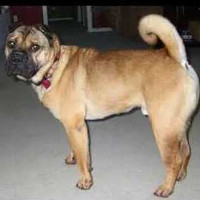
| The Ori Pei is a hybrid of the Pug and the Shar Pei. It is one of the specific crossbreeds to have produced at least six generations of hybrid dogs since its creation in 1970. The hybrid was born in 1970 when Aaron Silver, in the USA, crossed a Pug with a Shar Pei to reduce the size and health problems of his beloved Shar Pei breed, creating an adorable, playful member of the furry family, cleverly disguised as a couch potato who will melt the hearts of all those in his vicinity. |
History of the Ori Pei |
| The Ori Pei is a hybrid mix of a Pug and a Chinese Shar Pei. We can get some limited information on the Ori Pei hybrid itself, but we'll have to look at the history USA, in love with the Shar Pei breed, wanted to reduce the size of the Shar Pei breed and eliminate some of the health problems it suffered from. He crossed a Pug with a Shar Pei to accomplish this, and the Ori Pei hybrid entered the scene. This hybrid, also known by the American names Ori-Pei, Pugpei, Sharpug and Pug-a-pei, is one of the oldest breed-specific crossbreeds bred in America. There are at least six generations of this hybrid in the field, allowing for greater predictability of appearance, temperament and health characteristics. Although it seems to have been created for companionship, it also makes an excellent family and guard dog. |
A little of the Pug |
||
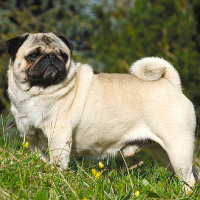
| The Pug, also known as the Chinese Pug, Dutch Mastiff or Dutch Bulldog, is a fairly old dog breed that originated in China at least 2,400 years ago. The origin and meaning of the breed are unknown, but some think it's slang for "monkey", while others believe it's a derivative of the Latin word "pugnus" meaning "fist". Regardless of where you think the name originated, the Carlin breed is distinguished by its appearance, as it has a stocky body with prominent eyes and was a historic companion of choice for monks and royal families in China and Europe. It seems that their original purpose was that of companionship, a function they performed competently then and still do today. The Carlin breed moved from China to Europe in 1572 and to England in 1688, earning the affection of Queen Victoria in the 19th century. Queen Victoria was instrumental in the creation of the Kennel Club in 1873, thanks to her breeding activities. The Carlin breed was recognized by the American Kennel Club in 1885. | ||
 |
||
| Standard of the Pug | ||
A little of the Shar Pei |
||
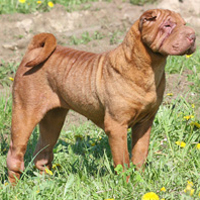
| The Chinese Shar Pei breed, also known as the Chinese Fighting Dog, originated in China. This dog breed is thought to be quite old, but no actual date of origin is available, due to the lack of data and documentation on dog breeds created in China. The Shar Pei has been owned mostly by peasants for several centuries, being bred for hunting, breeding and protection. Another activity for which the Shar Pei was created was wrestling and competitive entertainment, an activity in which their loose skin was an advantage, making it difficult for opponents to firmly control them. The Shar Pei breed barely escaped extinction when Communist rulers killed thousands of Chinese dogs, deeming dog ownership to be "Western decadence". They were finally recognized by the Hong Kong Kennel Club in 1960 and, in October 1970, the American Dog Breeders Association registered the first Shar Pei. The Shar Pei was accepted by the AKC in 1988 and fully recognized in 1992. Another interesting note: in 1978, the Chinese Shar Pei appeared in the Guinness Book of Records as the rarest dog breed in the world, with only 60 dogs known to be alive at the time. The Ori Pei hybrid is itself recognized by the following organizations: American Canine Association, Inc, American Pet Registry, Inc, American Canine Hybrid Club, Designer Dogs Kennel Club, Dog Registry of America, Inc, International Designer Canine Registry and Registre de race de créateurs. | ||
 |
||
| Standard of the Shar Pei |
Appearance of the Ori Pei |
| The Ori Pei is a hybrid mix of Pug and Shar Pei and, as such, can take on the appearance characteristics of one or both parent breeds. There have been over six generations of hybrids bred since 1970 and, from these dog owners and breeders, we have some very good descriptions of these cute plush dogs. They are described as weighing from 4.5 to 13.5 kilos and measuring from 30.5 to 38 centimeters in height at the withers. With their Pug-like appearance, they feature moderate wrinkles, stocky musculature, a massive round head, square-shaped muzzle and dark eyes. Its thin ears are turned slightly to the side and are either rose-shaped or more button-like, with its tail curled tightly over its back. The Ori Pei has a coat of around 1.25 centimeters, with a smooth outer coat and soft undercoat, available in the following colors: black, white, brown, gray and a mixture of colors. |
Temperament of the Ori Pei |
| Your furry Ori Pei family member is an interesting little fellow. Since he's a mix of Pug and Shar Pei, he can of course adopt the temperament characteristics of one or both of his parent breeds. What's more, given that this hybrid has over six generations of breeding behind it, we have some fairly reliable temperament information from owners and breeders indicating that this canine hybrid is friendly, gentle and easily forms attachments to family members. With a little early socialization, this hybrid will get along very well with children and other animals, but as it enjoys hunting and challenges, it can be an annoyance, but not a danger, to the family cat. This adorable and affectionate furry family member is also very playful and a pleasure to converse with, with truly amusing ways of entertaining. The hybrid is protective of human family members and their property, although he is described as well-mannered and good-humored. Ori Pei is intelligent and easy to train, eager to please his human master. While he loves to play both indoors and on his daily walks, your Ori Pei will cuddle and nap on command. He can have the couch-potato down to a science. |
Needs and activities of the Ori Pei |
| The Ori Pei is a small dog that doesn't need much exercise. He loves his daily walk and will play for hours at a time at home. It is a dog that can live in urban or rural environments and, because of its lower activity level, can live very well in an apartment, condo or family home without a fenced yard. He is a dog who barks mainly when he has to, alerting the family when necessary. This would be important for those living in noise-restricted communities. He doesn't tolerate extreme temperatures very well, so will be happy to stay indoors most of the time. Also, because his wrinkles need to be kept clean to reduce skin problems, keeping him indoors and taking him outside for his daily walks and physical activities is excellent. |
Maintenance of the Ori Pei |
| Your Ori Pei is considered a low-maintenance dog. He requires weekly brushing, occasional baths and occasional shampoos to keep his coat clean. Weekly brushing will remove hair and debris from his coat, which is not considered hypoallergenic. Given that your Ori Pei's appearance traits include wrinkles from both sides of the biological mix, extra care will be needed to keep the folds between the wrinkles clean and dry to avoid the skin irritations and infections for which mother breeds are known. This can probably be kept under control with at least a weekly cleaning when you brush them. Additional parts of the grooming regimen should also include a nail check and trimming if necessary, as well as an ear check, with cleaning carried out if necessary without any insertion into the ear canals. Ear cleaning will reduce the risk of infection. As far as your pet's teeth are concerned, we strongly recommend brushing at least two or three times a week, if not every day. Follow-up dental examinations and cleanings with your veterinary professional will also help reduce the risk of developing periodontal disease, which can lead to tooth loss over time. Odor and drool levels are considered low in this hybrid. |



 English (United Kingdom)

Comments